

Quercetine en vitamine C: synergy, dosing and safety
Quercetin and vitamin C genuinely work together, and the mechanism behind that pairing is biochemical rather than marketing copy. Vitamin C chemically regenerates oxidised quercetin, restoring its antioxidant capacity and extending the time it remains active in the body. That single fact is why so many immune-support formulas combine both compounds, and it is the most defensible reason to take them together.
- What the combination does physiologically: quercetin scavenges reactive oxygen species and moderates inflammatory signalling; vitamin C recycles quercetin back to its active form, so the antioxidant effect lasts longer than either compound achieves alone.
- Who may benefit most: adults with high oxidative stress loads, those supporting immune function during seasonal illness, and people exploring antioxidant support for healthy ageing.
Safety note first: quercetin affects CYP3A4 and other drug-metabolising enzymes, which means it can alter blood levels of statins, immunosuppressants, and several other drug classes. Anyone on chronic medication should speak with a clinician before starting a quercetin supplement.
Key takeaways
Quercetin and vitamin C form a genuine biochemical partnership: vitamin C regenerates oxidised quercetin, extending its antioxidant activity and providing a mechanistic rationale that goes beyond typical supplement marketing.
| Point | Details |
|---|---|
| Vitamin C recycles quercetin | Vitamin C chemically restores oxidised quercetin to its active form, prolonging antioxidant activity. |
| Evidence is promising but early | Preclinical data is strong; human trials remain small and mostly phase I–II with mixed endpoints. |
| Dose range from studies | Clinical studies commonly use 250–1000 mg quercetin daily, paired with 250–500 mg vitamin C. |
| Drug interactions require review | Quercetin inhibits CYP3A4 and CYP2C9; anyone on statins, immunosuppressants, or anticoagulants must consult a clinician first. |
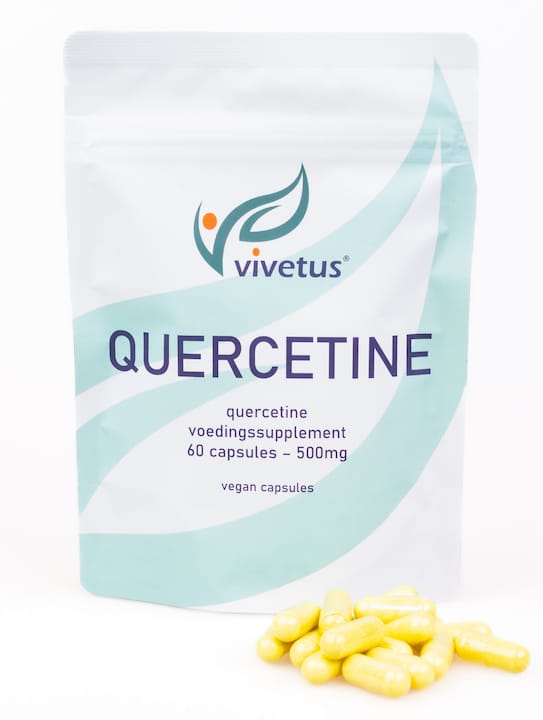
| Vivetus® Quercetine | 500 mg per capsule, vegan, third-party tested; available as a standalone or in anti-inflammation and senolytic bundles. |
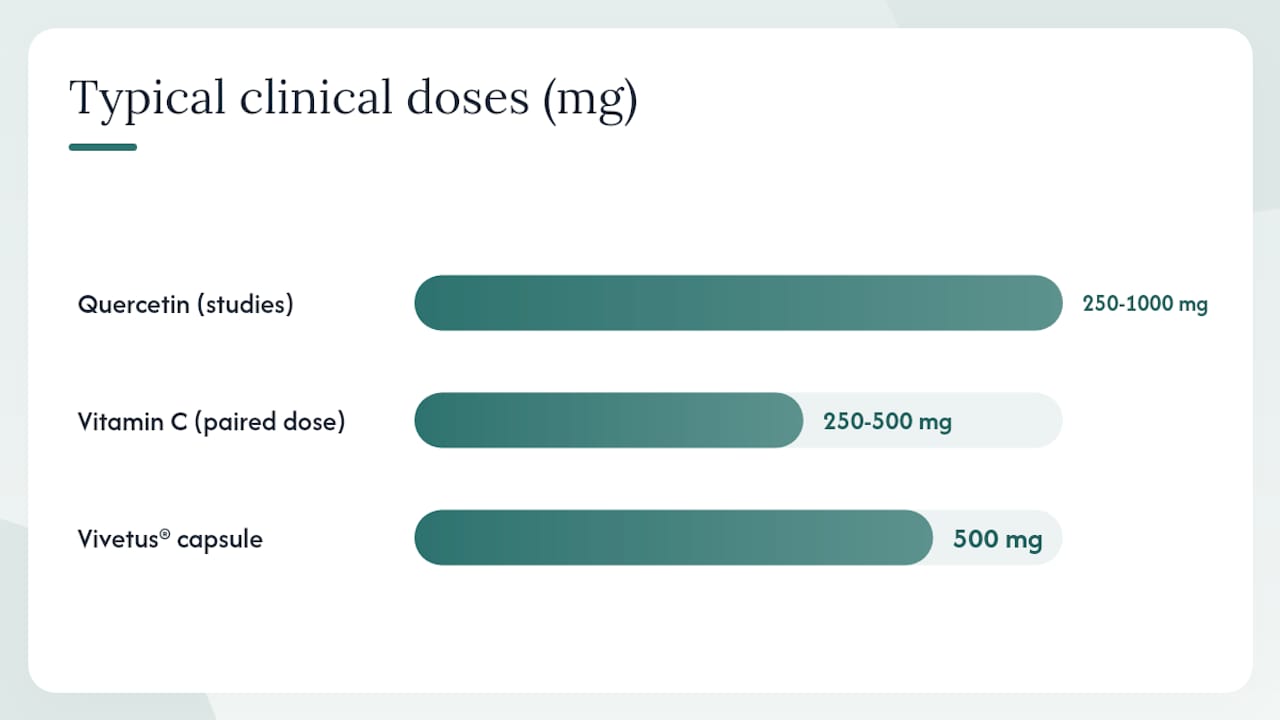
Table of Contents
- Quercetine en vitamine C: what they are and how they work together
- What the studies say about quercetin and vitamin C
- Common supplement formulas: why manufacturers add vitamin C, zinc, or bromelain
- Practical dosing, timing, and how to use quercetin supplements
- Side effects, contraindications, and drug interactions to check
- How to choose a quality quercetin supplement
- A note from Vivetus
- Vivetus® Quercetine: a tested option worth considering
- Sources
Quercetine en vitamine C: what they are and how they work together
Quercetin is a dietary flavonol found in the outer layers of many everyday foods. Onions, apples, kale, berries, and tea are among the richest sources, though typical dietary intake sits at roughly 5–40 mg per day — far below the doses used in clinical studies.
Antioxidant and anti-inflammatory mechanisms
At the cellular level, quercetin works through several overlapping pathways:
- ROS scavenging: it neutralises reactive oxygen species directly, reducing oxidative damage to cell membranes and DNA.
- NF-κB and MAPK modulation: quercetin suppresses two of the main inflammatory signalling cascades, which is why researchers associate it with reduced pro-inflammatory cytokine production.
- NRF2 upregulation: by activating the NRF2 pathway, quercetin stimulates the body’s own antioxidant enzymes, including glutathione, superoxide dismutase (SOD), and catalase.
These are not independent effects — they reinforce each other, which is part of why quercetin shows broad activity in laboratory models.
The zinc ionophore effect
Quercetin can act as a zinc ionophore, meaning it helps transport zinc ions across cell membranes and into cells. Zinc itself has antiviral and immune-regulatory properties, so this mechanism is the practical rationale for combining quercetin with zinc in many immune-support formulas. Practitioners often highlight this pairing as an explanation for the triple combination of quercetin, vitamin C, and zinc seen in clinical research programmes.
How vitamin C extends quercetin’s action
When quercetin donates an electron to neutralise a free radical, it becomes oxidised and temporarily inactive. Vitamin C donates a hydrogen atom to that oxidised quercetin molecule, regenerating it to its active antioxidant form. The result is a cycle: quercetin neutralises ROS, vitamin C restores quercetin, and the antioxidant effect continues longer than either compound achieves alone. This is a documented biochemical interaction, not a speculative claim.
Pro Tip: Taking quercetin and vitamin C at the same meal is not just convenient — it gives both compounds the best chance of being present simultaneously in the gut and bloodstream, where the regeneration cycle can actually occur.
Dietary quercetin intake from food alone (5–40 mg/day) is unlikely to produce the antioxidant effects seen in supplementation studies, where doses of 250 mg and above are standard.
What the studies say about quercetin and vitamin C
The evidence base for quercetin is genuinely broad in scope but uneven in quality. Understanding that distinction matters before drawing conclusions.
Preclinical and in vitro findings
Cell and animal studies consistently show antiviral and immunomodulatory activity for quercetin across a range of viruses, including influenza, dengue, Zika, Epstein-Barr virus, and hepatitis C. These findings are reproducible and mechanistically coherent. The limitation is straightforward: what works in a cell culture or a mouse model does not automatically translate to the same effect in a human being.
Human studies: promising but preliminary
Small human trials and prophylaxis studies have tested quercetin in combination with vitamin C and other compounds. One preprint study of healthcare workers used a combined supplement containing quercetin 500 mg, vitamin C 500 mg, and bromelain 50 mg. The supplement group reported fewer COVID-19 infections than controls, with a reported hazard ratio of 12.04 (95% CI 1.26–115.06, P = 0.031). The signal is notable, but the sample sizes were small and the multi-ingredient design makes it impossible to attribute any effect to a single component.
| Study type | Population or model | Main outcome | Key caveat |
|---|---|---|---|
| In vitro | Cell lines (multiple viruses) | Antiviral activity demonstrated | No human translation confirmed |
| Animal models | Rodent infection models | Reduced viral load, anti-inflammatory effects | Species differences limit extrapolation |
| Small human RCT/prophylaxis | Healthcare workers (quercetin + vitamin C + bromelain) | Fewer infections in supplement group | Small sample, multi-ingredient formula |
| Phase I–II trials | Adults, various indications | Preliminary safety and dosing signals | Limited endpoints, early-stage data |
- The strongest evidence for quercetin remains preclinical.
- Human trials are mostly phase I–II, with variable endpoints and methods.
- No large, well-powered RCT has established a definitive clinical benefit for the quercetin-plus-vitamin-C combination in healthy adults.
Common supplement formulas: why manufacturers add vitamin C, zinc, or bromelain
Most quercetin supplements on the market do not contain quercetin alone. Understanding why each co-ingredient appears on a label helps you evaluate whether a product is well-designed or simply crowded.
Common additions and their rationale:
- Vitamin C (as ascorbic acid or buffered ascorbate): the primary biochemical rationale is quercetin regeneration. Vitamin C also contributes its own antioxidant and immune-support properties independently.
- Zinc: paired for the ionophore mechanism described above. Zinc and quercetin together may support intracellular antiviral defences more effectively than either alone, based on the mechanistic logic.
- Bromelain: a pineapple-derived enzyme included primarily for its anti-inflammatory properties and, in some formulations, to support absorption of quercetin through the gut wall.
- Rutin and acerola: rutin is a quercetin glycoside with its own antioxidant activity; acerola is a natural vitamin C source used as an alternative to synthetic ascorbic acid.
- Phytosome or lecithin carriers: lipid-based delivery systems that improve quercetin’s notoriously poor water solubility, increasing the amount that reaches systemic circulation.
More ingredients do not automatically mean a better product. A formula with ten compounds at sub-therapeutic doses is less useful than one with three compounds at meaningful concentrations. Watch for labels that list many ingredients but give no individual quantities — that is a practical red flag.
Practical dosing, timing, and how to use quercetin supplements
There is no official recommended daily allowance for quercetin. Clinical studies have used a wide range, commonly 250–2000 mg per day depending on the indication and formulation, while dietary intake from food sits far below that at roughly 5–40 mg daily.
For most consumer supplements, doses of 250–1000 mg quercetin per day are the most commonly studied range. Vitamin C pairings in research formulas typically run 250–500 mg per dose, though many people already consume vitamin C from diet or separate supplementation.
Practical timing and use:
- Take quercetin with a meal containing some fat, particularly if using an aglycone or standard powder form. Fat improves absorption meaningfully.
- Phytosome formulations (quercetin bound to phosphatidylcholine) are less dependent on dietary fat for absorption and can be taken with a lighter meal.
- Dividing the daily dose across two meals rather than taking it all at once tends to maintain steadier plasma levels throughout the day.
- Short courses of 4–8 weeks are common in research protocols. Longer use is not necessarily unsafe, but it warrants periodic review, particularly for anyone on other supplements or medications.
Dosing is not one-size-fits-all. The quercetin dosage guide from Vivetus provides product-level guidance, but the right dose for you depends on your health status, other medications, and what you are trying to support. A clinician can help you set a sensible starting point.
Side effects, contraindications, and drug interactions to check
Quercetin is generally well tolerated at typical supplemental doses, but that does not mean it is without risk for everyone.
Common mild side effects reported in studies include headache, tingling sensations, and mild gastrointestinal discomfort. These are usually dose-dependent and resolve when the dose is reduced.
Drug interactions — the critical list:
- CYP3A4 and CYP2C9 inhibition: quercetin inhibits these liver enzymes, which metabolise a large proportion of commonly prescribed drugs. Higher quercetin levels in the body can raise plasma concentrations of affected drugs to unintended levels.
- Statins: quercetin may increase statin exposure via CYP3A4 inhibition, raising the risk of muscle-related side effects.
- Immunosuppressants (e.g. ciclosporin, tacrolimus): altered metabolism can shift drug levels significantly, which is a serious concern in transplant patients.
- Anticoagulants: some evidence suggests quercetin may potentiate anticoagulant effects; anyone on warfarin or similar drugs should not start quercetin without medical review.
- Certain antibiotics and antifungals: metabolised through overlapping CYP pathways, so co-administration warrants caution.
Quercetin is an adjunct, not a replacement for prescribed medicines. Clinicians consistently advise that patients on chronic medication should not self-initiate quercetin supplementation without professional review, because enzyme inhibition can shift drug levels in ways that are difficult to predict without monitoring.
Who should always consult a clinician first:
- Anyone taking statins, immunosuppressants, anticoagulants, or antifungals
- Pregnant or breastfeeding people (insufficient safety data)
- People with known liver disease or significantly impaired liver function
When monitoring is appropriate, clinicians commonly check liver enzymes and, where relevant, plasma drug levels. There is no uniform protocol in the published literature, so clinical judgement applies.
Pro Tip: Bring a full list of your current medications and supplements to your appointment. Quercetin’s interactions are dose-dependent, so the conversation is more productive when your clinician knows exactly what else you are taking.
How to choose a quality quercetin supplement
The supplement market for quercetin is crowded, and label quality varies considerably. A short checklist cuts through most of the noise.
What to look for on the label:
- Standardised quercetin content: the label should state the quercetin dose per capsule or serving clearly, not just the weight of a herbal extract.
- Formulation type: phytosome (quercetin-phosphatidylcholine complex) or quercetin glycosides generally offer better bioavailability than standard aglycone powder. If the label does not specify the form, assume it is aglycone.
- Vitamin C form and dose: ascorbic acid is effective; buffered forms (sodium or calcium ascorbate) suit people with sensitive stomachs. Check that the dose is meaningful, not a token amount.
- Third-party purity testing: look for a certificate of analysis (CoA) from an independent laboratory, confirming the product contains what it claims and is free from heavy metals and contaminants.
- Allergen and additive transparency: unnecessary fillers, artificial colours, and undisclosed allergens are red flags. A clean formula lists every ingredient with its quantity.
- Manufacturer contact information: a legitimate supplement company provides a physical address and a way to request testing documentation.
Pro Tip: Single-ingredient concentration matters more than the total number of ingredients. A product listing quercetin at 500 mg per capsule with a CoA is more trustworthy than one listing eight compounds with no individual quantities.
Bioavailability is the practical reason formulation type matters. Aglycone quercetin has poor water solubility and variable absorption. Phytosome and glycoside forms address this through different mechanisms — phytosomes use a lipid carrier, while glycosides improve water solubility directly. For a deeper look at quercetin’s evidence and benefits, the Vivetus blog covers the research in more detail.
A note from Vivetus
Vivetus stocks quercetin formulas because the evidence for quercetin as an antioxidant and anti-inflammatory compound is among the more coherent in the flavonoid category, and because the synergy with vitamin C has a clear biochemical basis rather than a purely marketing one. Product pages include third-party testing details and full ingredient transparency, so you can check exactly what you are buying. That said, Vivetus consistently recommends that anyone on chronic medication discusses quercetin supplementation with their clinician before starting, given the interaction profile described above.
Vivetus® Quercetine: a tested option worth considering
For those ready to try a quercetin supplement, Vivetus® Quercetine delivers 500 mg per capsule in a vegan formulation, with third-party purity testing and clear ingredient labelling. Each pack contains 60 capsules, giving a full two-month supply at a 250 mg twice-daily dose or a one-month supply at 500 mg daily.
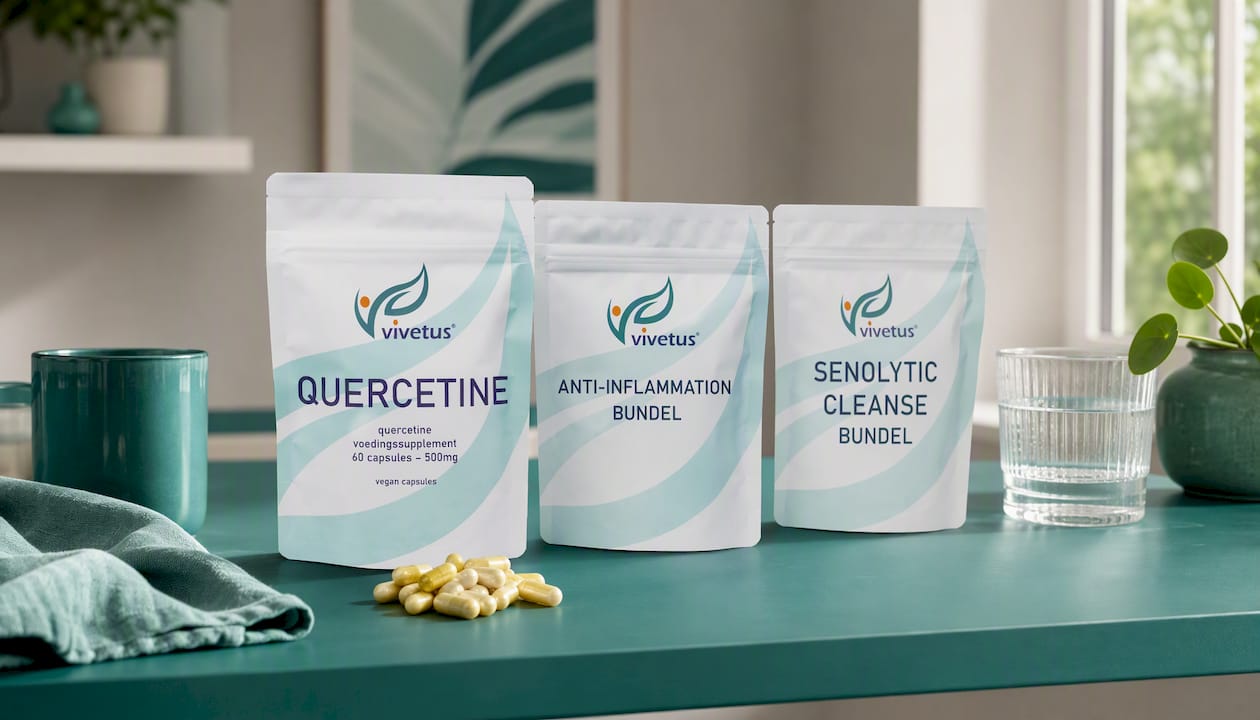
If your goal extends beyond single-compound antioxidant support, the Anti-inflammation bundel pairs quercetin with complementary compounds targeting inflammatory pathways, while the Senolytic Cleanse bundel combines quercetin with fisetin for a broader cellular health approach. Both bundles are built around the same purity and testing standards as the standalone product. Visit the product page to review the CoA and full ingredient list before purchasing.
Sources
- Quercetin, a Flavonoid with Great Pharmacological Capacity
- Comprehensive review (multiple antiviral and immunomodulatory effects of quercetin)
- Quercetin and Vitamin C: An Experimental, Synergistic Therapy for the Prevention and Treatment of SARS‑CoV‑2 Related Disease
- Quercetin — therapeutic uses and current clinical studies
- Quercetine — nutrients page with interactions and safety notes
This article is general information, not a substitute for advice from a qualified doctor. Consult a qualified healthcare professional about your own circumstances before acting on anything here.