

Sirtuin activators for Dutch buyers: Begin with NAD+ and one polyphenol
Sirtuin activators are compounds that increase the activity of NAD±dependent enzymes called sirtuins, which regulate metabolism, DNA repair and cellular stress responses. Some natural nutraceuticals and experimental drugs can modulate these enzymes in cells and animals, but human evidence for lifespan extension remains limited. The practical takeaway depends heavily on isoform specificity and how much NAD+ is actually available in the cell.
TL;DR:
- Sirtuin activators rely heavily on NAD+ availability, with natural compounds like resveratrol and pterostilbene offering limited bioavailability and synthetic options still in early development.
- Animal studies show promise for lifespan extension through sirtuin activation, but human trials have only demonstrated modest metabolic or biomarker improvements.
- Effectiveness depends on isoform specificity and combination with lifestyle factors such as fasting, exercise, and sleep, rather than on any single supplement alone.
- Natural polyphenols tend to support sirtuins indirectly, while synthetic compounds aim for more targeted, potent enzyme activation, but safety and efficacy data in humans remain limited.
- Supporting sirtuin activity practically involves boosting NAD+ levels first, layering complementary interventions, and gradually adjusting doses under medical supervision for personalized responses.
Table of Contents
- What are sirtuin activators and how do sirtuins work?
- What does the evidence from animals to humans actually show?
- Natural vs synthetic sirtuin activators: what’s the real difference?
- How can you support sirtuin activity in practice?
- Publisher note: proof points and how Vivetus fits the picture
- What controls sirtuin activity beyond NAD+ levels?
- How do sirtuins connect to other metabolic signalling networks?
- What do we know about long-term safety in humans?
- Which sirtuin activators actually work best in people?
- Does genetics affect how you respond to sirtuin activators?
- A balanced view on where the sirtuin story actually stands
- Where Vivetus fits if you want to act on this
- Sources
- FAQ
What are sirtuin activators and how do sirtuins work?
Sirtuins are a family of seven enzymes, labelled SIRT1 through SIRT7, that strip acetyl and other acyl groups off proteins using NAD+ as fuel. This isn’t optional. NAD+ is an obligate substrate, meaning the reaction simply cannot happen without it, unlike most enzymes that merely prefer certain conditions. That single fact explains why so much of the sirtuin field circles back to NAD+ availability rather than the sirtuin proteins themselves.
Each catalytic cycle consumes one molecule of NAD+ and produces nicotinamide as a byproduct, which is itself a mild sirtuin inhibitor at high concentrations. This creates a built-in feedback constraint: heavy sirtuin activity generates a compound that dampens further activity, which is one reason cells tightly regulate the enzymes that recycle nicotinamide back into usable NAD+. A review of sirtuin biology in metabolic regulation and ageing describes SIRT1 as the most extensively studied isoform, largely because of its links to caloric restriction and metabolic adaptation.
The seven isoforms don’t do the same job in the same place. Location determines function almost as much as sequence does:
- SIRT1 operates mainly in the nucleus and cytoplasm, deacetylating transcription factors like PGC1alpha and FOXO that govern fat metabolism and stress resistance.
- SIRT3, SIRT4 and SIRT5 work inside mitochondria, adjusting enzymes involved in fatty acid oxidation and the urea cycle.
- SIRT6 sits in the nucleus and has a specific role in DNA repair and telomere maintenance.
- SIRT7 is concentrated in the nucleolus, where it influences ribosomal RNA transcription.
This spatial split matters enormously for anyone thinking about “activating sirtuins” as if it were a single dial. A compound that boosts SIRT1 in liver cells has no guaranteed effect on SIRT3 in muscle mitochondria, and pushing one isoform too hard can create imbalances the cell wasn’t built to handle.
Sirtuins don’t act alone. They sit inside a broader energy-sensing network alongside AMPK, the enzyme that activates when cellular ATP runs low. AMPK and SIRT1 reinforce each other: AMPK activation raises NAD+ levels by shifting metabolism toward oxidative pathways, which in turn gives SIRT1 more fuel to work with. Caloric restriction triggers this same loop from the opposite direction, dropping energy intake enough that cells respond by raising NAD+ and leaning on AMPK and sirtuin activity to cope. This is the biological logic behind why fasting protocols and sirtuin activators keep showing up in the same conversation.
A 2024 study published in Nature added a genuinely new wrinkle to this picture. Researchers identified lithocholic acid as an allosteric activator that triggers an AMPK-mediated longevity pathway through a binding protein called TULP3, working through a completely different route than direct binding to sirtuin enzymes. It’s a reminder that “activating sirtuins” can mean acting on the enzyme directly or nudging the upstream signalling that controls its substrate supply, and the two strategies aren’t interchangeable.
What does the evidence from animals to humans actually show?
Preclinical models built the entire sirtuin activator field, and they remain the strongest evidence base by far. Yeast studies from the early 2000s showed that boosting sirtuin gene dosage extended replicative lifespan, and that finding is what launched the search for small molecules that could do the same thing pharmacologically.
Resveratrol was the first compound to generate real excitement. Studies in mice on high-fat diets showed improved insulin sensitivity, better mitochondrial function and, in some cohorts, extended survival compared with untreated animals on the same diet. Synthetic sirtuin-activating compounds, known as STACs, followed directly from this work. SRT1720, developed by Sirtris Pharmaceuticals, showed metabolic benefits in obese mice, including improved glucose tolerance and increased mitochondrial capacity.
None of this translated cleanly into humans, and the gap is worth understanding rather than glossing over.
- Resveratrol’s oral bioavailability in humans is poor. Most of an oral dose gets metabolised in the gut and liver before it reaches systemic circulation in an active form.
- Early in vitro assays used a fluorescently tagged substrate that turned out to produce false-positive activation signals, a methodological flaw that a review of sirtuin activator and inhibitor development flags as a major source of confusion in the field’s early years.
- Mouse dosing regimens often used amounts that would require impractically large or medically supervised doses in a person.
SRT2104, one of the more advanced synthetic STACs, reached human clinical testing and trial records on Clinicaltrials document its tolerability profile in various patient populations, including smokers and people with type 2 diabetes. Results were mixed: some markers of inflammation and lipid metabolism improved modestly, but the effect sizes were smaller than the animal data had suggested, and the compound never advanced to broad clinical use.
A 2024 review of sirtuin activator development summarises where things currently stand: natural compounds such as resveratrol, fisetin, quercetin and berberine show measurable activity in vitro and in animal models, but consistently suffer from poor specificity or limited bioavailability, while a handful of synthetic STACs, SRT2104 chief among them, reached early clinical testing without producing the dramatic results seen in mice.
The pattern that emerges across dozens of trials isn’t that sirtuin activation is a dead end. It’s that dose, delivery and assay design keep interfering with the ability to see a clean signal in human tissue the way researchers see one in a petri dish or a mouse liver.
Natural vs synthetic sirtuin activators: what’s the real difference?
Natural compounds and synthetic STACs solve the same biological problem through very different chemistry, and the distinction matters for anyone deciding what to actually try.
Natural sirtuin activators are plant-derived polyphenols and related compounds, most working indirectly by raising cellular stress signals or supporting NAD+ metabolism rather than binding sirtuins with pharmaceutical precision.
- Resveratrol, found in grape skin and Japanese knotweed, is the most studied natural activator but has notoriously poor oral bioavailability.
- Pterostilbene, a structural cousin of resveratrol found in blueberries, has better absorption and a longer half-life in the body, which is why it’s often positioned as the more practical alternative.
- Fisetin, present in strawberries, has drawn attention less for direct sirtuin activation and more for its senolytic properties, clearing ageing cells that contribute to tissue dysfunction.
- Quercetin, a widely distributed flavonoid, shows modest activity in cell models but faces the same absorption limitations as most polyphenols.
- Berberine, a plant alkaloid used traditionally for metabolic support, appears to work largely through AMPK activation rather than direct sirtuin binding.
- Urolithin A, produced by gut bacteria from pomegranate compounds, has a distinct mechanism centred on mitophagy, the clearance of damaged mitochondria.
Synthetic STACs occupy a different tier entirely. Sirtris Pharmaceuticals, later acquired by GlaxoSmithKline, developed a series of compounds including SRT1720 and SRT2104 designed to bind sirtuins directly with far greater potency than any polyphenol. More recent medicinal chemistry campaigns have produced newer chemotypes such as MDL-800 and ADTL-SA1215, targeting SIRT6 and SIRT1 respectively with improved selectivity profiles. These remain research tools and early-stage clinical candidates, not consumer products.
The interpretive pitfalls are real and worth naming plainly. Assay results depend heavily on which substrate researchers use to measure activation, and a compound that looks potent against one substrate can show no effect, or even inhibition, against another. This substrate dependence is exactly what produced the early false-positive results with resveratrol, and it’s a caution that applies to every new activator claim that surfaces.
For anyone weighing what’s appropriate to try, the practical line falls roughly where regulatory oversight falls. Natural compounds with established safety records at nutraceutical doses, resveratrol, pterostilbene, quercetin, fisetin, berberine and urolithin A, sit in the category of reasonable self-directed experimentation for a generally healthy adult. Synthetic STACs still in clinical development are a different matter entirely and belong under medical supervision within formal trial settings, not general use.
How can you support sirtuin activity in practice?
Supporting sirtuin function effectively means thinking about it as a system with several levers, not a single supplement to swallow. The nutraceutical review of Sirt1 activation makes a compelling case that combination approaches, rather than any single compound, offer the most realistic path to meaningful effect.
- Raise NAD+ availability first. This is the foundational step, because sirtuins cannot function without adequate substrate regardless of how “activated” they might otherwise be. NMN and NR supplementation has shown measurable increases in blood NAD+ levels alongside improvements in physical fitness markers in healthy adults, though effects on long-term outcomes remain under study.
- Layer in lifestyle interventions that mirror caloric restriction. Time-restricted eating, moderate fasting protocols and regular aerobic exercise all raise cellular AMPK activity and NAD+ turnover through the same pathway caloric restriction uses. Consistent sleep timing supports the circadian regulation that governs NAD+ synthesis enzymes over each 24-hour cycle.
- Add nutraceuticals with complementary, rather than duplicate, mechanisms. Pairing an NAD+ precursor with pterostilbene or resveratrol, and considering urolithin A for its distinct mitophagy effect, spreads the biological load across multiple pathways instead of overloading one.
- Respect dose and bioavailability limits. Pterostilbene’s improved absorption over resveratrol makes it a more forgiving starting point at standard nutraceutical doses; taking any of these compounds with a meal containing some fat generally improves absorption of the fat-soluble polyphenols.
- Watch for interactions and monitor how you respond. Berberine can interact with blood glucose and certain medications, so anyone on diabetes medication or blood thinners should talk to a doctor before adding it. A clinician conversation is worthwhile before combining several of these compounds, particularly for anyone already managing a chronic condition.
Pro Tip: Start with one NAD+ precursor and one polyphenol at standard label doses for four to six weeks before adding anything else. Stacking five compounds on day one makes it impossible to tell what’s actually doing anything, and it multiplies the chance of an unexpected interaction.
Realistic expectations matter here more than almost anywhere else in the supplement world. The evidence supports metabolic support and NAD+ maintenance, not a guarantee of extended lifespan, and anyone selling that story is overstating what the current research base actually shows.
Publisher note: proof points and how Vivetus fits the picture
Vivetus operates as a vegan, clinically-informed supplement retailer built specifically around healthy ageing and vitality, with international shipping and a catalogue that spans NAD+ precursors, polyphenols and combination bundles. That focus matters here because the practical steps above, raising NAD+ and layering in specific polyphenols, map directly onto categories Vivetus stocks rather than abstract advice with nowhere to act on it.
- The catalogue includes NMN in both capsule and powder form, providing flexibility in dosing an NAD+ precursor.
- The catalogue includes pterostilbene and resveratrol as standalone products, representing two well-studied natural polyphenols.
- Bundled longevity products combine several of these categories, aligning with combination approaches that research suggests may be more effective than single compounds.
- Products are offered with options for one-time or subscription purchase, supporting those who want to try a routine for several weeks.
None of this amounts to a therapeutic claim. Pterostilbene and resveratrol are offered as nutraceutical-grade polyphenols consistent with the mechanisms described earlier, not as treatments for any disease or a guaranteed route to a longer life. The distinction between “supports the biological pathway” and “proven to extend lifespan in humans” is one worth holding onto throughout, and it applies to every product on the market, Vivetus included.
What controls sirtuin activity beyond NAD+ levels?
NAD+ supply sets the ceiling for sirtuin activity, but several other layers decide how close any given cell gets to that ceiling. Post-translational modifications, chemical tags added to the sirtuin proteins themselves, can switch activity up or down independent of substrate availability. Phosphorylation of SIRT1 by upstream kinases, for instance, alters its binding affinity for target proteins and can either enhance or blunt its deacetylase function depending on which site gets modified.
Feedback loops add another layer of control. SIRT1 deacetylates and activates PGC1alpha, which drives mitochondrial biogenesis and, in turn, increases the cell’s overall NAD+ production capacity, feeding back to support more sirtuin activity. Nicotinamide, the byproduct of every sirtuin reaction, acts as a natural brake by competitively inhibiting the enzyme at high local concentrations, which prevents runaway activation.
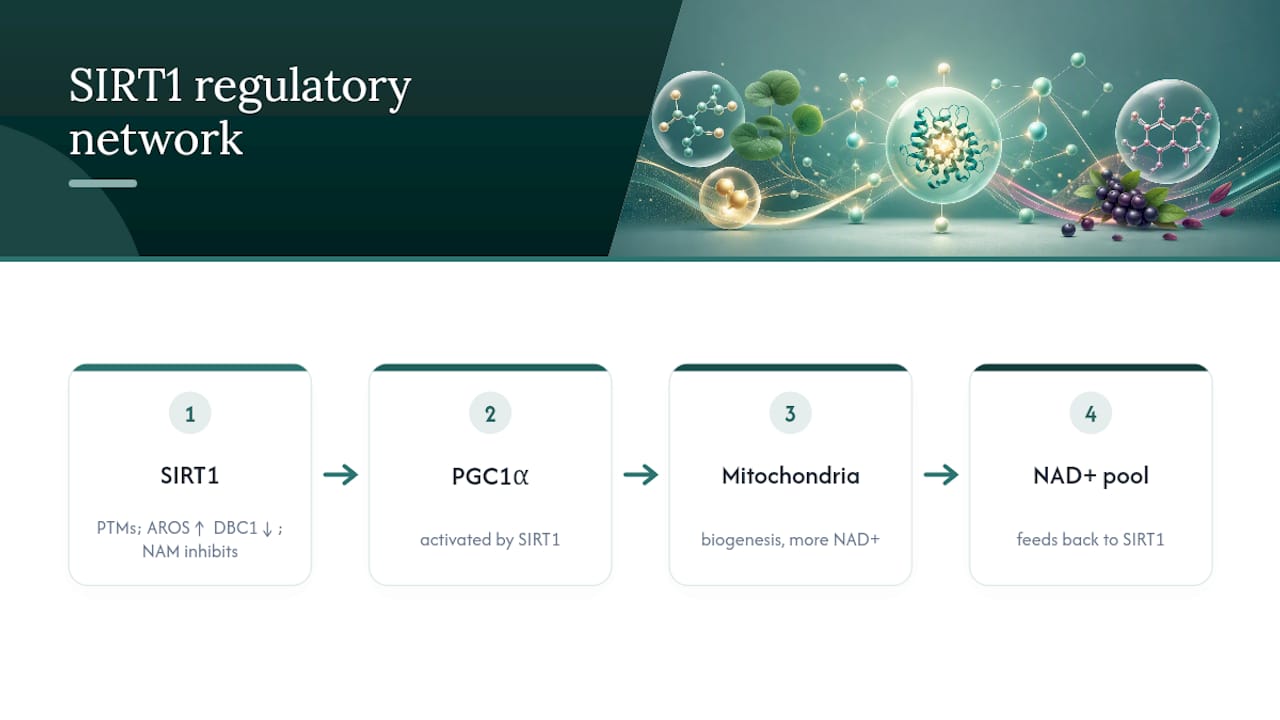
Protein-protein interactions also shape outcomes substantially. SIRT1 activity depends partly on binding partners like AROS and DBC1, which respectively enhance and suppress its function, meaning the same amount of SIRT1 protein can behave very differently depending on what else is present in the cell at that moment. This layered regulation is precisely why a supplement claiming to “activate” a sirtuin in a test tube doesn’t automatically translate into predictable activity inside a living, regulated human cell.
How do sirtuins connect to other metabolic signalling networks?
Sirtuins rarely act as isolated switches. They sit at a crossroads with several other major signalling systems that together decide how a cell allocates energy and responds to stress.
The mTOR pathway, which governs cell growth and protein synthesis, generally works in opposition to sirtuin activity. When nutrients are abundant, mTOR signalling dominates and sirtuin activity tends to decrease; under caloric restriction or fasting, the balance shifts toward AMPK and sirtuin activation as the cell prioritises maintenance and repair over growth. This inverse relationship is part of why fasting protocols and sirtuin-supportive strategies are so frequently discussed together.
Insulin and IGF-1 signalling also intersect directly with sirtuin function. SIRT1 deacetylates FOXO transcription factors, which regulate genes involved in stress resistance and glucose metabolism, meaning sirtuin activity effectively fine-tunes how cells respond to insulin signals. This connects the sirtuin field directly to metabolic health more broadly, not just to ageing research in isolation.
The AMPK relationship deserves a second mention here because it works bidirectionally. AMPK raises NAD+ through its effects on fatty acid oxidation, feeding sirtuin activity, while sirtuins deacetylate and activate LKB1, an upstream kinase that switches AMPK on in the first place. It’s a genuine feedback loop, not a one-way relationship, which is part of why lifestyle interventions that hit AMPK (exercise, fasting) tend to support sirtuin function so reliably compared with supplements alone.
What do we know about long-term safety in humans?
Long-term human safety data for dedicated sirtuin activators remains genuinely thin, and that gap deserves honesty rather than reassurance. Most human trials of resveratrol and SRT2104 ran for weeks to a few months, not years, which means chronic-use safety over a decade or more simply hasn’t been established through controlled study.
What the shorter trials do show is generally reassuring at moderate doses. Resveratrol at doses used in most studies has produced mild gastrointestinal effects, such as nausea or diarrhoea, as the most commonly reported issue, without serious adverse events emerging in the trial populations studied. SRT2104’s trial records on ClinicalTrials.gov document a generally tolerable profile in the populations tested, though with modest effect sizes rather than dramatic outcomes.
The reviews covering sirtuin activator and inhibitor development raise a more nuanced safety concern than simple toxicity. Sirtuin modulation can help in one metabolic context and cause harm in another, depending on which isoform gets affected and how strongly. Global, indiscriminate activation is not obviously safer than no activation at all. That’s a reason to favour compounds and doses with established track records over untested combinations, and to treat “more is better” as a genuinely bad assumption in this specific field.
Anyone taking berberine, resveratrol or NAD+ precursors alongside prescription medication, particularly for blood sugar or blood clotting, should raise it with a doctor rather than assume supplement-grade compounds are automatically free of interaction risk.
Which sirtuin activators actually work best in people?
Comparing sirtuin activators head-to-head in humans is harder than it sounds, because most compounds have never been tested against each other in the same trial using the same outcome measures. What exists instead is a patchwork of separate studies using different doses, populations and endpoints.
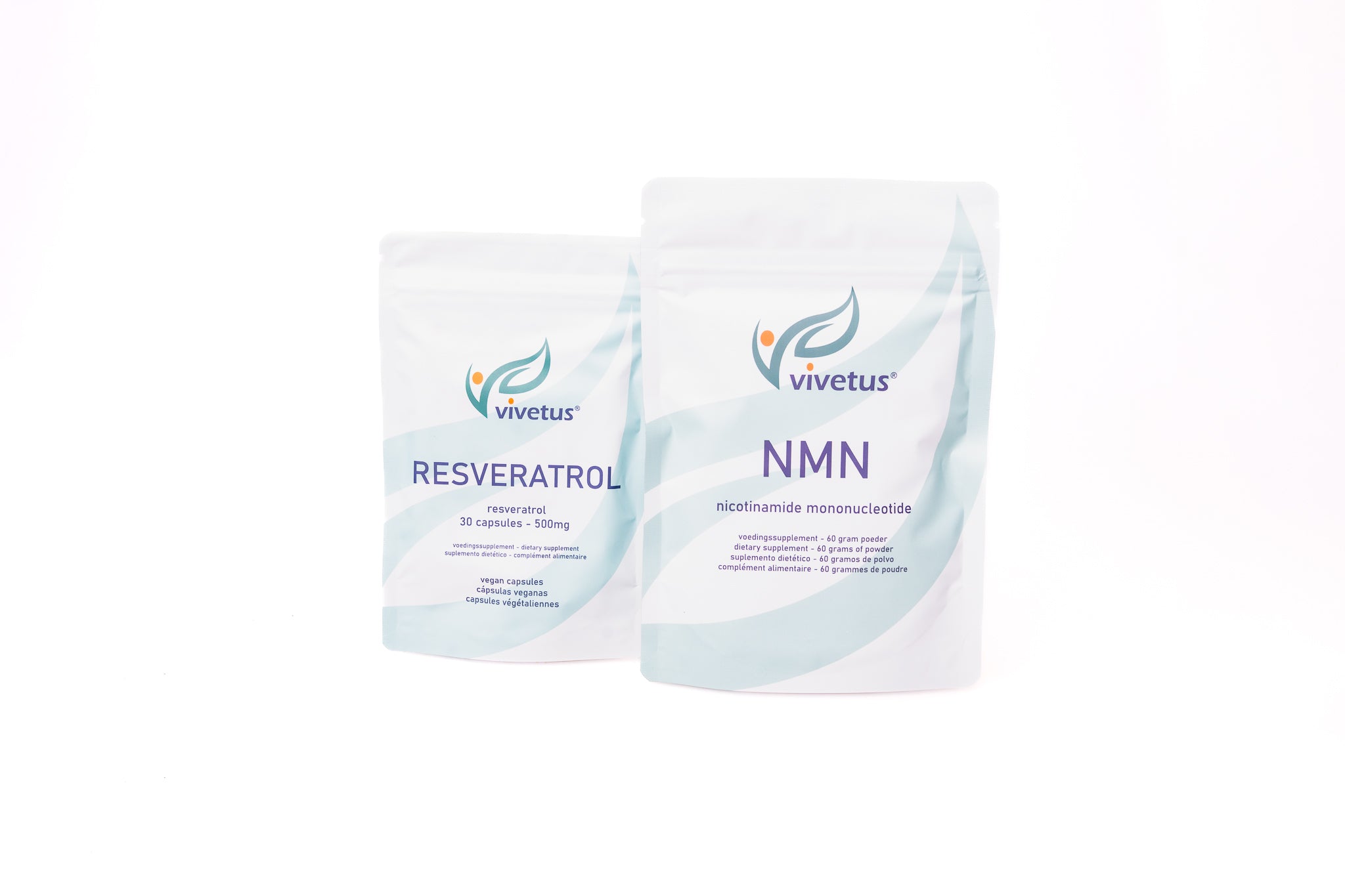
Within that patchwork, a rough hierarchy emerges. NAD+ precursors show the most consistent human data for their primary endpoint, raising blood NAD+ levels, with associated improvements in some physical performance measures in healthy adults. Resveratrol’s human trial record is the largest of any single natural compound simply because it’s been studied longest, but its poor bioavailability means oral doses need to be relatively high to achieve blood levels comparable to what worked in animal studies. Pterostilbene has fewer human trials overall but a more favourable absorption profile, which may make comparable doses more effective in practice despite a thinner evidence base. Synthetic STACs like SRT2104 showed measurable but modest biomarker changes in early trials, not the dramatic effects seen in mice.
The honest comparative conclusion is this: no single compound has demonstrated a large, clearly superior effect on human ageing biomarkers in controlled trials. What separates the more promising candidates from the weaker ones is largely bioavailability and mechanism clarity, not dramatically different potency at the cellular level.
Does genetics affect how you respond to sirtuin activators?
Genetic variation in the sirtuin genes themselves, particularly SIRT1 and SIRT3, has been linked in population studies to differences in metabolic rate and longevity outcomes, though these associations are modest and don’t function as reliable individual predictors. Certain SIRT1 gene variants correlate with differences in body mass index and insulin sensitivity across populations, suggesting baseline sirtuin expression or activity varies meaningfully between individuals before any activator ever enters the picture.
This variability likely explains part of why supplement responses feel so inconsistent from person to person. Someone with naturally higher baseline NAD+ turnover or a more active sirtuin variant may see less additional benefit from a precursor supplement than someone starting from a lower baseline. Metabolic factors like liver enzyme activity also vary genetically and affect how efficiently a person converts NMN or NR into usable NAD+ in the first place.
None of this is currently actionable through consumer genetic testing in any precise way. There’s no validated test that tells a person “you’ll respond well to pterostilbene” or “skip the berberine.” The practical implication is simpler: treat any sirtuin-support routine as an individual experiment, track how you feel and any measurable markers over a few months, and adjust based on your own response rather than a stranger’s trial results.
A balanced view on where the sirtuin story actually stands
The gap between what sirtuin activators promise and what they’ve demonstrated in humans is real, and it’s worth sitting with rather than glossing over. The mechanistic story is genuinely compelling. NAD+ dependence, isoform specificity, the AMPK feedback loop, all of it holds up under scrutiny. What doesn’t hold up as well is the leap from “this works in a mouse” to “this will extend your life.”
My honest read: lifestyle interventions, fasting patterns, exercise, sleep consistency, do more for sirtuin-related pathways than any single supplement will, because they hit multiple mechanisms at once rather than one narrow target. Supplements are worth layering in as support, not as a substitute for those basics. Track how you feel, be patient with timelines measured in months rather than weeks, and treat any dramatic longevity claim with proportionate scepticism.
— Jord
Where Vivetus fits if you want to act on this
Vivetus stocks the specific compounds this article has walked through, rather than a vague “longevity blend” with no transparency about what’s inside. The 🔬 Vitaal Basis bundel combines core longevity-support ingredients into one routine, which suits the combination-approach logic the evidence actually favours over single-compound strategies.
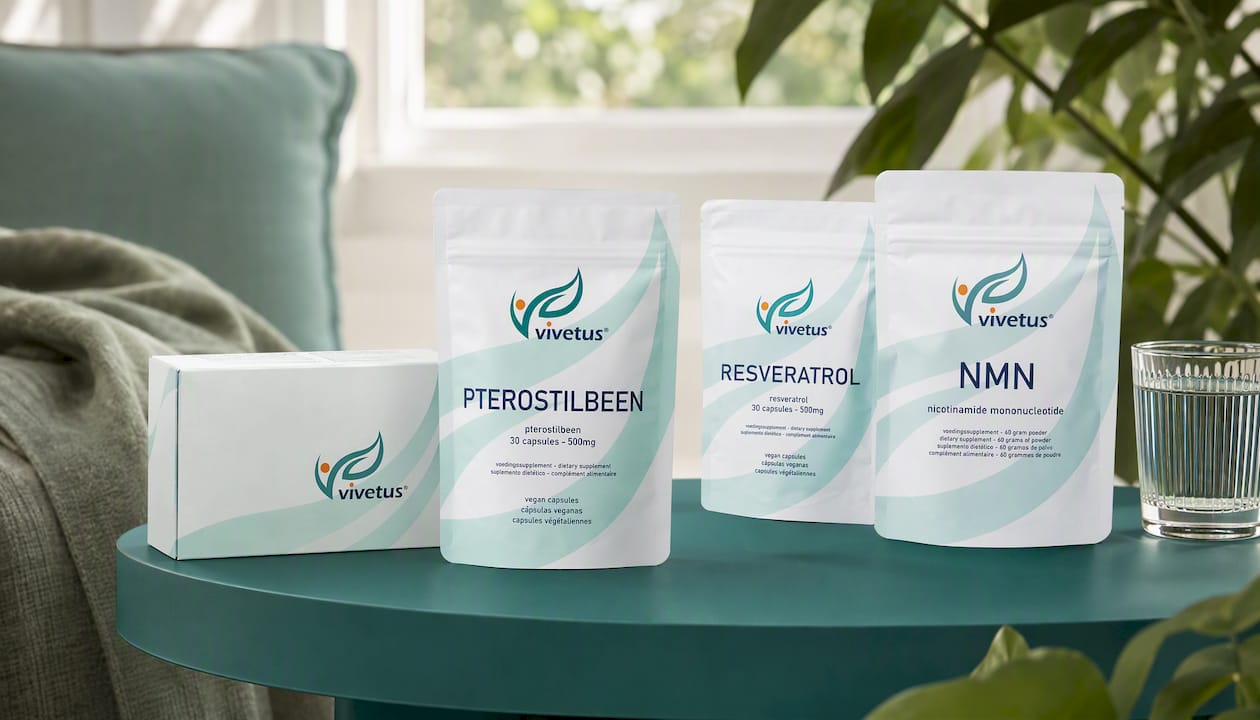
For anyone wanting to build a routine around the specific polyphenols discussed above, Vivetus® Pterostilbeen offers 500mg capsules of the better-absorbed resveratrol relative, while Vivetus® Resveratrol provides the original, most-studied compound at the same 500mg dose for those who prefer to start with the polyphenol with the longest human trial history. Both are vegan formulations tested for purity, and orders over €50 ship free. Subscription purchasing is available for anyone planning the four-to-six-week trial period a sensible routine requires, without needing to reorder manually each month. Browse the full NMN range to pair a NAD+ precursor with either polyphenol, and place your first order today to start building a routine grounded in the mechanisms this article has covered.
Sources
The claims in this article draw on peer-reviewed mechanistic reviews and primary trial data rather than marketing summaries. For readers who want to go deeper:
- Review: Sirtuins and their role in metabolic regulation and ageing (PMC3887872)
- Nature 2024: lithocholic acid as an allosteric activator (PubMed entry)
This article is general information, not a substitute for advice from a qualified doctor. Consult a qualified healthcare professional about your own circumstances before acting on anything here.
FAQ
What exactly do sirtuin activators do in the body?
They increase the activity of NAD±dependent enzymes called sirtuins, which regulate metabolism, DNA repair and cellular stress responses, though the strength of that effect varies enormously between natural compounds and synthetic drugs.
Is resveratrol or pterostilbene better as a sirtuin activator?
Pterostilbene has better oral bioavailability than resveratrol, but resveratrol has the longer human trial history; many longevity-focused buyers choose one, or use both, based on which trade-off matters more to them, and Vivetus stocks both as standalone 500mg capsule products.
Do sirtuin activators actually extend human lifespan?
No trial has demonstrated that any sirtuin activator extends human lifespan; the strongest evidence for lifespan effects comes from yeast, fly and mouse studies, while human trials have mainly measured shorter-term metabolic and biomarker changes.
Are synthetic STACs like SRT2104 available to buy?
No, synthetic sirtuin-activating compounds such as SRT2104 remain research and clinical-trial molecules rather than consumer products, and trial records on ClinicalTrials.gov document their tolerability profile rather than confirming broad efficacy.
What’s the safest way to start supporting sirtuin activity?
Most evidence favours starting with an NAD+ precursor like NMN alongside one polyphenol such as pterostilbene or resveratrol at standard doses, monitoring your response for four to six weeks before adding anything else, and checking with a doctor if you take medication for blood sugar or clotting.