

Top 12 supplements for an energy boost: a clear list
TL;DR:
- Supplements like B vitamins, iron, and vitamin D effectively improve energy when correcting specific deficiencies. For most people, blood testing is essential before supplementing, as excess intake offers limited benefits if levels are normal. Deficiency correction takes weeks, while adaptogens provide short-term support for stress-related fatigue.
The supplements most consistently linked to improved energy are B vitamins (including B12), iron, vitamin D, magnesium, vitamin C, CoQ10, L-carnitine, rhodiola rosea, Panax ginseng, ashwagandha, zinc, and NAD+ precursors such as NMN. Most of these work best when correcting a deficiency or supporting a specific condition. Testing your levels before supplementing is the single most practical step you can take.
Quick reference: supplements for energy boost list
- B complex / B12 — cofactors in ATP production; deficiency causes fatigue
- Iron (ferritin) — oxygen transport; low ferritin is a common, correctable cause of tiredness
- Vitamin D (D3) — widespread deficiency in Central Europe; linked to fatigue and muscle weakness
- Magnesium — required for ATP function; suboptimal intake is common
- Vitamin C — supports iron absorption and adrenal function
- CoQ10 — mitochondrial energy transfer; evidence strongest in clinical fatigue conditions
- L-carnitine — fatty acid transport into mitochondria; moderate evidence
- Rhodiola rosea — adaptogen; reduces perceived fatigue under stress
- Panax ginseng — adaptogen; moderate evidence for stamina and mental energy
- Ashwagandha — adaptogen; reduces cortisol and fatigue scores
- Zinc — cofactor in over 300 enzymatic reactions including energy metabolism
- NMN / NAD+ precursors and resveratrol — longevity-oriented; limited acute energy evidence
Table of Contents
- When do supplements actually raise your energy levels?
- The full supplements for energy boost list: evidence, doses and safety
- How to choose a quality supplement in Central Europe
- Safety, interactions and when to seek medical advice
- What clinical research actually shows about energy supplements
- Key takeaways
- The Vivetus Energy & Vitality bundle: a ready-made option
When do supplements actually raise your energy levels?
The answer depends almost entirely on your starting point. Supplements provide measurable benefit chiefly when an underlying deficiency exists; dietary changes, sleep, and exercise remain the most sustainable strategies for energy in a replete person.
The biochemistry in plain terms
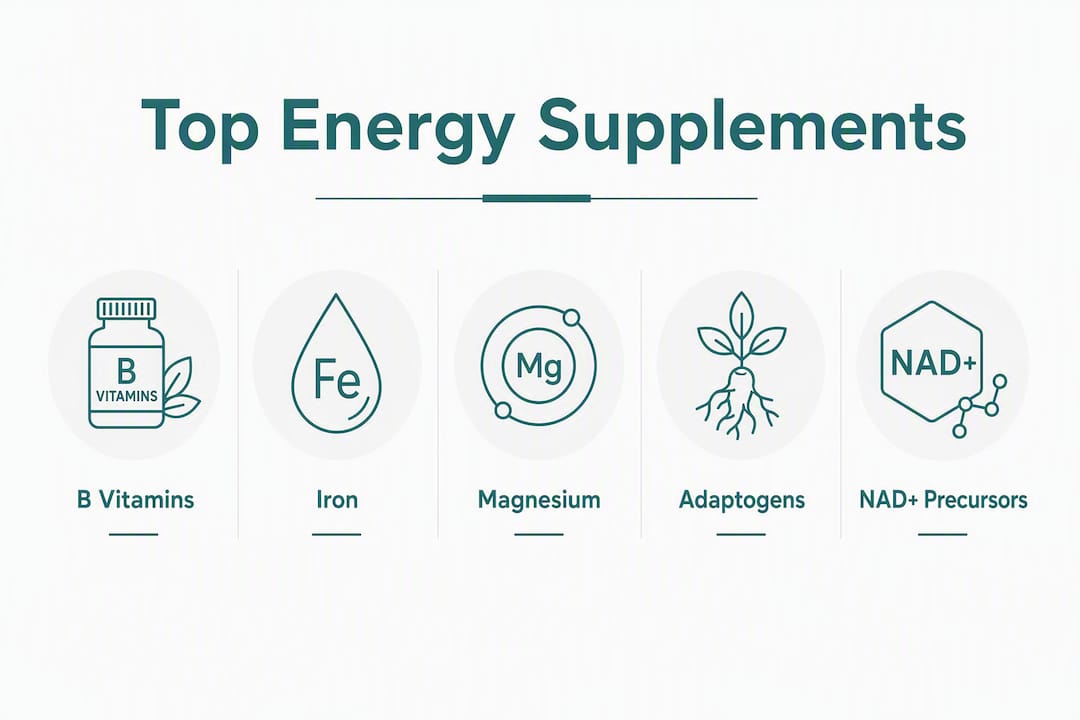
B vitamins, vitamin C, iron, magnesium, and zinc all serve as direct cofactors in the metabolic cycles that produce ATP, the cell’s primary energy currency. Iron carries oxygen in haemoglobin and sits inside the cytochrome enzymes of the electron transport chain. Magnesium is required for ATP itself to be biologically active. Without adequate B vitamins, glycolysis and the citric acid cycle slow down. These are not theoretical mechanisms; they are the reason deficiency fatigue is so consistent and so correctable.
In a person who is already replete, adding more of these nutrients rarely accelerates the same pathways. The machinery is already running at capacity.
Deficiency-driven benefit versus general population use
The distinction matters practically. Someone with ferritin below 30 µg/L, a B12 level under 200 pmol/L, or 25-OH vitamin D under 50 nmol/L is likely to notice a real improvement after correcting those levels. Someone with normal status taking the same supplement is unlikely to feel much difference, and in the case of iron or fat-soluble vitamins, may cause harm.
Typical timelines
- Hours to a few days — adaptogens with mild stimulant-adjacent effects (rhodiola, ginseng) and caffeine-containing formulas
- 4–8 weeks — correction of iron deficiency anaemia; B12 deficiency (oral supplementation)
- 8–12 weeks — vitamin D deficiency correction; magnesium status normalisation
- Months — cellular maintenance supplements such as CoQ10 and NAD+ precursors
When to check blood levels first
- Ferritin and haemoglobin (iron status)
- Serum B12 and folate
- 25-OH vitamin D
- Thyroid function (TSH) if fatigue is persistent and unexplained
- Magnesium (serum; note this is a blunt marker — tissue levels may be low even with normal serum)
Pro Tip: Ask your GP or a private laboratory in Central Europe for a fatigue panel that includes ferritin, not just haemoglobin. Haemoglobin can be normal while ferritin is already low enough to cause tiredness.
The full supplements for energy boost list: evidence, doses and safety
The table below summarises evidence level, typical adult dose ranges, expected timelines, and core safety notes. Detailed notes follow for each entry.
| Supplement | Evidence level | Typical adult dose | Timeline | Key caution |
|---|---|---|---|---|
| B complex / B12 | Strong (deficiency) | B12: 500–1,000 µg/day oral | 4–8 weeks | Masks folate deficiency at very high dose |
| Iron | Strong (deficiency) | 14 mg/day dietary; 100–200 mg therapeutic | 4–8 weeks | Never supplement without testing; toxicity risk |
| Vitamin D3 | Strong (deficiency) | 1,000–4,000 IU/day | 8–12 weeks | Fat-soluble; toxicity possible at very high doses |
| Magnesium | Moderate | 200–400 mg/day elemental | 4–8 weeks | Loose stools at high doses; caution in renal impairment |
| Vitamin C | Moderate | 200–1,000 mg/day | Weeks | High doses may cause GI upset; kidney stones at very high intake |
| CoQ10 | Moderate (clinical fatigue) | 100–300 mg/day | 4–12 weeks | Generally well tolerated; may interact with warfarin |
| L-carnitine | Moderate | 1,000–2,000 mg/day | 4–8 weeks | Fishy odour at high doses; caution with hypothyroidism |
| Rhodiola rosea | Moderate | 200–600 mg/day (3% rosavins) | Days to weeks | Avoid in bipolar disorder; caution with stimulants |
| Panax ginseng | Moderate | 200–400 mg/day | 4–8 weeks | Interacts with anticoagulants; avoid in pregnancy |
| Ashwagandha | Moderate | 300–600 mg/day (KSM-66 or Sensoril) | 4–8 weeks | Avoid in pregnancy; caution with thyroid medication |
| Zinc | Moderate (deficiency) | 8 mg/day dietary; up to 25 mg therapeutic | 4–8 weeks | Excess zinc depletes copper; do not exceed 40 mg/day long-term |
| NMN / NAD+ / Resveratrol | Limited (longevity-oriented) | NMN: 500 mg/day | Months | Limited human outcome data; resveratrol has poor bioavailability |
B complex and B12
B vitamins function as cofactors across glycolysis, the citric acid cycle, and the electron transport chain. B12 deficiency is particularly common in older adults, vegans, and people taking metformin or proton pump inhibitors. Oral B12 at 500–1,000 µg/day is effective even in many cases of absorption impairment. Expect 4–8 weeks for noticeable improvement. A full B complex is preferable to isolated B12 when overall dietary intake is low.
Iron and ferritin
Iron is central to haemoglobin and the cytochrome enzymes that drive ATP synthesis. Low ferritin is one of the most common and most correctable causes of fatigue, particularly in women of reproductive age. Therapeutic iron supplementation (typically 100–200 mg elemental iron daily in divided doses) should only follow a confirmed blood test. Never supplement iron without testing; iron overload in haemochromatosis is a serious risk.
Vitamin D3
Vitamin D deficiency is widespread across Central Europe, particularly in the autumn and winter months. Fatigue and muscle weakness are among the most reported symptoms. D3 (cholecalciferol) is the preferred form. A dose of 1,000–4,000 IU daily is appropriate for most adults correcting a deficiency, though the right dose depends on baseline 25-OH D levels. Retest after 12 weeks.

Magnesium
Magnesium is required for ATP to function and for over 300 enzymatic reactions. Suboptimal intake from food is common; around 48% of the US population consumes less than the recommended amount, a pattern likely mirrored in Central Europe given similar dietary patterns. Magnesium glycinate or malate are better tolerated than oxide. Doses above 400 mg/day may cause loose stools.
Vitamin C
Vitamin C supports iron absorption from plant sources and is involved in adrenal hormone synthesis. It is not a primary energy supplement, but correcting low intake can improve fatigue indirectly. Doses of 200–1,000 mg/day are well within safe limits for most adults. Very high doses (above 2,000 mg/day) increase the risk of kidney stones in susceptible individuals.
Coenzyme Q10 (CoQ10)
CoQ10 and NADH have evidence of benefit for fatigue in some clinical populations, particularly chronic fatigue syndromes, though results are mixed across studies. CoQ10 is produced naturally in the body but declines with age and with statin use. Ubiquinol (the reduced form) is better absorbed than ubiquinone in older adults. The interaction with warfarin is modest but worth noting.
L-carnitine
L-carnitine transports long-chain fatty acids into mitochondria for oxidation. Evidence is moderate for reducing fatigue in older adults and in people with carnitine deficiency. Acetyl-L-carnitine crosses the blood-brain barrier more readily and is sometimes preferred for cognitive fatigue. Standard doses are 1,000–2,000 mg/day.

Rhodiola rosea
Rhodiola is an adaptogen with the most consistent short-term evidence among the herbal options. Standardised extracts (3% rosavins, 1% salidroside) at 200–600 mg/day reduce perceived fatigue and stress-related exhaustion within days to a few weeks. It is not a stimulant in the classical sense but does have mild activating properties. Avoid combining with other stimulants.
Panax ginseng
Panax ginseng has moderate evidence for improving stamina and reducing mental fatigue at 200–400 mg/day of a standardised extract. Effects on physical performance are more consistent in studies lasting 4–8 weeks. It interacts with anticoagulants including warfarin and should be avoided during pregnancy.
Ashwagandha
Ashwagandha (KSM-66 or Sensoril extracts) reduces cortisol and fatigue scores in adults under chronic stress. The energy benefit appears indirect: lower cortisol and better sleep quality translate to improved daytime energy over 4–8 weeks. Avoid during pregnancy and use with caution alongside thyroid medication.
Zinc
Zinc is a cofactor in hundreds of enzymatic reactions, including those involved in energy metabolism and immune function. Deficiency is associated with fatigue, but zinc supplementation in replete individuals produces no additional benefit. Do not exceed 40 mg/day long-term; excess zinc progressively depletes copper.
NMN, NAD+ precursors and resveratrol
NMN and related NAD+ precursors raise circulating NAD+ markers in human trials, but evidence for acute energy improvement is limited. Animal studies show metabolic benefits; human data so far shows raised NAD+ levels without consistent tissue-level or clinical outcome evidence. These are primarily longevity-oriented supplements rather than quick energy boosters. Resveratrol has poor oral bioavailability, which limits its practical effect. For readers interested in NMN research, Vivetus has published a detailed review of NMN and physical fitness in healthy adults.
How to choose a quality supplement in Central Europe
Product quality varies considerably. The checklist below applies whether you are buying online or in a pharmacy in Central Europe.
- Standardised ingredient amounts — the label should state the active compound and its quantity per dose (e.g. “600 mg ashwagandha root extract, standardised to 5% withanolides”), not just the raw herb weight
- Batch or lot number — indicates the product can be traced and recalled if needed
- Third-party purity testing — look for certificates of analysis from independent laboratories; some brands publish these on their website
- Vegan or vegetarian labelling — relevant if you avoid animal-derived capsule shells (gelatine is common)
- Clear manufacturer contact details and expiry date — a basic quality signal; absent contact details are a red flag
- No unnecessary fillers or allergens — check the “other ingredients” list for common allergens (gluten, soy, dairy) and unnecessary additives
Reading the label in Central Europe
Products sold across Central Europe carry labelling in the local language of the country of sale. Look for the declared amount of the active ingredient per serving, not per 100 g. The reference intake (RI) percentage shown on European labels is based on EU reference values and gives a useful starting point, though therapeutic doses for deficiency correction often exceed the RI.
Pro Tip: Subscription purchasing makes sense for supplements you plan to take consistently for 8–12 weeks or longer, such as vitamin D, magnesium, or NMN. A one-off purchase is fine for a short trial, but consistency matters for most of the supplements on this list. Vivetus offers a subscription option that reduces cost per unit and removes the need to reorder manually.
Safety, interactions and when to seek medical advice
Over-supplementation can cause harm, notably with iron and fat-soluble vitamins; checking status before high-dose supplementation is standard clinical guidance.
Key interactions and contraindications
- Iron — contraindicated in haemochromatosis; reduces absorption of certain antibiotics (tetracyclines, quinolones) and thyroid medication; take separately
- Ginseng — interacts with warfarin and other anticoagulants; avoid with stimulant medications
- Ashwagandha — may amplify thyroid hormone effects; avoid in pregnancy and autoimmune thyroid conditions
- CoQ10 — modest interaction with warfarin; generally safe but inform your prescriber
- Vitamin D — fat-soluble; toxicity is possible at sustained high doses (above 10,000 IU/day); retest levels after 12 weeks
- Zinc — long-term high-dose use depletes copper; do not combine high-dose zinc with copper-free formulas without monitoring
- Rhodiola — avoid in bipolar disorder; mild activating effect may worsen insomnia if taken late in the day
Blood tests to request
| Test | Why it matters | When to retest |
|---|---|---|
| Ferritin + haemoglobin | Identifies iron deficiency before anaemia develops | After 8–12 weeks of supplementation |
| Serum B12 | Detects deficiency; common in vegans and older adults | After 3 months |
| 25-OH vitamin D | Confirms deficiency and guides dose | After 12 weeks |
| TSH (thyroid) | Rules out thyroid cause of persistent fatigue | As directed by clinician |
| Serum magnesium | Blunt marker; useful as a baseline | After 8–12 weeks |
What clinical research actually shows about energy supplements
The strongest clinical evidence for energy-related supplements comes from deficiency correction and from multinutrient trials in specific populations.
An RCT published in Nutrition & Metabolism found that a multivitamin/mineral formula containing approximately 1–3 times the reference daily intake of water-soluble vitamins plus CoQ10 raised energy expenditure during cognitive tasks and produced greater reductions in mental tiredness after 28 days in some participant groups. The same trial reported increased carbohydrate oxidation during incremental exercise in male participants. These are real metabolic effects, but they were observed in a controlled setting and the magnitude varied by sex and exercise intensity.
The MDPI Nutrients narrative review provides the clearest biochemical rationale: B vitamins, vitamin C, iron, magnesium, and zinc each have direct, well-characterised roles in ATP-producing pathways. Deficiency in any one of them slows those pathways. The clinical implication is straightforward: correct the deficiency and energy improves; supplement without deficiency and the effect is modest at best.
For NAD+ precursors and resveratrol, human trial data shows raised NAD+ markers but limited tissue-level or clinical outcome evidence so far. These are promising for cellular maintenance research, not for immediate fatigue relief.
Key takeaways
Supplements correct deficiency-driven fatigue reliably; in replete adults, the same supplements produce modest or inconsistent effects, making blood testing the most practical first step.
| Point | Details |
|---|---|
| Test before supplementing | Check ferritin, B12, and 25-OH vitamin D before starting any energy supplement. |
| Prioritise the highest-yield deficiencies | Iron, B12, and vitamin D have the strongest evidence for correcting fatigue when levels are low. |
| Allow adequate time | Most deficiency corrections take 4–12 weeks; do not judge a supplement’s effect in under a month. |
| Quality markers matter | Look for standardised extracts, batch numbers, and third-party testing certificates on any product you buy. |
| Vivetus Energy & Vitality bundle | Vivetus offers a tested, vegan-certified bundle covering key longevity and vitality ingredients, available with a subscription option for consistent use. |
The gap between what supplements promise and what the evidence supports
Most people who reach for an energy supplement are not deficient in anything obvious. They are tired because of poor sleep, chronic stress, or a diet that is adequate but not optimal. A supplement cannot fix a sleep debt, and it cannot substitute for the metabolic benefit of regular physical activity.
That said, dismissing supplements entirely misses something real. Vitamin D deficiency is genuinely widespread in Central Europe, particularly through the winter months, and its effect on energy and mood is well documented. Iron deficiency without anaemia is routinely missed because standard blood panels check haemoglobin but not ferritin. These are correctable problems, and correcting them works.
The adaptogens (rhodiola, ginseng, ashwagandha) occupy a different category. They do not correct a deficiency; they modulate the stress response. The evidence is moderate rather than strong, but it is more consistent than the marketing around most herbal products. For adults managing sustained workload or stress, a standardised rhodiola or ashwagandha extract is a reasonable, low-risk addition once the obvious deficiencies have been addressed.
The longevity-oriented supplements, NMN in particular, are worth understanding separately. They are not energy boosters in the way that iron or B12 is an energy booster. They support NAD+ metabolism, which declines with age and which underpins cellular repair and mitochondrial function. The energy-boosting tips for older adults resource from Vivetus covers this distinction clearly. For anyone over 40 thinking about long-term vitality rather than a short-term fix, NMN belongs on the list, with realistic expectations about the timescale and the type of benefit.
The Vivetus Energy & Vitality bundle: a ready-made option
If you want a single, tested product that covers several of the supplements on this list without assembling them individually, the Vivetus Energy & Vitality bundle is worth considering. It combines longevity-oriented ingredients including NMN, resveratrol, and complementary compounds, all tested for purity and produced to vegan standards.
Each ingredient is present at a declared, standardised amount. The bundle is available as a one-time purchase or by subscription, with international shipping and free delivery on orders over €50. For readers who have already addressed the core deficiencies (iron, B12, vitamin D) and want to support cellular vitality over the longer term; this is a practical next step. Visit the product page for the full ingredient list and current pricing.
This article is general information, not medical advice. Confirm current guidance with a qualified healthcare professional for your own situation.