

What is energy support: a guide to sustained vitality
TL;DR:
- Energy support optimizes the body’s biological processes to produce energy efficiently at the cellular level. It depends on maintaining mitochondrial function through essential nutrients like B vitamins, magnesium, iron, and CoQ10, which facilitate ATP production. Proper testing and lifestyle management are crucial for sustainable energy improvement and avoiding ineffective supplement use.
Energy support is defined as the process of optimising the body’s biological mechanisms to maintain efficient energy production and sustained vitality. At its core, this means ensuring that your cells have the right nutrients, conditions, and metabolic environment to generate adenosine triphosphate (ATP), the molecule that powers every function in the body. Persistent fatigue, brain fog, and low stamina are often signs that this process is breaking down. Understanding energy support through the lens of cellular biology, rather than vague notions of “energy boosts,” gives you a far more useful framework for addressing the root causes of low vitality.
What is energy support and how does it work at a cellular level?
Energy support works by maintaining the conditions that allow mitochondria to produce ATP efficiently. Mitochondria are the structures inside each cell responsible for converting nutrients into usable energy. Without the right cofactors, this conversion process slows down, and fatigue follows.

The process begins with cellular respiration. Macronutrients such as carbohydrates, fats, and proteins are broken down into smaller molecules that enter the mitochondria. There, they pass through two key biochemical pathways: the Citric Acid Cycle and the Electron Transport Chain. Both pathways depend on micronutrients to function. Micronutrients act as enzymatic cofactors in these reactions, meaning that without them, ATP synthesis becomes inefficient.
This is why energy support is not simply about eating more food. Macronutrients provide the raw fuel, but micronutrients enable the enzymatic reactions that convert that fuel into ATP. Think of macronutrients as the petrol and micronutrients as the engine components that make combustion possible. Remove either, and the system stalls.
The key nutrients involved in this process include:
- B vitamins (B1, B2, B3, B5, B6, B12, and folate): Each plays a distinct role in the Citric Acid Cycle and Electron Transport Chain.
- Magnesium: A cofactor for over 300 enzymes, including those directly involved in ATP production.
- Iron: Required for the electron transport proteins that generate ATP.
- Coenzyme Q10 (CoQ10): A structural component of the Electron Transport Chain.
- Zinc, manganese, and copper: Trace minerals that support antioxidant defence and enzymatic activity within mitochondria.
Which nutrients are most critical for energy metabolism?
The mitochondrial energy pathways rely on a specific set of vitamins and minerals as cofactors or structural components. A deficiency in any one of them creates a bottleneck in ATP production.
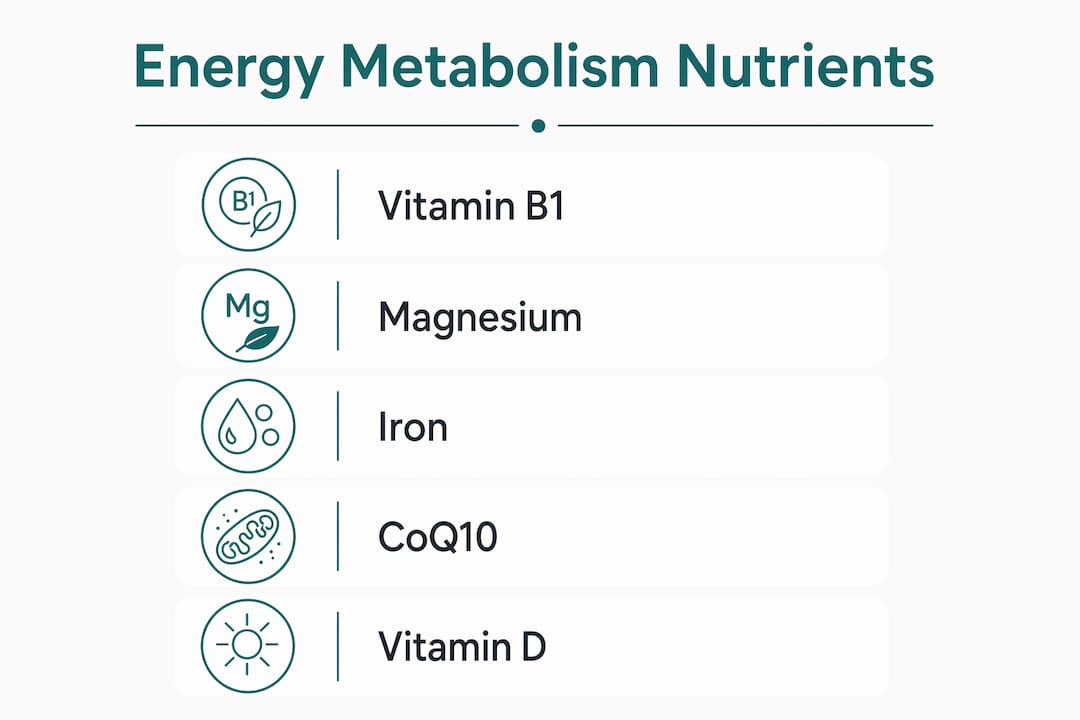
| Nutrient | Role in energy metabolism |
|---|---|
| Vitamin B1 (thiamine) | Converts carbohydrates into acetyl-CoA for the Citric Acid Cycle |
| Vitamin B2 (riboflavin) | Carries electrons in the Electron Transport Chain |
| Vitamin B3 (niacin) | Forms NAD+, the primary electron carrier in cellular respiration |
| Vitamin B5 (pantothenic acid) | Component of Coenzyme A, essential for fat and carbohydrate metabolism |
| Vitamin B12 | Supports red blood cell formation and neurological energy signalling |
| Magnesium | Activates ATP molecules and supports 300+ enzymatic reactions |
| Iron | Structural component of haemoglobin and mitochondrial proteins |
| CoQ10 | Transfers electrons between protein complexes in the Electron Transport Chain |
Deficiencies in these nutrients do not always produce obvious symptoms immediately. Sub-optimal levels reduce metabolic efficiency gradually, which is why many people experience a slow decline in energy rather than a sudden crash. The role of vitamins for energy is well documented, and the evidence consistently points to B vitamins and magnesium as the most commonly depleted in adults with fatigue.
Vitamin D also deserves attention. Vitamin D is involved in over 200 genes, including those that regulate mitochondrial function and immune response. Optimal serum levels for energy are between 40–60 ng/mL, and levels stabilise within 4–8 weeks after supplementation begins.
Pro Tip: Before purchasing any supplement, ask your GP for a blood panel that includes ferritin, B12, vitamin D, magnesium, and thyroid hormones. Supplementing without this data is guesswork that can create new imbalances.
What factors impair energy production?
Several lifestyle and physiological factors reduce the efficiency of ATP synthesis. Identifying which ones apply to you is the first step towards meaningful improvement.
Athletes and people under chronic stress have significantly higher demands for B vitamins and magnesium due to increased metabolic turnover. The body burns through these nutrients faster under physical or psychological load, and dietary intake rarely keeps pace. This explains why high-performing individuals often feel depleted despite eating well.
The most common factors that impair energy production include:
- Nutrient deficiencies: Iron, B12, vitamin D, and magnesium are the most frequently identified in people with persistent fatigue.
- Poor sleep: Restorative sleep is when mitochondria repair themselves. Disrupted sleep reduces this recovery window and impairs metabolic function.
- Chronic stress: Elevated cortisol increases the metabolic demand for magnesium and B vitamins, depleting reserves faster than they are replenished.
- Ageing: Mitochondrial efficiency declines with age. Understanding how ageing affects metabolism is particularly relevant for adults over 40 who notice a gradual drop in stamina.
- Sedentary behaviour: Physical inactivity reduces mitochondrial density in muscle cells, which directly limits energy capacity.
Fatigue is a warning signal indicating metabolic system stress, but it does not specify which nutrient is deficient. This is a critical distinction. Treating fatigue with a broad-spectrum supplement without testing first often fails to address the actual bottleneck.
Pro Tip: If you have been fatigued for more than four weeks, request a comprehensive blood test that includes ferritin, thyroid-stimulating hormone (TSH), and inflammatory markers alongside standard nutrient panels. This rules out underlying conditions before you begin any supplementation.
How to optimise energy support through nutrition, lifestyle, and supplements
Practical energy support combines dietary choices, physical habits, and targeted supplementation. None of these three elements works as well in isolation as they do together.
-
Prioritise a nutrient-dense diet. Focus on whole foods rich in B vitamins, magnesium, and iron. Leafy greens, legumes, whole grains, eggs, and lean meat cover most of the key micronutrients. Processed foods displace these nutrients without providing the cofactors needed for ATP synthesis.
-
Exercise regularly, with a focus on resistance and aerobic training. Exercise increases mitochondrial efficiency and stimulates the growth of new mitochondria in muscle cells. Even moderate aerobic activity performed three to four times per week produces measurable improvements in cellular energy capacity over weeks.
-
Protect your sleep. Aim for 7–9 hours of uninterrupted sleep. Magnesium glycinate is one of the better-studied supplements for improving sleep quality, and magnesium can improve sleep within days of correcting a deficiency.
-
Manage stress actively. Chronic stress depletes magnesium and B vitamins faster than diet can replace them. Structured stress management, whether through breathwork, regular rest periods, or physical activity, reduces this metabolic drain.
-
Supplement based on test results, not trends. Official guidelines recommend treating iron, B12, vitamin D, and folic acid deficiencies as the first steps in addressing fatigue-related conditions. Supplements support energy metabolism but are not cures for complex fatigue syndromes. Nutrient restoration takes time: iron stores take 3–6 months to rebuild, while vitamin D levels stabilise in 4–8 weeks.
The evidence behind supplement choices after 50 shows that targeted, test-guided supplementation consistently outperforms broad-spectrum approaches in adults with age-related energy decline.
Key takeaways
Effective energy support requires addressing the specific nutrient deficiencies and lifestyle factors that impair mitochondrial ATP production, not simply adding supplements.
| Point | Details |
|---|---|
| Test before supplementing | Blood panels for ferritin, B12, vitamin D, and magnesium identify the actual deficiency. |
| Micronutrients drive ATP synthesis | B vitamins, magnesium, iron, and CoQ10 are cofactors in the Citric Acid Cycle and Electron Transport Chain. |
| Lifestyle shapes mitochondrial health | Regular exercise increases mitochondrial density; poor sleep and chronic stress reduce it. |
| Nutrient restoration takes weeks to months | Iron stores rebuild over 3–6 months; vitamin D stabilises in 4–8 weeks after supplementation. |
| Fatigue is a signal, not a diagnosis | Persistent fatigue indicates metabolic stress but does not identify which nutrient is depleted. |
Why I think most people approach energy support the wrong way
The most common mistake I see is people reaching for a supplement before they have any idea what their body actually needs. Fatigue is a symptom, not a diagnosis. Treating it with a generic multivitamin or an energy formula without testing first is the nutritional equivalent of taking antibiotics for a virus. It might do something, but it is unlikely to fix the actual problem.
What I have observed consistently is that the people who see real, lasting improvements in energy are those who go through a proper diagnostic process first. They find out whether their ferritin is low, whether their vitamin D is in the functional range, whether their thyroid is performing well. Then they address those specific gaps with targeted nutrients at therapeutic doses, not maintenance doses.
The other thing worth saying plainly: improvement is slow. Magnesium might help your sleep within a week. But if your iron stores are depleted, you will not feel meaningfully better for three to six months. That timeline frustrates people, and it leads them to abandon a protocol that was actually working. Patience is not a soft recommendation here. It is a clinical reality.
The best energy support plan is personal. It accounts for your age, your stress load, your diet, your sleep, and your test results. A one-size-fits-all approach does not fail occasionally. It fails most of the time.
— Jord
Vivetus Energy & Vitality: nutritional support grounded in science
For those who have done the groundwork and are ready to support their energy metabolism with targeted nutrition, Vivetus offers the Energy & Vitality bundle, a product designed around the micronutrients most relevant to mitochondrial function and ATP production.

The bundle is suited to adults who want to address nutritional gaps identified through testing, particularly those related to B vitamins, magnesium, and CoQ10. Vivetus formulates its products with scientific evidence in mind, making it a practical option for health-conscious individuals who take a considered approach to supplementation. Free shipping applies to orders over €50. Visit the Energy & Vitality bundle page for full product details and ingredient information.
FAQ
What is energy support in nutrition?
Energy support in nutrition refers to the process of providing the body with the micronutrients and macronutrients needed for efficient ATP production in mitochondria. It includes dietary choices, lifestyle habits, and targeted supplementation based on individual deficiencies.
Which vitamins are most important for energy metabolism?
B vitamins (particularly B1, B2, B3, B5, and B12), magnesium, iron, and CoQ10 are the most critical nutrients for mitochondrial energy production. Deficiencies in any of these create bottlenecks in ATP synthesis.
How long does it take to feel the effects of energy support supplements?
The timeline varies by nutrient. Magnesium can improve sleep quality within days, vitamin D levels stabilise in 4–8 weeks, and iron stores take 3–6 months to fully rebuild after depletion.
Should I take energy supplements without a blood test?
Supplementing without a blood test risks missing the actual deficiency and potentially creating new nutrient imbalances. A panel covering ferritin, B12, vitamin D, magnesium, and thyroid hormones is the recommended starting point.
Does exercise improve energy levels?
Yes. Regular aerobic and resistance exercise increases mitochondrial density and efficiency in muscle cells, which directly improves the body’s capacity to produce and sustain energy over time.