

Berberine for Cholesterol: 9–19 mg/dL LDL Drop, but Watch Interactions
Berberine produces modest but measurable falls in total cholesterol and LDL in clinical trials, typically in the range of a few percentage points rather than a dramatic drop. The evidence is consistent enough across trials to take seriously, though study quality varies and effects are smaller than statins deliver. The real caveat isn’t efficacy, it’s interactions. Berberine can alter how the body handles statins and metformin, so anyone on prescription medicine should talk to a clinician before starting.
TL;DR:
- Berberine typically lowers total cholesterol by about 12 to 17 mg/dL and LDL by 9 to 19 mg/dL, with larger effects seen when combined with other supplements.
- Most clinical benefits appear after 8 to 12 weeks of taking 500 mg twice daily, but the reductions are modest and unlikely to replace statins for high-risk patients.
- Common side effects are mild gastrointestinal issues, but significant risks mainly involve interactions with statins, metformin, and other medications affecting liver enzymes and transporters.
- People with mild to moderate dyslipidemia or early metabolic syndrome are the best candidates, while those with liver disease, pregnancy, or on multiple prescriptions should consult a doctor first.
- Proper monitoring and medical advice are vital, especially for those on prescribed lipid or blood sugar medications, due to potential interaction risks.
Table of Contents
- Clinical evidence: what meta-analyses and trials actually show
- How berberine works: AMPK, PCSK9, and gut cholesterol handling
- What dose and timeline should you expect results from?
- Side effects, safety signals, and medicine interactions to watch
- Who is likely to benefit, and who should see a clinician first?
- Vivetus on the evidence: a cautious, monitored approach
- Energy & Vitality bundle: a tested option for a supervised trial
- Sources
Clinical evidence: what meta-analyses and trials actually show
The strongest single data point comes from a mechanistic randomised controlled trial using 500 mg of berberine twice daily. That’s a real effect, not noise, but it’s also not a number that rewrites someone’s cardiovascular risk overnight.
Pooled data tells a similar story at a larger scale. A systematic review and meta-analysis covering multiple RCTs found berberine and berberine-combination products significantly reduced total cholesterol, LDL, and triglycerides against control. Reported reductions cluster in a modest range for total cholesterol, LDL, and triglycerides, though the spread between studies is wide.
The numbers, at a glance:
- Total cholesterol: roughly −0.39 mmol/L in the mechanistic RCT; 12 to 17 mg/dL in pooled analyses
- LDL cholesterol: 9 to 19 mg/dL reduction across meta-analyses
- Triglycerides: 17 to 19 mg/dL reduction across meta-analyses
- Larger effects appear when berberine is paired with red yeast rice or silymarin rather than used alone
That last point matters for interpretation. Much of the strongest headline data comes from combination products, not berberine in isolation, which inflates how impressive the “berberine effect” looks in casual summaries. A separate systematic review and meta-analysis on dyslipidaemia treatment confirms the direction of effect but flags substantial heterogeneity between trials, differences in dose, duration, formulation, and population that make it hard to state one universal number. Long-term outcome data, the kind that tracks heart attacks or strokes rather than lipid panels, remains thin.
How berberine works: AMPK, PCSK9, and gut cholesterol handling
Berberine’s lipid effects trace back to a handful of overlapping pathways, distinct from how statins operate. Statins block an enzyme in cholesterol synthesis directly; berberine works more indirectly, through cellular signalling and gut chemistry.
- AMPK activation. Berberine switches on AMP-activated protein kinase, a cellular energy sensor that dials down lipid synthesis in the liver and pushes cells towards burning fatty acids instead of storing them.
- PCSK9 modulation. Some research suggests berberine reduces expression of PCSK9, a protein that normally marks LDL receptors for breakdown. Less PCSK9 activity means more LDL receptors stay on liver cell surfaces, clearing LDL from the blood more efficiently.
- Gut-level effects. Berberine appears to reduce intestinal cholesterol absorption and increase faecal cholesterol excretion, meaning less dietary cholesterol makes it into circulation in the first place.
None of these mechanisms is as forceful as statin inhibition of HMG-CoA reductase, which is a large part of why the clinical numbers stay modest rather than dramatic. Readers curious about the fuller mechanism behind berberine’s metabolic effects can find more detail on how it links blood sugar and lipid handling together.
What dose and timeline should you expect results from?
Trial protocols are fairly consistent, which makes planning a supervised trial straightforward.
- Typical dose: 500 mg taken twice daily, totalling roughly 1 g per day, is the dose used in the mechanistic RCT and echoed across dose–response analyses as the point where lipid benefits become reliably detectable.
- Timeline: Measurable changes in total cholesterol and LDL generally appear between 8 and 12 weeks. Glycaemic outcomes sometimes need longer, closer to the higher end of that window or beyond.
- Monitoring: A sensible approach is a baseline lipid panel before starting, a recheck at 8 to 12 weeks, and a simple symptom diary noting any digestive changes.
- Magnitude: “Modest” in clinical terms means a total cholesterol drop in the region of −0.39 mmol/L, comparable to roughly 15 mg/dL. That’s meaningful over years but won’t replace a statin for someone at high cardiovascular risk.
Pro Tip: Book your follow-up blood test before you start the supplement, not after. Setting the 8 to 12 week recheck date in advance makes it far more likely you’ll actually track whether it’s working, rather than guessing months later.
Side effects, safety signals, and medicine interactions to watch
Gastrointestinal upset is the most consistently reported issue: nausea, diarrhoea, and constipation feature across multiple trials, usually mild and dose-related. Most people tolerate 1 g per day without stopping treatment.
The more consequential risk sits with interactions rather than side effects felt directly.
- Berberine inhibits CYP3A4, an enzyme that metabolises many statins, which can raise statin blood levels unpredictably.
- It also affects OCT transporters involved in how the body processes metformin, potentially altering blood sugar control in people managing diabetes.
- Anticoagulants and immunosuppressants carry similar transporter-based interaction risks worth flagging to a prescriber.
- A draft regulatory safety opinion has raised genotoxicity signals in experimental studies and noted that repeated-dose safety data remains limited, particularly for vulnerable groups.
If severe symptoms develop, stop the supplement and seek medical advice. Berberine is not recommended during pregnancy or breastfeeding, and anyone taking multiple prescription medicines should check with their prescriber before adding it. Vivetus covers this in more detail in its guide to reducing berberine side effects.
Who is likely to benefit, and who should see a clinician first?
Adults with mild to moderate dyslipidaemia, or those managing early metabolic syndrome, are the most plausible candidates for a supervised berberine trial. It fits as an adjunct alongside diet and exercise changes, not as a replacement for prescribed lipid therapy in anyone at high cardiovascular risk.
- Good fit: mild to moderate cholesterol elevation, metabolic syndrome features, or a wish for adjunctive support alongside lifestyle change.
- Poor fit without supervision: pregnancy, breastfeeding, existing liver disease, or polypharmacy involving statins, metformin, or anticoagulants.
- Anyone already on prescribed lipid medication should treat berberine as a discussion point with their clinician, not a substitute.
Vivetus on the evidence: a cautious, monitored approach
Vivetus reads this evidence as supportive of berberine as a well-defined adjunct, not a standalone fix for high cholesterol. The mechanistic data is genuinely interesting; the safety data demands respect.
The number that matters most isn’t the percentage drop in a headline. It’s whether someone has checked for interactions with their existing medication before day one. Berberine rewards patience and monitoring, not shortcuts.
Vivetus supports that approach with published dosing guidance and side-effect information, and consistently recommends checking with a prescriber before combining berberine with statins, metformin, or anticoagulants.
— Jord
Energy & Vitality bundle: a tested option for a supervised trial
If a supervised berberine trial makes sense for your situation, sourcing a tested, purity-checked product matters as much as the dose itself. The 💪 Energy & Vitality bundel pairs berberine with complementary vitality-focused ingredients from Vivetus’s vegan, clinically-backed range, giving readers who want a broader metabolic and energy-support approach a single, tested starting point rather than piecing together separate products.
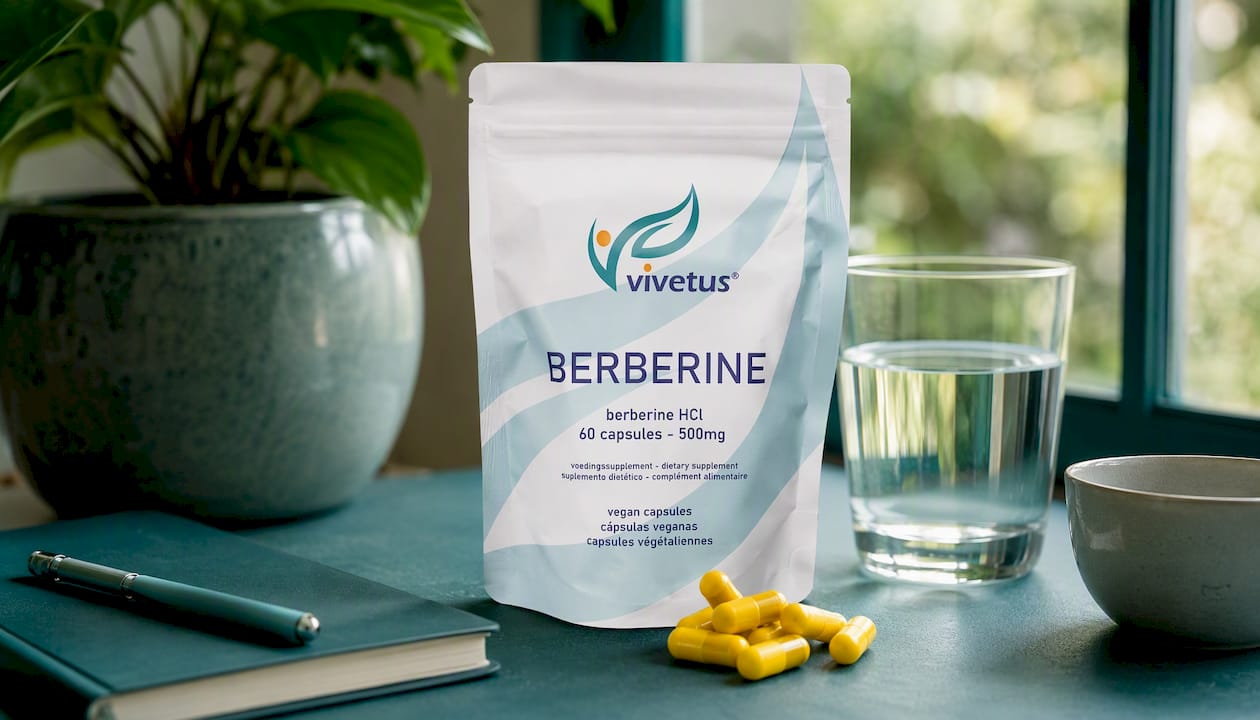
All products are tested for purity, and free shipping is available on orders over a certain amount, with subscription options offered for those who prefer regular deliveries without manual reordering. Before starting, read the Vivetus guide to 1.0 g/day berberine dosing and check any prescription medicines against the interaction notes above. If you’re currently taking a statin, metformin, or anticoagulant, speak to your prescriber first, then browse the Energy & Vitality bundel to see current pricing and subscription terms.
Sources
- Effect of Berberine on Cardiovascular Disease Risk Factors: A Mechanistic Randomized Controlled Trial
- Impact of Berberine or Berberine Combination Products on Lipoprotein, Triglyceride and Biological Safety Marker Concentrations in Patients with Hyperlipidemia: A Systematic Review and Meta-Analysis
- Dose-response systematic review on berberine supplementation and CVD risk factors
- Gov