

8–12 Weeks of Trial Data: Berberine for Adults With Insulin Resistance
Berberine improves insulin resistance in the short term, with meta-analyses showing modest-to-moderate reductions in HOMA-IR over 8 to 12 weeks. The evidence comes mostly from short trials, some using berberine alongside standard glucose-lowering drugs. It interacts with several medicines, so anyone on prescription treatment for blood sugar needs medical supervision before starting it.
TL;DR:
- Berberine generally reduces HOMA-IR by about 0.71 to 0.85 over 8 to 12 weeks, showing modest but meaningful improvements in insulin resistance.
- Most trials involved doses around 1,000 to 1,500 mg daily, split across meals, with better tolerance when doses are divided rather than taken all at once.
- It interacts with CYP450 enzymes, which can heighten risks for people on prescription medications like blood sugar or immunosuppressant drugs, requiring medical oversight.
- The strongest evidence applies to adults with established type 2 diabetes or significant insulin resistance, mainly tested over short periods without long-term safety data.
- Berberine’s effects are comparable to short-term metformin in some studies but do not indicate long-term equivalence or replacement for prescription drugs.
Table of Contents
- What clinical trials and meta-analyses say about berberine insulin resistance
- How berberine affects insulin sensitivity at a cellular level
- Berberine dosing, formulations and how long it takes to work
- Berberine side effects and drug interactions to check first
- Who berberine’s evidence actually supports, and who should be cautious
- Vivetus berberine and longevity bundles matched to the research
- The verdict on berberine and insulin resistance
- Why the “natural equals safer” framing around berberine misses the point
- Where Vivetus fits if you’re ready to try berberine
- Sources
What clinical trials and meta-analyses say about berberine insulin resistance
Pooled trial data give a consistent, if modest, picture. Across randomised controlled trials, berberine lowers fasting glucose, HbA1c, fasting insulin, and HOMA-IR, the standard marker used to estimate insulin resistance from a fasting blood sample. The effect sizes are real but not dramatic, and they cluster tightly enough across independent analyses to suggest the signal is genuine rather than a statistical fluke.
Statistic callout: A systematic review and meta-analysis of randomised controlled trials found HOMA-IR reductions typically between −0.71 and −0.85, with one pooled estimate reporting a mean difference of −0.85 alongside a fasting glucose drop of 0.52 mmol/L and an HbA1c reduction of roughly 4.48 mmol/mol (about −0.41%).
Those numbers matter because HOMA-IR is not an intuitive scale. A shift of −0.85 in a population with baseline insulin resistance in the 3 to 5 range represents a meaningful proportional improvement, comparable in magnitude to what some lifestyle interventions achieve over a similar timeframe. The same pooled analysis also recorded a two-hour post-prandial glucose reduction of about 1.81 mmol/L, which speaks to how the body handles a glucose load after eating, not just fasting values.
A few patterns are worth flagging before anyone reads too much into the headline figures:
- Most trials run for several weeks, describing short-term changes rather than sustained long-term control.
- A large share of the underlying studies were conducted in Asian cohorts, which limits how confidently the results generalise to other populations.
- Sample sizes in individual trials are often modest, which is why meta-analyses pooling several studies carry more weight than any single trial.
- Some trials tested berberine alone; others tested it as an add-on to existing glucose-lowering therapy, and the two designs are not interchangeable.
The comparison with metformin is where things get interesting. An early trial in patients with type 2 diabetes found berberine produced glycaemic improvements broadly comparable to metformin over the trial period, and later work has reinforced that short-term glucose and lipid benefits hold up against standard therapy in some head-to-head designs. That does not make berberine a substitute for metformin. It means the short-term glycaemic signal is strong enough that researchers keep testing it against a first-line drug, which is a different claim to “as effective as metformin long-term.” No trial has tracked berberine against GLP-1 receptor agonists for the multi-year cardiovascular and weight outcomes those drugs are increasingly prescribed for, so any comparison there stays speculative.
A broader systematic review of berberine’s effects on metabolic syndrome adds another layer: benefits extended beyond glucose markers to triglycerides and BMI in several trials, suggesting berberine’s action is not narrowly confined to insulin signalling.
How berberine affects insulin sensitivity at a cellular level
The mechanism explains why the clinical numbers look the way they do. Berberine’s primary action is activating AMP-activated protein kinase, or AMPK, an enzyme often described as the cell’s energy sensor. When AMPK switches on, it shifts a cell from storing energy to using it, which has several downstream effects relevant to insulin sensitivity.
- AMPK activation promotes translocation of GLUT4 transporters to the cell surface, allowing muscle and fat cells to pull glucose out of the bloodstream without needing as much insulin to do it.
- It suppresses hepatic gluconeogenesis, the liver’s process of manufacturing new glucose, which is often overactive in insulin-resistant states and drives high fasting glucose readings.
- It shifts cellular metabolism toward fatty acid oxidation over storage, which may partly explain the modest weight and lipid changes seen alongside glycaemic improvement.
Beyond AMPK, preclinical research points to secondary mechanisms: berberine appears to influence insulin receptor expression in some tissue models, has measurable anti-inflammatory effects in cell and animal studies, and modulates lipid metabolism pathways connected to fat accumulation in the liver. These findings are worth knowing but worth qualifying carefully. Much of the receptor-expression and anti-inflammatory data comes from cell cultures and animal models, not human trials. The AMPK activation pathway itself has been demonstrated more directly, but the leap from “AMPK is activated in a rat’s muscle tissue” to “your HOMA-IR drops by 0.85” involves a lot of biology that human trials only measure indirectly, through blood markers rather than tissue sampling.
Pro Tip: Think of AMPK as a dimmer switch, not an on/off button. Berberine turns it up rather than flooding the system, which is one reason its glycaemic effects look more like a gradual metabolic nudge than the sharper drop you’d see with an injectable insulin sensitiser.
That gradualism is precisely why the dosing schedule and the weeks-long timeline in trials matter as much as the mechanism itself.
Berberine dosing, formulations and how long it takes to work
Trial regimens are fairly consistent, which makes it easier to translate research into a practical starting point.
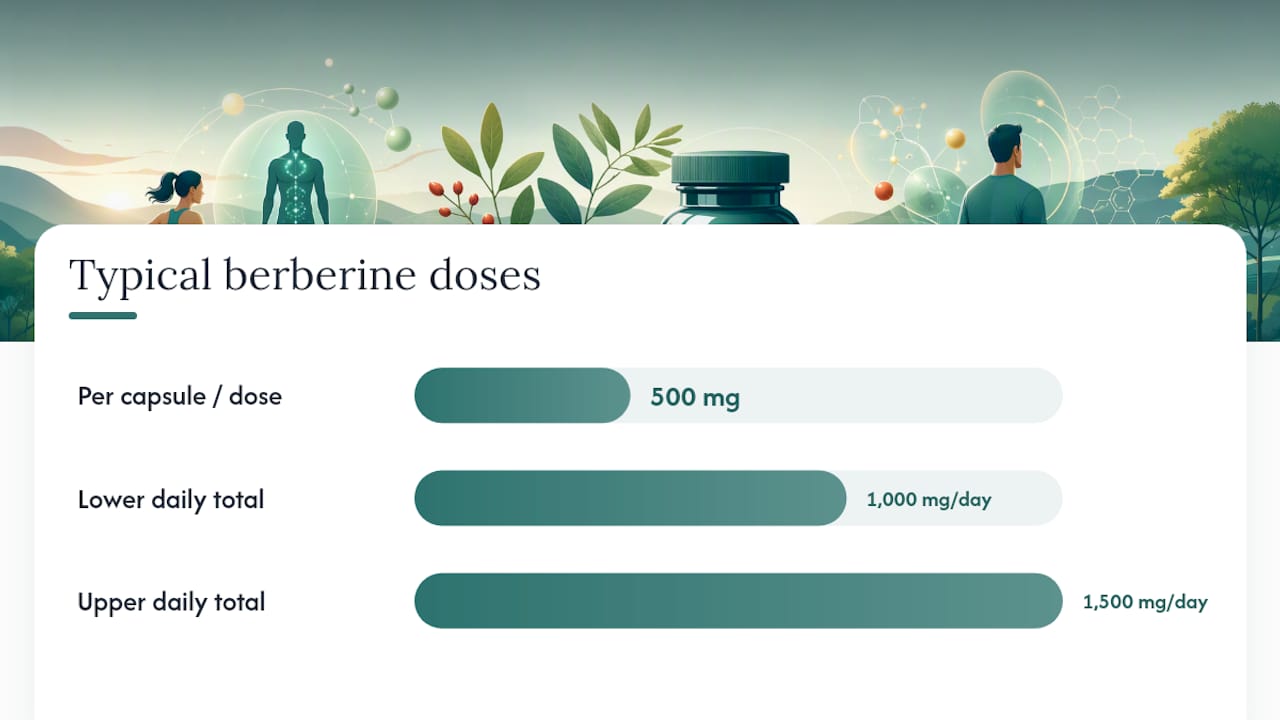
- Typical trial dose: Most studies use 500 mg taken two or three times daily, totalling roughly 1,000 to 1,500 mg per day, though some protocols cap around 1 g daily.
- Split dosing matters: Trials that divide the daily total across two or three meals report better tolerance than single large doses, largely because gastrointestinal upset scales with the size of each individual dose.
- Timing with food: Taking berberine alongside meals, particularly those containing carbohydrate, aligns with how the trials were structured and may help smooth out the digestive adjustment period.
- Bioavailability is a genuine limitation: Berberine is poorly absorbed on its own, which is why some formulations use enteric coatings or complexed forms designed to improve how much reaches the bloodstream rather than passing through unabsorbed.
- Expected timeline: Trials that report measurable HOMA-IR and glucose improvements generally do so at the 8 to 12 week mark, not within days. Shorter windows in some studies show smaller or inconsistent changes.
- What to monitor: Fasting glucose can be checked within weeks, but HbA1c, which reflects average blood sugar over roughly three months, needs that full window to show a meaningful shift.
Vivetus’s berberine 500 mg capsules are formulated at the same per-capsule strength used in most published trials, meaning two capsules taken with meals broadly mirrors the regimens the meta-analyses were built on. Anyone mapping a personal dose against the research should read the dosing breakdown for reaching roughly 1 g a day before adjusting anything.
The bioavailability question deserves one more note. Low absorption is not necessarily a flaw to be engineered away entirely. It is partly why the split-dose, multiple-times-daily pattern exists in the trial literature in the first place: smaller, more frequent doses work with the absorption limitation rather than against it.
Berberine side effects and drug interactions to check first
Gastrointestinal symptoms dominate the side-effect profile. Nausea, constipation, and abdominal discomfort appear consistently across trials, and they are dose dependent rather than random.
Statistic callout: Short-term trials commonly report gastrointestinal side effects as the leading complaint, with symptoms tending to ease when the daily total is split into smaller, more frequent doses rather than taken all at once.
The more clinically important issue sits below the surface, in how berberine is processed by the body. It inhibits several cytochrome P450 (CYP450) enzymes, the enzyme family responsible for metabolising a large share of prescription drugs. When berberine slows down that enzyme system, other medicines cleared through the same pathway can build up to higher-than-expected levels.
- People taking metformin, sulfonylureas, or insulin face a real risk of additive blood-sugar lowering, which can tip into hypoglycaemia if berberine is added without adjusting monitoring or doses.
- Transplant recipients on immunosuppressants metabolised through CYP450 pathways are considered high risk, since altered drug levels can affect organ rejection risk.
- Anyone on a narrow-therapeutic-index medicine, where the difference between an effective dose and a harmful one is small, should treat berberine as a variable that needs clinical oversight, not a neutral addition.
- Pregnancy is considered a contraindication due to insufficient safety data.
Clinical commentary from UCLA Health makes a point worth repeating directly: berberine is biologically active in the same pathways as several prescription drugs, and being plant-derived does not make it inherently gentler on the body. That framing matters more than any single statistic in this section.
Three practical steps reduce risk considerably. Review every current medicine with a pharmacist or doctor before adding berberine, particularly anything for blood sugar, blood pressure, or immune suppression. Start at the lower end of the trial dose range rather than jumping straight to 1.5 g daily. And if you’re already on glucose-lowering medication, monitor blood sugar more closely in the first fortnight, since that’s when an interaction is most likely to show up as unexpected lows.
Who berberine’s evidence actually supports, and who should be cautious
The evidence base is strongest for a fairly specific group: adults with established type 2 diabetes or clearly measurable insulin resistance, tested over trial windows of roughly two to three months. Subgroup data from the pooled analyses suggests effects may run somewhat larger in women and in people who already have a diabetes diagnosis, compared with those with only mild metabolic changes, though this remains a secondary finding rather than the primary result of most trials.
Three gaps deserve honesty rather than glossing over:
- Trial duration is short. No widely cited study has followed participants for years, so nothing here speaks to long-term cardiovascular outcomes, sustained weight change, or whether the glycaemic benefit holds or fades with continued use.
- Population skew. Many of the underlying trials were conducted in Asian cohorts, and results in other populations, including most people shopping for supplements in Europe, have not been tested at the same scale.
- Safety data beyond a few months is limited. Interaction risks and side-effect patterns are documented well for the 8 to 12 week trial window, less so for continuous year-round use.
Who reasonably fits a trial of berberine? Adults with mild-to-moderate insulin resistance who are not on complex medication regimens, and who would prefer a researched nutraceutical adjunct alongside diet and activity changes, sit closest to the population the trials actually studied. Anyone on multiple prescription medicines, anyone pregnant, and anyone with a transplant history should treat berberine as something to discuss with a clinician first, not something to self-start.
Vivetus berberine and longevity bundles matched to the research
Vivetus formulates its berberine capsules at 500 mg per capsule, the same unit dose used across the majority of the trials cited above. Reaching a trial-equivalent total of roughly 1 g daily means two capsules, generally split across meals rather than taken together, in line with the dosing pattern that shows up repeatedly in the research.
For readers weighing side-effect management against dosing goals, Vivetus’s own guidance on reducing berberine side effects walks through splitting strategies and timing with food, and the explainer on how berberine works covers the AMPK mechanism in more detail for anyone who wants the fuller biological picture before buying.
Berberine rarely sits in isolation for people focused on healthy ageing and metabolic health more broadly. Vivetus’s product range reflects that:
- The 🔬 Longevity Core bundel combines foundational longevity ingredients for readers who want a broader metabolic and cellular-health base alongside targeted berberine use.
- The 🔬 Longevity Plus bundel extends that stack further for readers prioritising a wider spread of research-backed compounds.
- Vivetus® Resveratrol, at 500 mg per capsule, is frequently paired with berberine by readers interested in the overlapping AMPK and metabolic pathways both compounds influence, though the two have distinct evidence bases and shouldn’t be conflated.
The company ships products internationally and has subscription options for those planning to use berberine over an 8 to 12 week period, rather than buying single bottles.
The verdict on berberine and insulin resistance
The evidence supports a real but bounded claim: berberine produces modest-to-moderate improvements in insulin resistance over 8 to 12 weeks, backed by consistent HOMA-IR reductions across multiple meta-analyses. It is not a replacement for prescribed diabetes medication, and it is not risk-free simply because it is derived from a plant.
Before starting, work through a short checklist. Talk to a clinician if you take any prescription medicine, particularly for blood sugar, blood pressure, or immune suppression. Review your current medication list for CYP450 overlap. Start at a lower dose, split across meals, rather than the highest trial dose. Track fasting glucose early and plan an HbA1c check around the 12-week mark, which is where the trial data actually starts to speak. If you’re ready to match a dose to the research, Vivetus’s berberine product page lays out the capsule strength and format used to reach that trial-equivalent total.
Why the “natural equals safer” framing around berberine misses the point
The conventional advice on berberine tends to split into two unhelpful camps: breathless enthusiasm that treats it as a plant-based Ozempic, or blanket dismissal because “supplements aren’t regulated like drugs.” Both miss what the trial data actually shows, which is a compound with a real, mechanistically plausible, modestly sized effect that behaves like a drug because it acts on the same enzyme pathways as several drugs.
The number that gets underrated is the trial duration, not the effect size. A HOMA-IR reduction of −0.85 sounds precise and reassuring, but every one of those figures comes from an 8 to 12 week window. Nobody has the long-term data to say what happens at year two or three, and that gap matters more than the exact decimal point on the reduction itself.
What should change in how people approach this is sequencing. Medication review comes before dose selection, not after. Most people research the “how much” question obsessively and treat the “what else am I taking” question as an afterthought, when the CYP450 interaction risk is arguably the more consequential variable for anyone already on glucose-lowering therapy.
— Jord
Where Vivetus fits if you’re ready to try berberine
The 500 mg berberine formulation strength matches that used in clinical trials, making dosing regimens easier to align with published research. The products are vegan and tested for purity, and subscription options correspond to the 8 to 12 week trial timeframe, avoiding repeated purchases of single bottles while monitoring HbA1c changes.
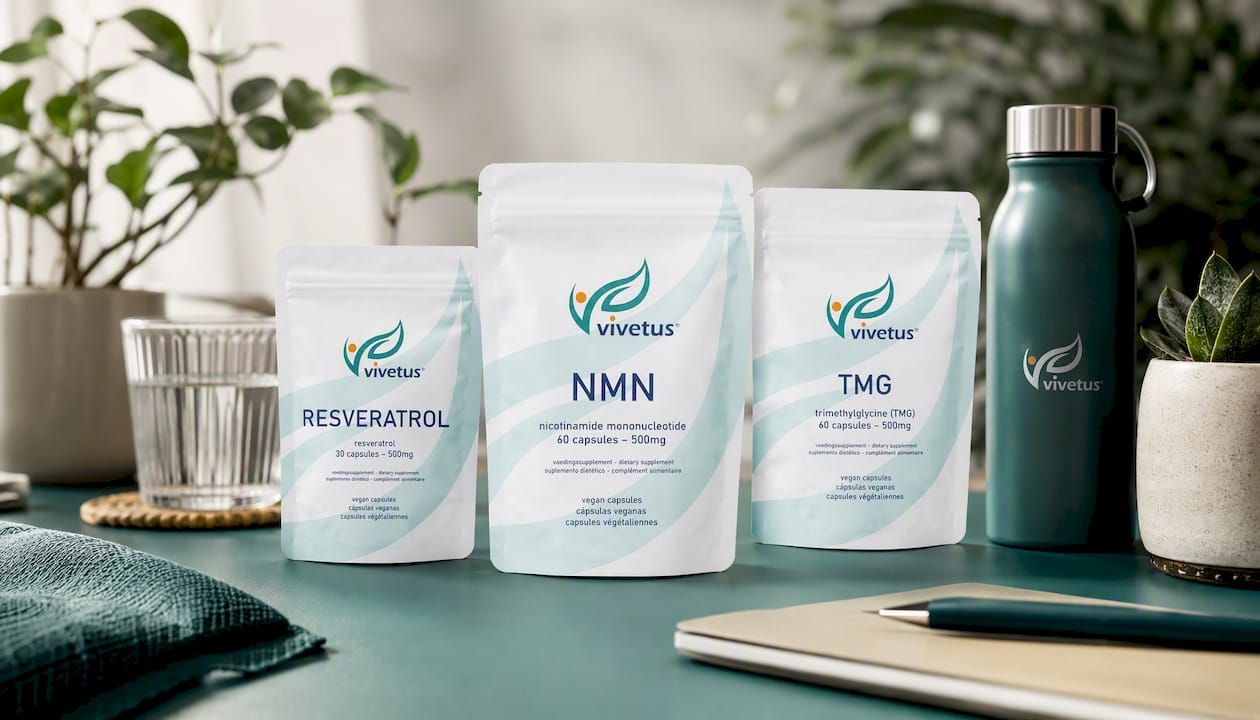
For readers already looking at broader metabolic or longevity support, the 🔬 Longevity Plus bundel pairs berberine-adjacent goals with other researched compounds, while Vivetus® Resveratrol is a common companion pick for those interested in overlapping AMPK pathways. If berberine alone is your starting point, visit the berberine product page to check current stock, capsule count, and subscription pricing before your next conversation with your clinician.
This article is general information, not a substitute for advice from a qualified doctor. Consult a qualified healthcare professional about your own circumstances before acting on anything here.