

Quercetin and hay fever: does the evidence actually hold up?
Quercetin can ease certain hay fever symptoms in short clinical trials, particularly when it’s delivered in higher-bioavailability forms such as phytosome or EMIQ. The clearest signal comes from a randomised, double-blind trial in which a dose of phytosomal quercetin daily over several weeks reduced eye itching, sneezing and nasal discharge compared with placebo. That’s a genuine result, though a modest one. Quercetin looks safe for most people over the short term, but it’s not a substitute for medical advice if you’re pregnant, have kidney disease, or take regular medication.
TL;DR:
- Higher-bioavailability forms like phytosome or EMIQ significantly improve quercetin’s absorption and effectiveness in reducing hay fever symptoms.
- Most evidence comes from small, short-term trials showing modest benefits after four weeks of 200 mg daily, but larger studies are needed for confirmation.
- Proper formulation and third-party testing are essential when choosing a supplement, with emphasis on bioavailability-enhancing technologies.
- Quercetin is generally safe over short periods but requires caution for pregnant women, people with kidney issues, or those on medication due to potential interactions.
- Starting treatment early before pollen season and maintaining existing medications improve its potential benefits as a supportive measure.
Table of Contents
- How quercetin works against allergic rhinitis
- What the clinical evidence shows so far
- Formulations and bioavailability: why ‘phytosome’ or EMIQ matters
- Safety, interactions and typical dosing used in trials
- How to use quercetin sensibly for hay fever
- Vivetus’s approach to quercetin and the evidence behind it
- Choosing a quercetin supplement: what to look for
- A realistic view on where quercetin fits
- Sources
How quercetin works against allergic rhinitis
Hay fever starts when your immune system misreads pollen as a threat and floods your nasal passages, eyes and airways with histamine. Quercetin’s proposed effect on this process happens at several points along that chain, not just at the final histamine release.
Research summarised in a review of quercetin’s therapeutic applications points to three mechanisms worth understanding:
- Mast cell stabilisation: quercetin appears to steady the membranes of mast cells and eosinophils, the immune cells that release histamine when they detect an allergen.
- Histamine control: by stabilising those membranes, quercetin can reduce how much histamine actually reaches your tissues, which is what drives the itching, sneezing and swelling.
- IgE and cytokine modulation: quercetin also seems to influence IgE-related signalling and pro-inflammatory cytokines such as IL-4 and IL-5, both implicated in the allergic cascade.
Quercetin’s antioxidant properties may add a secondary layer of support, dampening the oxidative stress that tends to accompany chronic allergic inflammation. None of this replaces antihistamine drugs, which block histamine receptors directly and far more forcefully. It does explain why quercetin is being studied as a complementary approach rather than a fringe idea.
What the clinical evidence shows so far
The strongest piece of evidence is a randomised, double-blind, placebo-controlled trial involving 66 adults with allergic symptoms. Participants took a dose of phytosomal quercetin daily over several weeks, and the results showed measurable improvement in three specific complaints: eye itching, sneezing, and nasal discharge.
200 mg daily for 4 weeks was enough to produce a statistically meaningful difference from placebo in that trial, one of the few controlled human studies to isolate quercetin’s effect on hay fever type symptoms specifically.
Other research fills in the picture without overturning it:
- A small controlled trial of EMIQ (enzymatically modified isoquercitrin), a more bioavailable relative of quercetin, found reduced ocular symptoms in people with Japanese cedar pollinosis after eight weeks of dosing.
- A systematic review of quercetin and allergic rhinitis found consistent reductions in oxidative stress markers and symptom improvements when quercetin was added to standard care, though it stopped short of calling the evidence definitive.
- Across this body of work, sample sizes have generally been small, and trial durations limited to a few weeks, meaning nobody has yet tracked quercetin through a full pollen season with hundreds of participants.
The honest summary is that quercetin has real, replicated signals in small trials, not the volume of evidence behind established antihistamines like cetirizine or loratadine. Systematic reviewers keep asking for larger studies, and that request hasn’t gone away.
Formulations and bioavailability: why ‘phytosome’ or EMIQ matters
Plain quercetin, the aglycone form sold in older-style supplements, absorbs poorly from the gut. Most of it passes through unused, which is likely why some early trials using standard quercetin produced disappointing results.
Two approaches change that:
- Phytosome technology binds quercetin to lecithin phospholipids, helping it cross the intestinal membrane more efficiently and raising plasma concentrations well above what plain quercetin achieves, according to formulation research from Indena.
- EMIQ modifies quercetin enzymatically into a more soluble form, which is the version tested in the Japanese cedar pollinosis trial mentioned above.
This is largely why the trials showing hay fever benefit used phytosomal or enzymatically modified quercetin rather than the cheaper standard powder still found on some supplement shelves.
Pro Tip: Check the label for “phytosome,” “EMIQ,” or a stated absorption-enhancing technology before buying. If a quercetin product doesn’t mention how it’s formulated, assume it’s the poorly absorbed standard form.
Some formulations pair quercetin with vitamin C, bromelain or papain, which practitioners commonly use to support absorption and add complementary anti-inflammatory action, as noted by Verywell Health. Our own guide on combining quercetin and vitamin C covers dosing considerations for that pairing.
Safety, interactions and typical dosing used in trials
Quercetin has a reasonably reassuring short-term safety profile. A dedicated safety review found supplemental quercetin was rarely linked to adverse effects across human intervention studies, though the same review flagged a real gap: nobody has properly studied what happens at high doses over long periods.
Data gap worth noting: safety reviews describe limited human evidence beyond 12 weeks of use and above roughly 1,000 mg daily, a threshold where a related safety analysis urges more caution and closer monitoring.
Before starting quercetin, be aware of the following:
- Quercetin can interact with drug-metabolising enzymes (the CYP family) and drug transporters, so it may alter how certain medications behave, particularly anticoagulants and some cardiovascular drugs.
- Pregnant or breastfeeding people should avoid supplementing without medical guidance, since safety data for these groups is thin.
- Anyone with existing kidney disease should speak to a doctor first, as quercetin is processed renally.
- The trial dose most consistently linked to symptom improvement is 200 mg of phytosomal quercetin daily, taken for around four weeks, not an indefinite high-dose regimen.
If you take any regular prescription medication, review it with a pharmacist or GP before adding quercetin. Vivetus sets out studied dosing ranges in more detail on its quercetin dosage guide.
How to use quercetin sensibly for hay fever
Timing and expectations matter more than most people assume.
- Start early, not mid-flare. The trials showing benefit ran for four to eight weeks, which suggests starting a course shortly before or at the very beginning of pollen season gives quercetin the best chance to build an effect.
- Don’t drop your existing treatment. If you already take a prescribed antihistamine or nasal spray, keep using it and treat quercetin as an addition, not a replacement, unless your clinician advises otherwise.
- Pair it with basic avoidance measures. Rinsing pollen from your nose and eyes, keeping windows closed on high-pollen days, and showering after being outdoors all reduce the allergen load quercetin has to work against.
- Know when to stop and ask for help. Seek medical advice if symptoms turn severe, if you’re pregnant, if you have kidney disease, or if you’re starting new medication that could interact with quercetin.
Vivetus’s approach to quercetin and the evidence behind it
Vivetus builds its supplement range, including quercetin, around published human trial data rather than marketing claims, which is why its product pages link directly to studied dosing ranges and safety considerations instead of vague wellness language. The brand’s quercetin dosage guide and its overview of quercetin’s evidence base both reflect the same trial data referenced throughout this article. Vivetus formulates for purity and third-party testing rather than relying on the cheapest, poorly absorbed aglycone form.
Choosing a quercetin supplement: what to look for
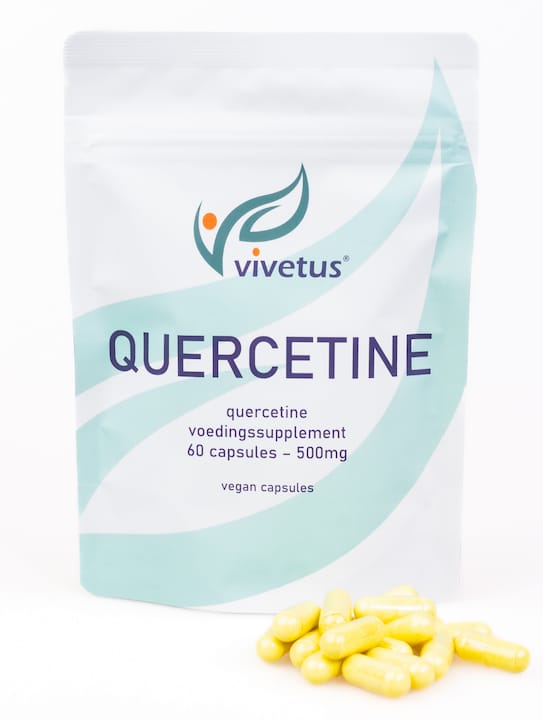
If you’re weighing up quercetin for hay fever this season, the formulation decides most of the outcome. Vivetus® Quercetine is supplied in 500mg capsules, 60 to a pack, designed to fit within the dosing ranges studied in the trials discussed above rather than an arbitrary round number.
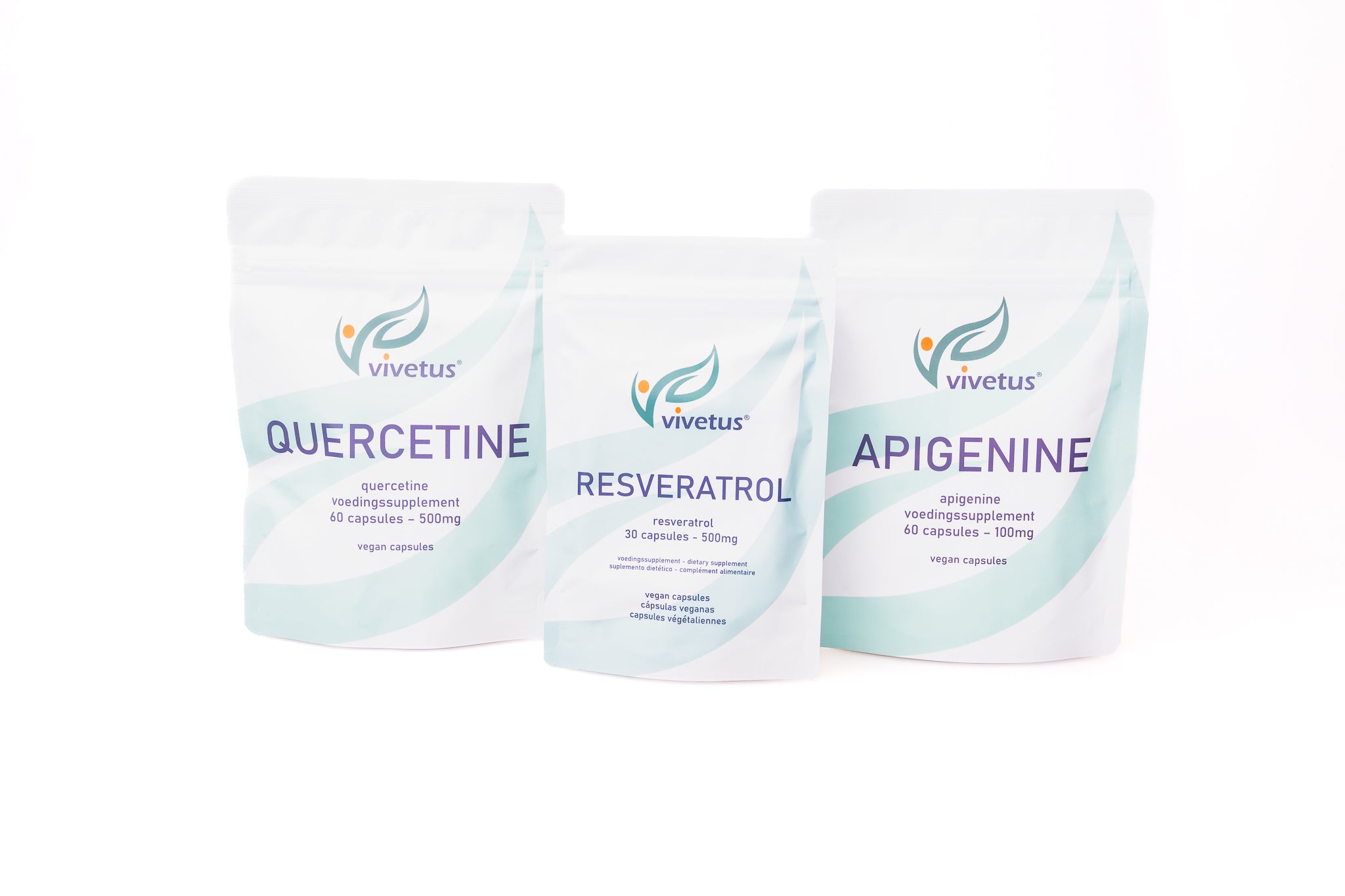
For readers dealing with hay fever alongside other inflammatory complaints, the Anti-inflammation bundel combines quercetin with complementary anti-inflammatory support in one package, which suits anyone who’d rather manage a single order than juggle several separate supplements.
When comparing any quercetin product, run through four checks: does the formulation address bioavailability (phytosome, EMIQ, or a stated absorption method) rather than relying on plain aglycone; is the product third-party tested for purity; does the label state a clear, trial-relevant dose rather than a vague “proprietary blend”; and is the ingredient list fully disclosed. Vivetus publishes all four on its quercetin product page, alongside vegan capsule details and dosing guidance drawn from the same research cited across this article. If you’re ready to start a short course ahead of pollen season, that product page is the place to check current stock and dosing options.
A realistic view on where quercetin fits
Quercetin sits in a useful but limited place in hay fever management. The trial evidence is real and reasonably consistent, yet it comes from small studies over a matter of weeks, not the decades of data behind conventional antihistamines. Treat it as a supportive option worth trying alongside proper medical care, not a replacement for it, and always check interactions with a clinician before combining it with existing prescriptions or if you fall into a higher-risk group.
— Jord
Sources
- Effects of repeated oral intake of a quercetin-containing supplement on allergic reaction: a randomized, placebo-controlled, double-blind parallel-group study
- Quercetin: a flavonoid with multiple potential therapeutic applications (review)
- Safety aspects of the use of quercetin as a dietary supplement
- Effect of enzymatically modified isoquercitrin, a flavonoid, on symptoms of Japanese cedar pollinosis: a randomized double-blind placebo-controlled trial
- The Efficacy of Quercetin in Attenuating Oxidative Stress and Clinical Symptoms in Allergic Rhinitis: A Systematic Review