

Senolytica Protocol: 2–3 Day Pulses, High Bioavailability and CelReset Bundle
A senolytica protocol, in consumer terms, means intermittent short pulses of over-the-counter flavonoids such as quercetin or fisetin rather than daily supplementation. The standard pattern is 2 to 3 high-dose days followed by weeks or months off, ideally alongside baseline bloodwork and clinician input. Evidence for OTC senolytic supplements remains limited, so treat the schedule below as a starting point for a conversation with a healthcare professional, not a fixed regimen.
TL;DR:
- The recommended pulse pattern involves using high-dose flavonoids for 2 to 3 days, followed by rest periods of several weeks to months, typically every three months.
- Baseline bloodwork and consultation with a healthcare professional are essential before starting, especially for those on medications or with liver disease, pregnancy, or active cancer treatments.
- Formulations like phytosome or liposomal greatly enhance absorption, and doses should be carefully adjusted based on individual tolerance and blood results.
- Efficacy of OTC flavonoids like quercetin and fisetin remains unproven in large human trials, and current protocols are based on theoretical extrapolations and early signals.
- Regular monitoring of blood markers and avoiding CYP3A4-interacting drugs during pulses are crucial to safe implementation of a senolytic protocol.
Table of Contents
- What is the senolytica protocol’s hit-and-run principle?
- A practical example protocol to discuss with your clinician
- Who should avoid senolytic pulsing, and what should you monitor?
- How do you choose a senolytic supplement with good absorption?
- How Vivetus supports a cautious senolytic approach
- What I’d actually tell a friend considering this
- Try a cautious, quality-checked senolytic option with Vivetus
- Sources
- FAQ
What is the senolytica protocol’s hit-and-run principle?
Senolytic compounds work on a “hit-and-run” basis. A short, high-intensity exposure triggers apoptosis in senescent cells, the damaged, non-dividing cells that accumulate with age and drive low-grade inflammation. Once those cells clear, the compound’s job is largely done. Senescent cells take weeks to re-accumulate, so there is little biological reason to dose daily, and doing so may simply raise the risk of side effects without adding benefit, according to research on the hit-and-run mechanism.
This is why nearly every serious senolytic protocol, whether academic or consumer-facing, is built around cycles rather than continuous use.
Common pulse patterns look like this:
- A pulse of 2 to 3 consecutive days at a higher dose than you would use for general antioxidant support.
- A rest period of several weeks to a few months before the next pulse.
- A conservative default cycle of once every 3 months, particularly for anyone new to senolytic supplementation.
Statistic callout: A 2024 pilot study testing dasatinib plus quercetin, and later dasatinib, quercetin and fisetin together, used intermittent 3 day pulses in some phases. It reported mixed epigenetic clock signals and tolerability concerns worth noting before assuming any protocol translates neatly to supplements, according to the Aging journal study.
That distinction matters for anyone reading OTC marketing copy. Most human senolytic trials pair a prescription drug, dasatinib, with quercetin. Standalone flavonoid-only regimens at senolytic-style doses are largely theoretical extrapolations from that combined approach. Fisetin on its own shows encouraging preclinical and early human signals, but pharmacokinetics and optimal dosing are still being worked out, according to a review of fisetin as a senotherapeutic. Anyone comparing the two flavonoids in more depth might find it useful to read this quercetin versus fisetin comparison before deciding which to try first.
A practical example protocol to discuss with your clinician
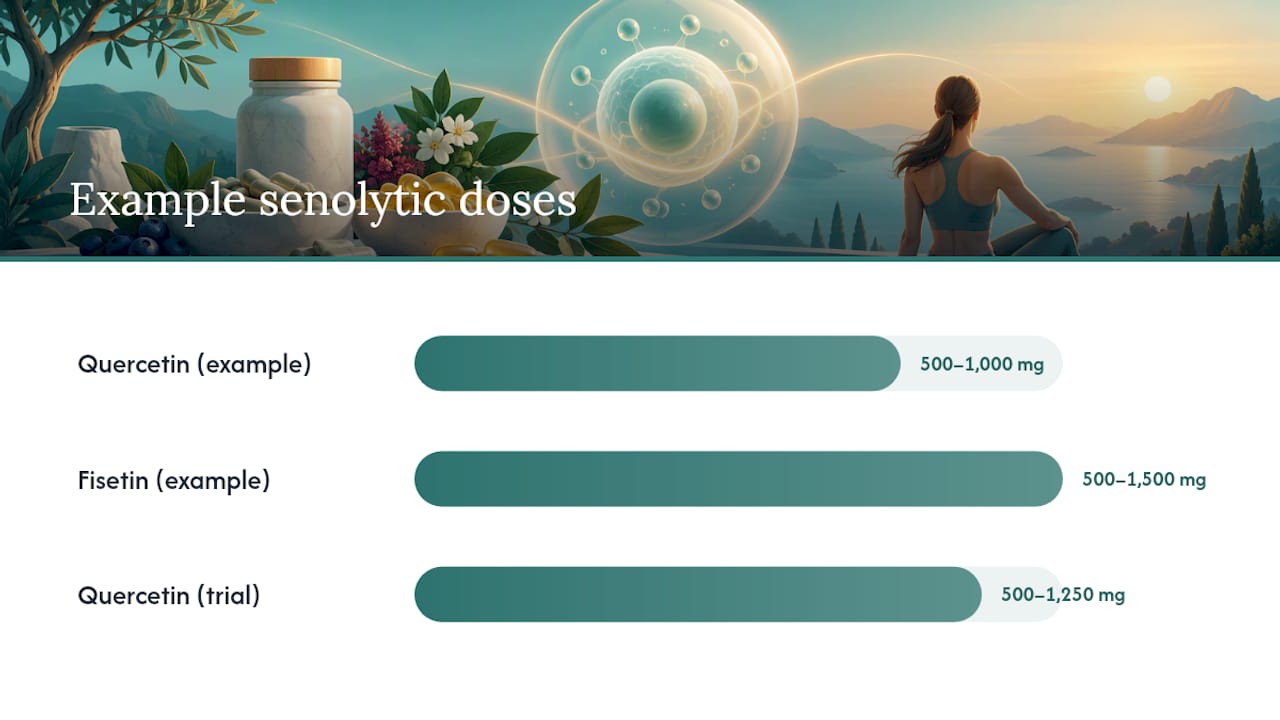
Trial doses of quercetin paired with dasatinib have ranged from 500mg to 1,250mg a day, while fisetin trial doses vary even more widely, from 500mg daily pilot regimens up to higher weight-based Phase II doses, according to a synoptic review of human trials. Because standalone OTC flavonoid regimens have not been validated at senolytic-style doses in large human trials, any numbers here should be treated as a cautious starting point rather than a proven formula.
A conservative example pulse might follow this structure:
- Day 1: Take your chosen flavonoid (quercetin around 500 to 1,000mg, or fisetin around 500 to 1,500mg, spread across one or two doses) with a fat-containing meal.
- Day 2: Repeat the same dose and timing, noting any digestive or skin reactions.
- Day 3 (optional): Repeat once more only if day 1 and 2 were well tolerated; sensitive users may prefer to stop at 2 days.
- Next 3 months: Rest completely before considering another pulse, adjusting the interval based on bloodwork and how you felt.
Before the first pulse, a few preparatory steps make the whole exercise safer and more informative:
- Get baseline bloodwork done, including a full blood count and liver function tests.
- Review current medications and supplements with a pharmacist or GP, particularly anything metabolised through the CYP3A4 pathway.
- Pause other CYP-interacting supplements for the duration of the pulse.
- Take the flavonoid dose alongside a meal containing some fat, which measurably improves absorption.
Readers weighing up dosing specifics for quercetin alongside other supplements may find this guide to quercetin and vitamin C a useful companion reference.
Who should avoid senolytic pulsing, and what should you monitor?
Certain groups have good reason to steer clear of pulsed senolytic supplementation altogether, or to only attempt it under direct medical supervision. That includes anyone on anticoagulant medication, since flavonoids can influence platelet function, and anyone taking drugs metabolised through CYP3A4, because quercetin and fisetin can alter how those medications are processed. Pregnancy, active cancer treatment, and existing liver disease are further reasons to avoid the approach entirely, or at minimum to have the plan reviewed by a specialist first.
Baseline and follow-up testing worth discussing with a clinician:
- Full blood count (CBC) to catch unexpected changes in blood cell lines.
- Liver function tests (LFTs) and a comprehensive metabolic panel (CMP), since both compounds are processed hepatically.
- Inflammatory markers such as hs-CRP, and optionally IL-6, to track whether the pulse is having any measurable effect on background inflammation.
- An ECG where there’s any pre-existing risk of QTc prolongation, particularly if combined with other medications that affect heart rhythm.
Stop a pulse and contact your clinician promptly if you notice severe gastrointestinal symptoms, new neurological changes such as confusion or unusual headaches, or any cardiac symptoms like palpitations or chest discomfort. Details on fisetin-specific interactions and dosing caveats are worth reading in full if fisetin is your preferred compound; see this breakdown of fisetin safety and interactions.
Pro Tip: Book your bloodwork appointment for the week before your first pulse, not the week of. That gives you time to adjust the plan if anything unexpected shows up, rather than discovering an issue mid-pulse.
How do you choose a senolytic supplement with good absorption?
Quercetin and fisetin both suffer from poor baseline bioavailability in their raw, unformulated state. Much of an ordinary dose simply passes through without being absorbed. Phytosome-bound, liposomal, or otherwise complexed formulations substantially increase how much actually reaches the bloodstream, according to a review of flavonoid bioavailability. That single formulation choice can be the difference between a pulse that does something and one that mostly passes through unused.
- Favour products explicitly labelled as phytosome, liposomal, or otherwise enhanced for absorption.
- Take your pulse with a meal containing some fat, and avoid grapefruit or other strong CYP modulators on pulse days.
- Check the label for a standardised extract strength, and look for a batch certificate of analysis (COA) confirming purity and potency.
More detail on why formulation can multiply absorption is covered in this piece on fisetin’s 24-times absorption boost, useful reading before choosing a product.
Pro Tip: If a product doesn’t publish a batch COA anywhere on its site or on request, treat that as a reason to look elsewhere, regardless of how the marketing reads.
How Vivetus supports a cautious senolytic approach
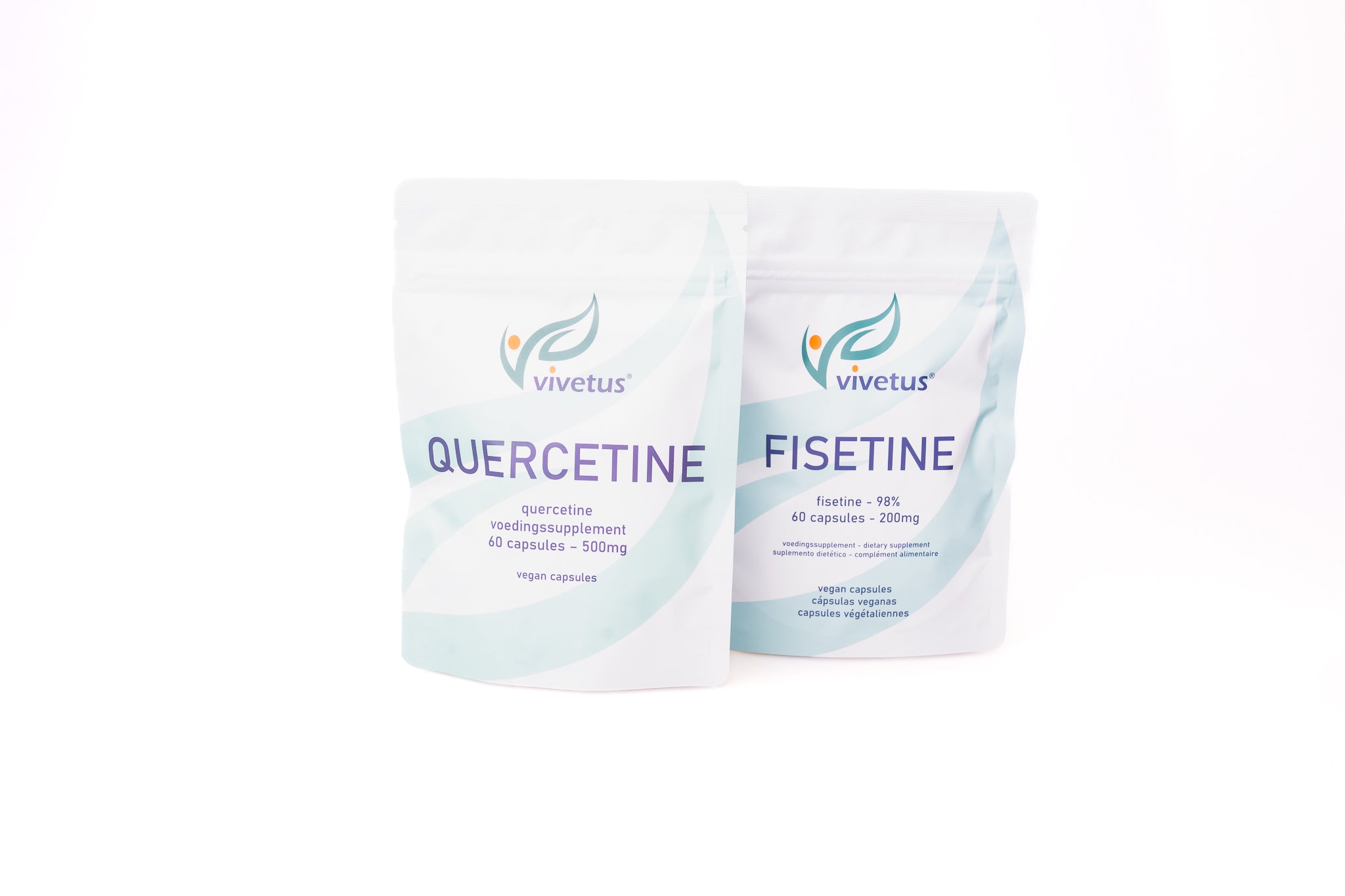
Vivetus builds its range around scientifically supported ingredients, with a 60 Second Supplement Purity Check and batch-level transparency behind every product, so you can see what you’re actually taking before you pulse. For readers assembling a protocol, the ♻ CelReset bundel pairs core senolytic-relevant ingredients in one purchase, while single-ingredient options let you run a more targeted pulse:
- Vivetus® Fisetin for a fisetin-only cycle.
- Vivetus® Quercetin for a quercetin-only cycle.
- Vivetus® NMN and Vivetus® Resveratrol for readers stacking broader healthy-ageing support around their pulses.
Whichever route you choose, prioritise high-bioavailability formulations, check the COA before your first dose, and consider a subscription only once you’ve confirmed a formulation suits you across a full cycle.
What I’d actually tell a friend considering this
If someone close to me asked whether to try a senolytica protocol, I’d say: the biological logic is sound, the human evidence for standalone flavonoids is still thin, and the sensible move is to treat this as a monitored experiment rather than a proven intervention. Track your bloodwork before and after, not just how you feel, and loop in a clinician who can flag interactions you might miss on your own.
— Jord
Try a cautious, quality-checked senolytic option with Vivetus
Vivetus is the alternative to guessing at unverified supplement brands online: every product carries a 60 Second Supplement Purity Check and a batch COA, so you know exactly what’s in the capsule before you build a pulse schedule around it. If you’re weighing up which flavonoid to start with, or want a broader formula covering several longevity pathways at once, Vivetus gives you both single-ingredient precision and bundled convenience.
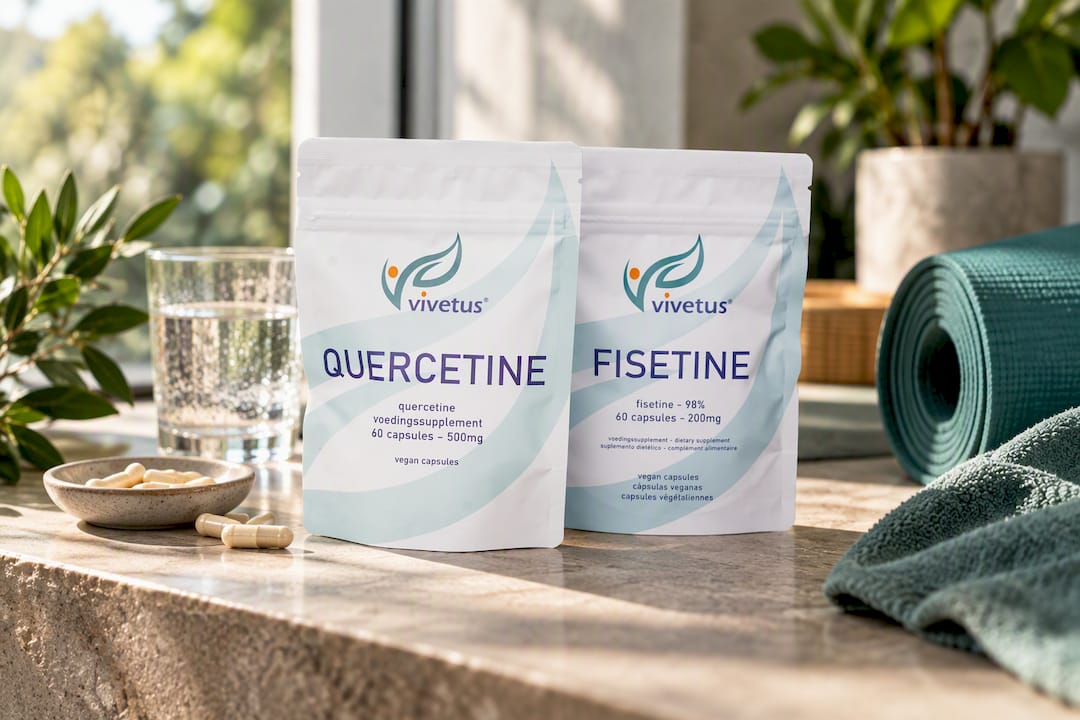
For readers wanting a ready-made starting point, the ♻ CelReset bundel combines the key ingredients discussed in this guide into one purchase. Those who prefer to isolate a single compound can go straight to Vivetus® Fisetin or Vivetus® Quercetin, while anyone stacking additional healthy-ageing support might browse Vivetus® Pterostilbene or the wider supplement collection. Vegan formulations are assembled in the Netherlands, with shipping options available for orders over a certain amount. Check the COA on your chosen product page, then order ahead of your next planned pulse window.
This article is general information, not a substitute for advice from a qualified doctor. Consult a qualified healthcare professional about your own circumstances before acting on anything here.
Sources
- Senolytics and the hit‑and‑run mechanism — PMC article
- Aging. 2024 — study of dasatinib+quercetin and DQ+fisetin in human participants
- Review: fisetin as a senotherapeutic (ScienceDirect)
FAQ
What is a senolytica protocol exactly?
A senolytica protocol is an intermittent, short-pulse supplement schedule using OTC flavonoids such as quercetin or fisetin, taken for 2 to 3 days at a time rather than daily. It relies on the “hit-and-run” principle, where senescent cells clear during the pulse and take weeks to return, according to research on the hit-and-run mechanism.
How often should you pulse senolytic supplements?
A conservative default is once every 3 months, though some approaches use monthly pulses in supervised settings. Spacing pulses further apart initially and adjusting based on bloodwork is the safer starting position for most people new to the approach.
Are OTC quercetin and fisetin as effective as clinical dasatinib plus quercetin trials?
Not proven to be. Most human senolytic trial data comes from dasatinib paired with quercetin, and standalone flavonoid-only regimens at senolytic-style doses remain largely theoretical, with fisetin’s human efficacy and optimal dosing still under investigation according to a review of fisetin evidence.
Does formulation really change how well quercetin or fisetin works?
Yes. Raw, unformulated quercetin and fisetin have poor absorption, while phytosome and liposomal forms significantly increase how much reaches the bloodstream, according to a bioavailability review. Taking either compound with a fat-containing meal further improves uptake.