

TMG for NMN Users: Methylation Mechanism and 3–6 g Dose
Trimethylglycine (TMG) works as a methyl donor and an osmolyte, and both roles matter for anyone tracking healthy ageing. Its main job is feeding the BHMT pathway, which converts homocysteine back into methionine and, eventually, into SAMe, the body’s principal methyl group carrier. TMG also draws water into cells, helping them keep their shape under stress. Together, these two functions explain why TMG shows up so often alongside NMN in longevity routines.
TL;DR:
- TMG effectively lowers homocysteine levels within weeks, especially in individuals with genetic variants like MTHFR that elevate baseline levels.
- It functions independently of folate and B12, making it a useful backup pathway when these nutrients are deficient or low.
- Dosing for homocysteine reduction typically ranges from 3 to 6 grams daily, with higher amounts requiring professional supervision due to potential side effects.
- Supplementing with TMG can support liver health and lipid metabolism, though evidence for athletic or cognitive benefits remains inconsistent.
- Always measure baseline homocysteine and start with low doses, adjusting based on response and under medical guidance if necessary.
Table of Contents
- Wat is TMG en hoe verschilt het van betaïne-HCl?
- De biochemische route: BHMT, SAMe en osmolyt-effecten
- Wat zeggen de studies over TMG-voordelen?
- TMG dosering: hoeveel heb je nodig?
- Hoe start je veilig met TMG-suppletie?
- Why TMG deserves more attention than it gets
- Vivetus TMG: waar je op moet letten bij aanschaf
- Bronnen en verder lezen
- Sources
Wat is TMG en hoe verschilt het van betaïne-HCl?
Trimethylglycine, also called betaine anhydrous, is the IUPAC name for a small organic compound with the formula C5H11NO2. It carries three methyl groups on a glycine backbone, which is exactly why it behaves as a methyl donor rather than just another amino acid derivative. This molecule occurs naturally in beetroot, spinach, wholegrain products and shellfish, though dietary intake through food alone rarely reaches the amounts used in homocysteine research.
Supplement shelves carry two very different products under the “betaine” name, and mixing them up matters:
- TMG (betaine anhydrous): the pure methyl-donating form used for methylation support and homocysteine control.
- Betaine HCl: betaine bound to hydrochloric acid, sold to support stomach acid and digestion.
Betaine HCl adds an acid load that TMG does not, so taking it at methylation-style doses can irritate the stomach lining without delivering the intended methyl-donor benefit. If your goal is methylation support, the label needs to say betaine anhydrous or trimethylglycine, not betaine HCl.
De biochemische route: BHMT, SAMe en osmolyt-effecten
TMG’s core mechanism runs through betaine-homocysteine methyltransferase, an enzyme found mainly in the liver and kidneys. BHMT strips one methyl group from TMG and hands it to homocysteine, turning it into methionine. That methionine feeds into the production of S-adenosylmethionine (SAMe), the compound your cells use for hundreds of methylation reactions, from DNA regulation to neurotransmitter synthesis.
What makes this route distinct is that it is independent from folate and vitamin B12. The body has a second remethylation pathway that relies on 5-methyltetrahydrofolate and a B12-dependent enzyme, but BHMT offers an alternative route that keeps working even when folate or B12 status is suboptimal. That is one reason TMG appeals to people managing methylation load from other supplements.
TMG’s second function, as an osmolyte, operates on a completely different level. It gets pulled into cells to help regulate volume and protect proteins from being destabilised by osmotic stress, a role documented in detailed biochemical reviews of the molecule. This is a well-established mechanism in cell biology, distinct from methylation, and it likely underpins some of the reported effects on muscle cells during physical exertion.
Beyond these two confirmed roles, researchers have floated hypotheses connecting TMG to NAD+/NADH balance, glycolytic flux and creatine synthesis. These ideas are plausible given how tightly methylation and energy metabolism are linked, but human evidence for them stays thin. It’s worth separating the two established mechanisms, BHMT-mediated remethylation and osmoregulation, from these more speculative downstream effects when weighing what TMG can realistically do for you.
In short: TMG’s methylation mechanism does not depend on adequate folate or B12 status, which is exactly why it functions as a backup route when those nutrients run low.
Wat zeggen de studies over TMG-voordelen?
Trials measuring TMG’s effect on blood homocysteine are the most consistent evidence base available. Doses in a moderate range typically lower homocysteine within a matter of weeks, and that decline can matter clinically for people whose levels sit above the reference range. Genetics play a real role here too. Variants in enzymes like MTHFR can shift how much homocysteine someone produces at baseline, so response to TMG is not identical across individuals.
Liver-related findings are the second strongest thread. Betaine has documented effects on lipid metabolism, and Dutch nutrient resources on the topic describe its supportive role in liver health, consistent with its function as a methyl donor feeding hepatic methylation demand.
Evidence for sports performance and body composition is more mixed:
- Some studies link TMG supplementation with modest gains in power output and lean mass during resistance training.
- Effect sizes vary considerably between studies, and not every trial finds a measurable benefit.
- Cognitive effects are reported anecdotally and in smaller studies but lack the volume of data behind the homocysteine findings.
One caveat worth flagging plainly: lowering homocysteine numbers on a blood panel is not the same as proving a cardiovascular outcome. Large trials testing whether homocysteine-lowering therapies actually reduce heart attacks or strokes have produced inconsistent results, so treat homocysteine as a useful marker to monitor, not a guaranteed proxy for cardiovascular risk reduction.
TMG dosering: hoeveel heb je nodig?
Dosing depends entirely on your goal, and getting this wrong is the most common mistake people make when they start supplementing.
- General nutritional support: 0.5 to 1 gram daily, roughly matching what a varied diet with beets and grains would provide anyway.
- NMN companion dosing: 0.5 to 2 grams daily, scaled to how much NMN or NR you take, since higher NAD+ turnover raises methylation demand.
- Homocysteine-lowering protocols: 3 to 6 grams daily, the range most consistently used in the trials that show measurable reductions within weeks.
- Higher therapeutic ranges: some practitioner reports describe doses above 6 grams, but these should only be considered with professional supervision.
Side effects at standard doses are uncommon. At higher intakes, gastrointestinal symptoms like bloating, nausea or loose stools can appear, and very high, sustained exposure has occasionally been linked to trimethylaminuria, a rare metabolic condition causing a fishy body odour, in genetically predisposed individuals. TMG can also interact with other methyl donors, so stacking it carelessly alongside multiple B-vitamins and NMN without any monitoring is not a sound strategy.
Pro Tip: Never substitute betaine HCl for TMG to chase a “methylation” effect. The added hydrochloric acid does nothing for homocysteine and can aggravate an already sensitive stomach.
Hoe start je veilig met TMG-suppletie?
Starting TMG sensibly takes a bit more thought than just opening a bottle, particularly if you already take an NAD+ booster.
- Get a baseline first. Measure homocysteine, and check B12 and folate if relevant, since these impact methylation.
- Start low. Begin with a low dose to assess tolerance and effect, especially when combining with NMN.
- Titrate gradually. Increase dose cautiously if targeting homocysteine reduction, monitoring for side effects.
- Retest after several weeks. Changes in homocysteine can be assessed to guide dosing adjustments.
- Pair thoughtfully. Supporting folate and B12 pathways alongside TMG can provide balanced methylation support.
Pro Tip: When combining TMG with NMN supplementation, some adopt a starting ratio favoring TMG two to four times higher than NMN, then adjust dosing guided by homocysteine measurements rather than fixed formulas.
Anyone with existing kidney or liver conditions, or anyone already on methylation-affecting medication, should talk to a clinician before starting rather than self-titrating based on general guidance alone.
Why TMG deserves more attention than it gets
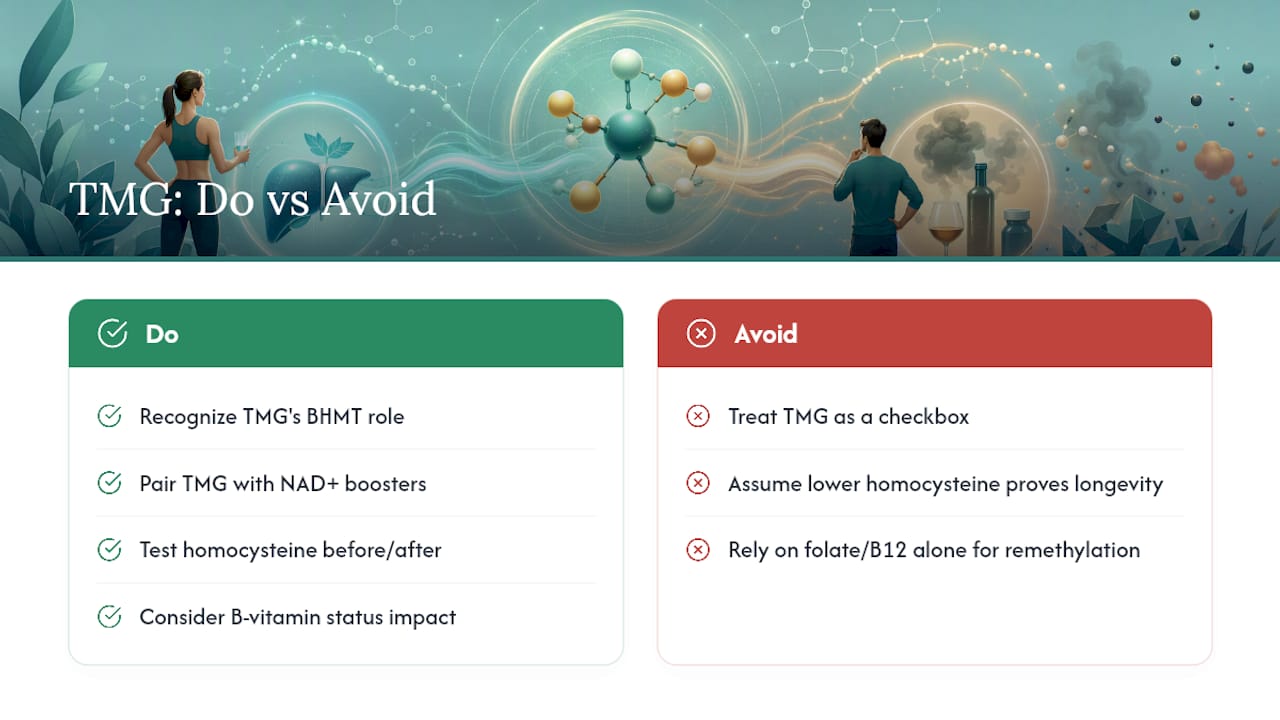
Most longevity content treats TMG as an afterthought bolted onto an NMN stack, a box to tick rather than a mechanism worth understanding. That undersells it. The BHMT pathway is a genuinely elegant piece of biochemistry: a backup remethylation route that keeps working when folate or B12 status wobbles, which matters more than people realise given how common mild B-vitamin insufficiency actually is.
Where I’d push back on the enthusiasm, though, is the tendency to treat homocysteine reduction as an end in itself. A lower number on a blood panel feels like progress, but the cardiovascular outcome data hasn’t caught up to that assumption. The honest position is that TMG is a well-supported methylation tool with a plausible, mechanistically grounded rationale for pairing with NAD+ boosters, not a proven longevity intervention on its own. Readers who test their homocysteine before and after supplementing, rather than taking it on faith, are the ones who actually learn something about their own biochemistry. For a deeper look at how TMG and NAD+ metabolism interact, the TMG and NMN pairing guide covers that relationship in more practical detail.
— Jord
Vivetus TMG: waar je op moet letten bij aanschaf
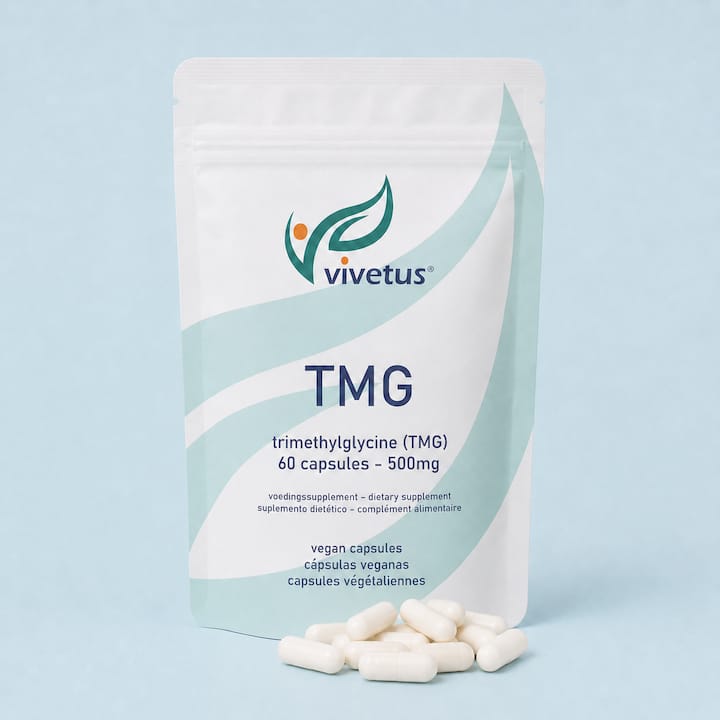
Vivetus stocks Trimethylglycine (TMG) in 500mg capsules, 60 to a bottle, giving you a straightforward way to reach nutritional or homocysteine-lowering dose bands without measuring powder. The full TMG collection sits alongside educational material if you want more detail before ordering.
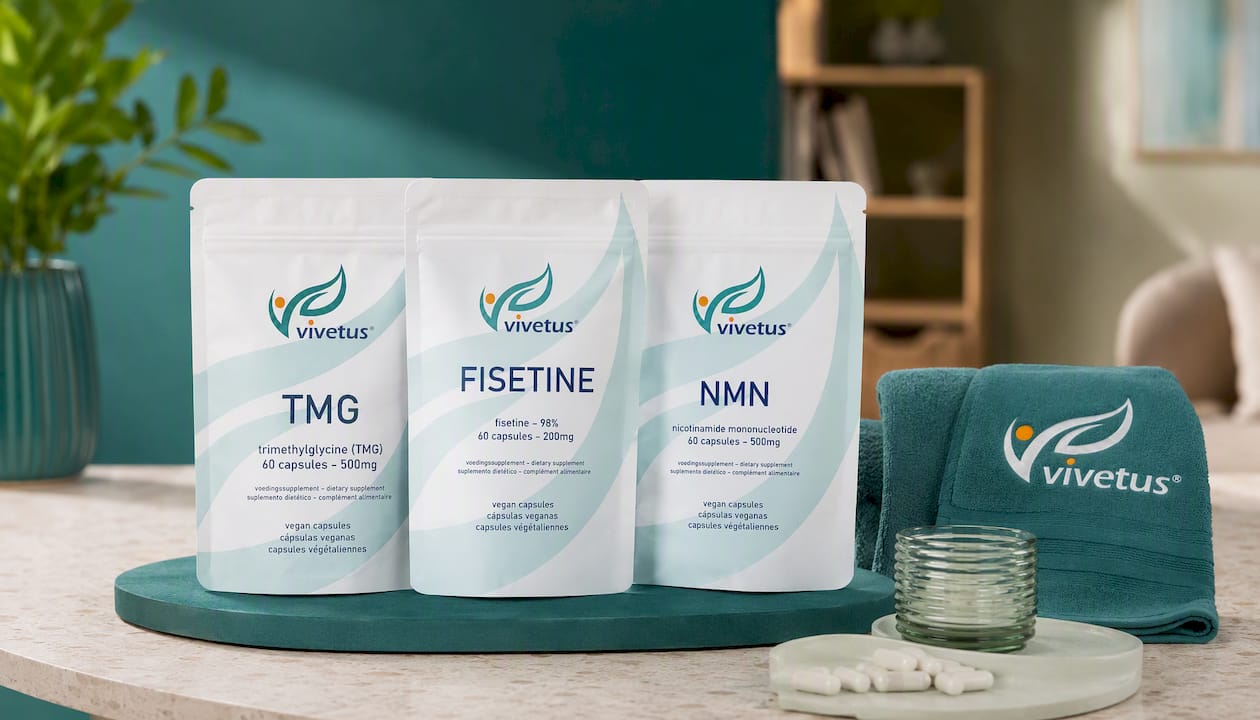
Not sure which product fits your goal? If cognitive support and mental sharpness are the priority, the Helder en Scherp bundel pairs TMG with complementary ingredients aimed at that focus. If you’re building a broader longevity stack, the VitaalPlus bundel combines TMG with other core supplements for a more complete approach to healthy ageing. Whichever route you take, start low, retest your homocysteine after a few weeks, and adjust from there rather than guessing at a dose. Browse the Helder en Scherp bundel or the VitaalPlus bundel to see which stack matches your current routine.
Bronnen en verder lezen
- Trimethylglycine — Wikipedia
- Nutrients 2018, folinic acid study — MDPI
- Trimethylglycine: voedingsstof voor de lever — Natuurdietisten
- Essential supplement safety tips
This article is general information, not a substitute for advice from a qualified doctor. Consult a qualified healthcare professional about your own circumstances before acting on anything here.
Sources
- Nutrients 2018; folinic acid study
- Trimethylglycine: voedingsstof voor de lever — Natuurdietisten
- Trimethylglycine — Wikipedia