

Resveratrol for Skin: What 40+ Adults Can Expect in 8–12 Weeks
Oral resveratrol can support skin health indirectly, working through systemic antioxidant, vascular and mitochondrial pathways rather than any direct topical action. Whether that translates into visible change depends heavily on formulation, dose and how consistently you take it. This isn’t a quick cosmetic fix, and understanding why matters more than the marketing claims stacked on any bottle.
TL;DR:
- Higher doses, around 75 to 1,000 milligrams daily, show larger systemic effects in metabolically compromised individuals but offer only modest skin-related benefits.
- Formulations like liposomal or micronized resveratrol significantly improve absorption, making dosage and delivery technology critical for efficacy.
- Beneficial effects on skin depend on consistent, long-term use over 8 to 12 weeks and are rooted in systemic vascular and metabolic improvements rather than direct topical action.
- Safety considerations include gastrointestinal side effects at high doses and potential drug interactions, so start with standard doses and consult a healthcare professional if necessary.
- Quality products should specify trans-resveratrol content, use proven bioavailability technology, and provide third-party testing for purity, with price per milligram as a key comparison metric.
Table of Contents
- How oral resveratrol supports skin: the mechanisms behind resveratrol huid effects
- What clinical trials actually show about resveratrol and skin-related outcomes
- Why formulation matters more than the dose on the label
- Safety, side effects and sensible dosing for resveratrol huid benefits
- A buying checklist for choosing a resveratrol supplement
- Jord’s take: resveratrol is a longevity tool, not a skin cream in a capsule
- Vivetus resveratrol: where to start if you want the systemic benefits
- Sources
How oral resveratrol supports skin: the mechanisms behind resveratrol huid effects
Resveratrol doesn’t touch your skin from the inside the way a serum does from the outside. It works by nudging cellular machinery that governs how your body handles stress, inflammation and repair, and skin happens to be one of the tissues that benefits from that housekeeping.
The molecule activates SIRT1 and AMPK, two proteins that regulate cellular energy use and longevity signalling. It also switches on the Nrf2-ARE antioxidant pathway, which ramps up your body’s own antioxidant enzyme production rather than simply mopping up free radicals directly. That distinction matters: resveratrol is largely working upstream, training your cells to defend themselves better rather than acting as a one-off antioxidant dose.
There’s also a vascular angle worth understanding. Resveratrol has been shown to improve endothelial function and boost nitric oxide availability, which supports better blood flow. Skin is heavily dependent on microcirculation for nutrient delivery and waste clearance, so improved perfusion is one plausible route from “systemic supplement” to “skin that looks and functions better.”
The key pathways at work include:
- SIRT1 and AMPK activation – supports cellular energy regulation and longevity signalling
- Nrf2-ARE pathway – boosts the body’s own antioxidant enzyme production
- Nitric oxide and endothelial support – improves microcirculation and nutrient delivery to tissue
- Mitochondrial support – helps offset the chronic low-grade inflammation linked to skin ageing
Resveratrol modulates a genuinely broad set of cellular pathways. Research has documented effects across NF-κB, SIRT1, AMPK, MAPK, Nrf2 and the PI3K/AKT/mTOR axis, giving it more mechanistic reach than most single-ingredient antioxidants for ageing. That breadth is exactly why researchers keep circling back to it, and exactly why no single mechanism should be treated as the whole story.
What clinical trials actually show about resveratrol and skin-related outcomes
Direct trials measuring resveratrol’s effect on skin appearance are thin on the ground. What exists in far greater depth is evidence on the vascular and metabolic markers that plausibly feed into skin health, and that’s where the real certainty lives.
A 2024 umbrella review pooling multiple randomised trials found high-certainty evidence for modest reductions in waist circumference and blood pressure in patients with type 2 diabetes. Effects on other outcomes came with lower certainty, and the review is explicit that benefits varied substantially by population. Healthy, non-diabetic adults tend to see smaller effects than metabolically compromised groups, largely because there’s less dysfunction to correct in the first place.
Dose ranges across the trial literature are wide. Human studies have used doses from roughly 75mg up to 1,000mg per day, with tolerability generally holding up well to around 1g daily. Some trials have used very high doses without serious safety signals, though adverse effects, mostly gastrointestinal, become more common as the dose climbs.
A few points worth holding onto:
- Effect sizes are consistently larger in people with existing metabolic dysfunction (obesity, type 2 diabetes) than in healthy adults
- Trial heterogeneity is high: different doses, durations and populations make blanket claims unreliable
- No major trial has used “skin appearance” as its primary endpoint, so skin benefits are inferred from vascular and metabolic improvement, not measured directly
The honest summary: if you’re a healthy 40-something taking resveratrol hoping for a skin transformation, the evidence supports modest, indirect benefit built on months of consistent use, not a rapid cosmetic turnaround. Anyone selling it as the latter is overstating what the trial data shows.
Why formulation matters more than the dose on the label
Here’s the detail most buyers miss entirely: two products both listing “500mg resveratrol” can deliver wildly different amounts into your bloodstream. Resveratrol’s oral bioavailability is famously poor, often cited at under 1%, because your gut and liver rapidly glucuronidate and sulfate it before it ever reaches general circulation.
Formulation science exists specifically to solve this problem. Micronisation reduces particle size to improve dissolution. Liposomal and lipid-carrier delivery wraps the molecule in a fat-soluble shell that survives digestion better. Cyclodextrin inclusion complexes, and increasingly nanoparticle formulations, have shown several-fold increases in both peak blood concentration and total absorption compared with standard powder-in-capsule products, according to pharmacokinetic formulation trials.
When you’re comparing products, work through this shortlist:
- Check for “trans-resveratrol” specifically – this is the biologically active isomer; products that don’t specify it may contain a less useful mix
- Look for stated milligrams per dose, not per serving of an unspecified blend
- Scan for delivery technology language – micronised, liposomal, or cyclodextrin-encapsulated formulations signal the brand has actually addressed the bioavailability problem
- Ask for a certificate of analysis confirming purity and actual trans-resveratrol content, not just label claims
Piperine (from black pepper) is sometimes added as a bioenhancer, and taking resveratrol alongside a small amount of dietary fat can also help, since it’s fat-soluble.
Pro Tip: Take your resveratrol capsule with breakfast alongside something containing a little healthy fat, like eggs or avocado, and keep the bottle away from direct light and heat. Resveratrol degrades on exposure to both, which quietly reduces potency long before the expiry date.
Safety, side effects and sensible dosing for resveratrol huid benefits
Resveratrol behaves like a lot of plant compounds: helpful in moderate, consistent doses, less helpful when pushed to extremes. This is hormesis in action, where a compound that supports cellular resilience at sensible doses can tip toward pro-oxidant, irritating effects at very high ones.
At higher doses, the most commonly reported issues are gastrointestinal: nausea, diarrhoea and general stomach upset. There’s also a theoretical interaction risk, since resveratrol can influence certain CYP enzyme pathways involved in drug metabolism, which matters most at high doses alongside prescription medicines.
Sensible ground rules:
- Start with a standard, clearly labelled dose rather than stacking multiple high-strength products
- Favour steady daily use over occasional high-dose “bursts”, since chronic low-to-moderate dosing appears to be where the hormetic benefit sits most reliably
- Speak to a doctor first if you’re pregnant, breastfeeding, on anticoagulants, managing liver disease, or taking any prescription medication regularly
- Track how you feel over several months rather than judging a product after a week
A detailed look at studied resveratrol dosing is worth reading in full if you want the evidence-based range in more depth before you buy.
A buying checklist for choosing a resveratrol supplement
Standing in front of a shelf of near-identical bottles, here’s what actually separates a well-formulated product from a marketing exercise.
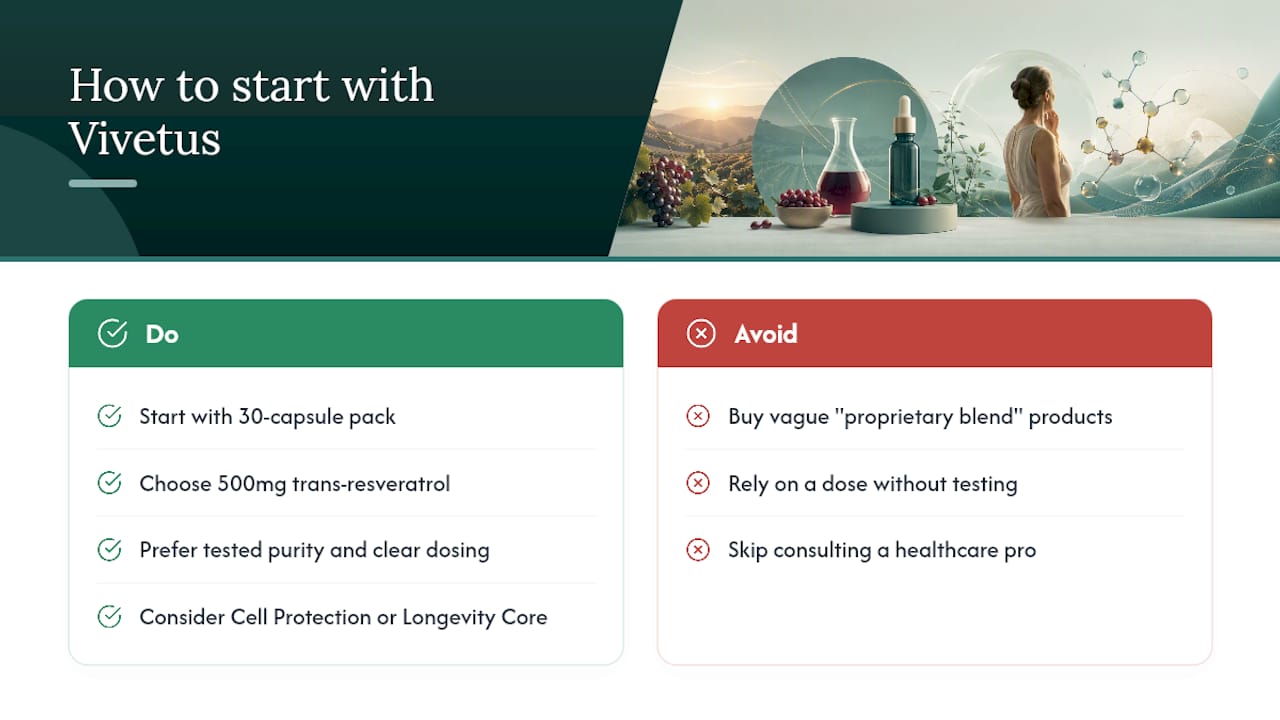
- Confirm the effective dose per serving – look for a clear trans-resveratrol figure, not a vague “proprietary blend”
- Check for bioavailability technology – micronised, liposomal or encapsulated forms address the absorption problem head-on
- Verify testing and purity certification – third-party testing should back up label claims
- Consider compatibility with your existing regimen – resveratrol pairs logically with other longevity-focused supplements rather than working best in isolation
- Compare price per milligram of active ingredient, not price per bottle
Take it with a little dietary fat, at the same time each day, and give it 8 to 12 weeks before judging whether it’s doing anything measurable. Red flags include vague labelling with no trans-resveratrol figure, claims that promise topical-style skin “fixes” from an oral capsule, and any product with no visible testing or certification.
Jord’s take: resveratrol is a longevity tool, not a skin cream in a capsule
Resveratrol earns its place in a longevity toolkit because of what it does systemically, not because it rivals a topical retinoid for skin texture. Vivetus builds its resveratrol range around that honesty: transparent trans-resveratrol content, clear dosing, and no promise the mechanism can’t support. Judge any formulation on what it actually delivers into your bloodstream, not what the label implies.
— Jord
Vivetus resveratrol: where to start if you want the systemic benefits
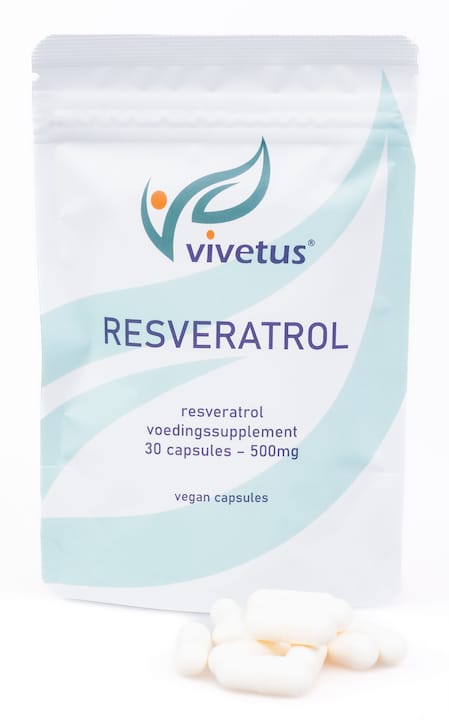
If the checklist above is your standard, Vivetus® Resveratrol is built to meet it: 500mg capsules with clearly stated trans-resveratrol content, tested for purity, and priced transparently per capsule rather than buried in a vague “blend.”
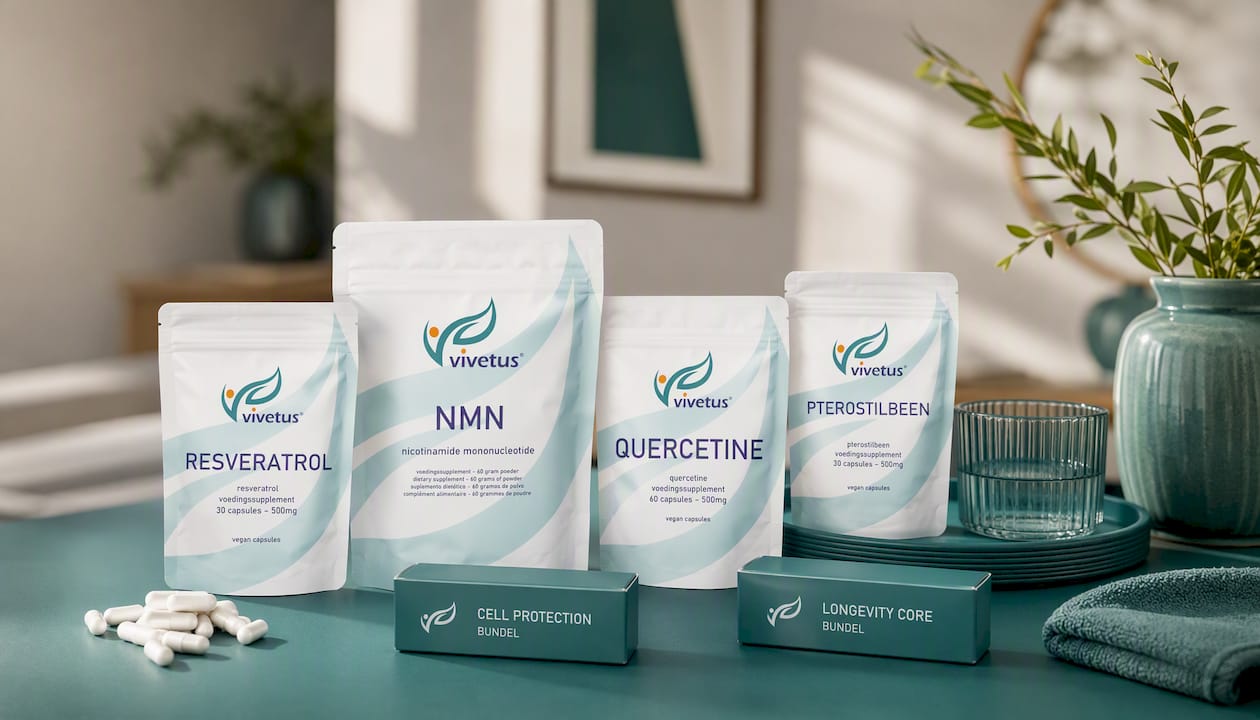
For readers building a fuller regimen rather than a single ingredient, two bundles are worth knowing about. The 🛡 Cell Protection bundle pairs resveratrol with complementary antioxidant support aimed at cellular defence, while the 🔬 Longevity Core bundle combines resveratrol with core longevity ingredients for readers who want systemic coverage rather than a single-molecule approach. Both work on the same principle as the standalone capsules: clear dosing, tested purity, no vague “proprietary blend” language hiding what you’re actually taking.
Vivetus ships internationally and offers free shipping on orders over €50, with subscription options if you’d rather not remember to reorder every few months. If you’re ready to commit to the 8 to 12 week evaluation window the evidence actually supports, start with the 30-capsule resveratrol pack and build outward from there once you know how your body responds.
This article is general information, not a substitute for advice from a qualified doctor. Consult a qualified healthcare professional about your own circumstances before acting on anything here.
Sources
- Resveratrol and mechanisms (PMC5811244)
- Umbrella review of resveratrol trials (Nutrition Journal / Springer)
- Resveratrol pharmacokinetics and delivery strategies (MDPI Antioxidants, 2026)