

How to stay active with age: your 2026 guide
TL;DR:
- Regular exercise can extend lifespan and reduce mortality risk for older adults. A combination of aerobic, strength, balance, and flexibility training promotes independence and prevents falls. Starting gradually and consulting a doctor ensures safety and sustainability in an active aging routine.
Staying active with age is defined by the World Health Organisation as maintaining regular, adapted physical activity that preserves strength, balance, and independence throughout later life. The NHS recommends that older adults aim for 150–300 minutes of moderate aerobic activity each week. Research confirms that consistent exercise reduces mortality risk by up to 30% and can add up to 4.5 years to life. These are not aspirational figures. They are achievable outcomes for adults who move regularly, regardless of where they start.
What types of physical activity are most beneficial for older adults?
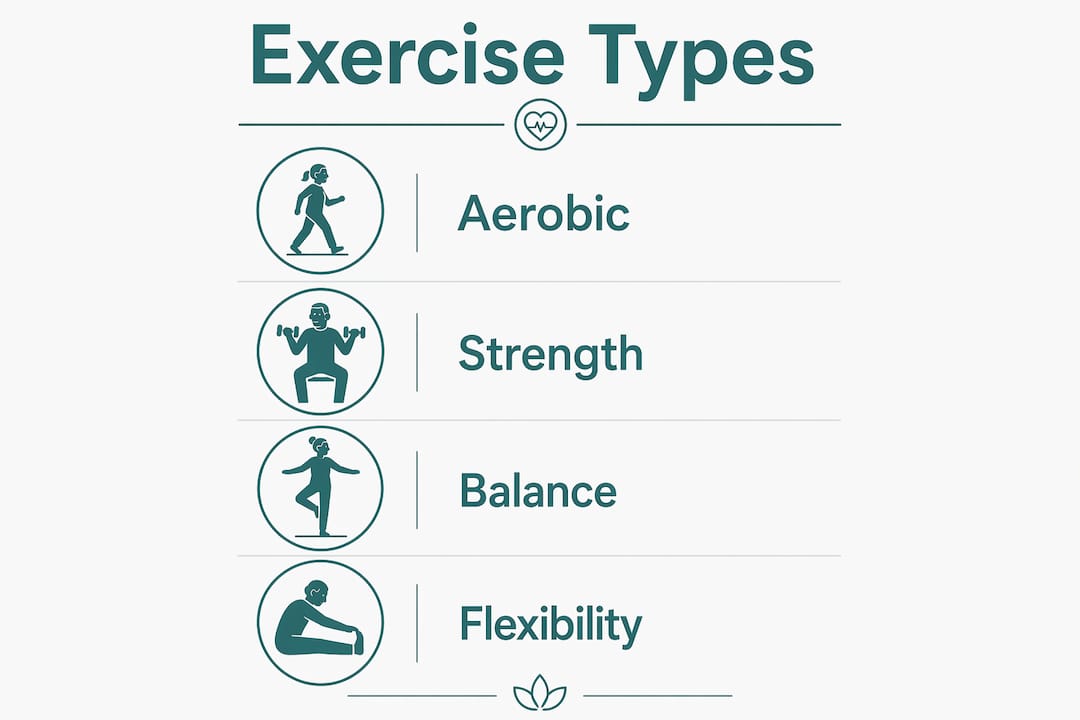
Four categories of exercise form the foundation of active ageing: aerobic activity, strength training, balance work, and flexibility. Each one targets a different aspect of physical function, and all four work best together.
Aerobic activity
Aerobic exercise is the backbone of any senior fitness programme. Walking, swimming, cycling, and dancing all count. The target is 150–300 minutes of moderate activity per week, which breaks down to roughly 30 minutes on five days. Consistent aerobic exercise reduces mortality risk by up to 30% and adds measurable years to healthy life. That is a more reliable return than almost any other health intervention available.
Strength training
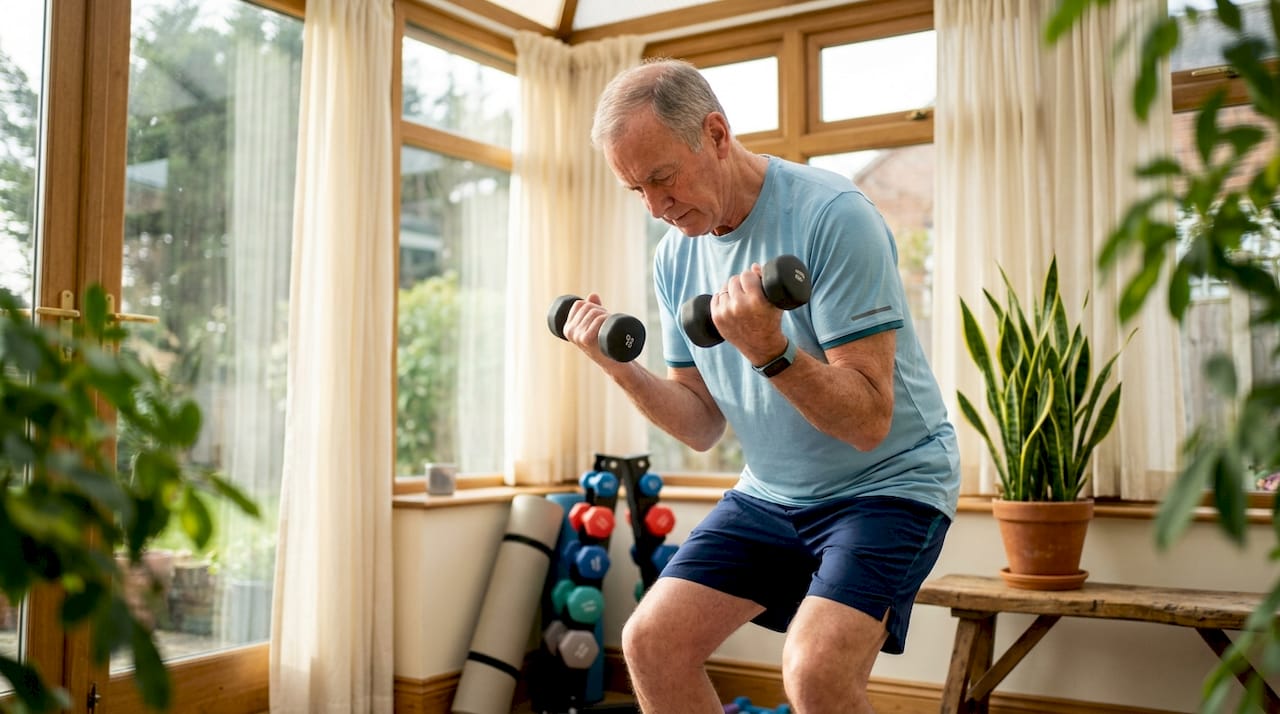
Resistance training at least twice a week reduces fall risk by up to 40% and directly supports functional independence. The focus should be on major muscle groups: legs, hips, back, abdomen, chest, shoulders, and arms. One to three sets of 8–15 repetitions per exercise is the recommended range. Bodyweight squats, wall press-ups, and resistance band rows are all practical starting points that require no gym membership.
Balance and proprioception
Proprioception is the body’s ability to sense its own position in space. It declines with age, which is a leading cause of falls. Tai chi and yoga are the most studied balance activities for older adults, and both improve spatial awareness alongside flexibility. Training proprioception is often more valuable than sheer strength because it directly prevents the falls that end independence.
Flexibility
Stretching and mobility work maintain joint range of motion and reduce stiffness. Gentle yoga, Pilates, and daily stretching routines all qualify. Flexibility work is best done after aerobic or strength sessions, when muscles are warm.
| Activity type | Recommended frequency | Key benefit | Suggested intensity |
|---|---|---|---|
| Aerobic (walking, swimming) | 5 days per week, 30 min | Heart health, endurance | Moderate (can hold a conversation) |
| Strength training | 2 days per week | Muscle mass, fall prevention | Moderate, 8–15 reps per set |
| Balance (tai chi, yoga) | 2–3 days per week | Fall risk reduction, coordination | Low to moderate |
| Flexibility (stretching) | Daily or after each session | Joint health, reduced stiffness | Gentle, no pain |
Pro Tip: If you are new to exercise, start with balance and walking. These two alone deliver significant benefits and carry the lowest injury risk.
How to safely start and maintain an exercise routine as you age
Starting a new exercise routine after a long break, or for the first time, requires a measured approach. Safety is not a barrier to activity. It is the foundation that makes activity sustainable.
Consult your GP first
Regular medical screening is critical before beginning any new physical programme, particularly cardiovascular monitoring. Blood pressure, cholesterol, and glucose checks give your GP a clear picture of what your body can handle. This is not a formality. It is the step that allows you to exercise with confidence rather than anxiety.
Know the difference between good and bad pain
Muscular fatigue after exercise is normal and expected. Sharp pain in a joint is not. Distinguishing muscular fatigue from joint pain is one of the most practical skills an older adult can develop. Fatigue fades within 24–48 hours. Joint pain that persists or worsens with movement is a signal to stop and seek advice.
“Fear of injury is one of the most common reasons older adults avoid exercise. The evidence shows the opposite is true: consistent aerobic and resistance training is the most effective strategy for healthy ageing, and the risk of inactivity far outweighs the risk of carefully managed movement.”
Common barriers and how to address them
Fear of injury and chronic pain are the two most cited barriers to physical activity for older adults. Both are manageable with the right modifications.
- Use a sturdy chair for support during standing exercises if balance is uncertain.
- Swap floor-based exercises for seated or wall-supported versions if getting up and down is difficult.
- Reduce intensity during flare-ups of arthritis or joint pain, but do not stop moving entirely.
- Work with a physiotherapist or certified fitness instructor experienced with older adults.
| Health condition | Recommended modification | Activity to prioritise |
|---|---|---|
| Arthritis | Low-impact movement, warm water exercise | Swimming, gentle yoga |
| Osteoporosis | Weight-bearing activity, avoid high-impact | Walking, resistance bands |
| Heart condition | GP clearance, monitor exertion | Walking, light cycling |
| Limited mobility | Seated or chair-based exercises | Chair yoga, resistance bands |
| Balance issues | Use support, focus on proprioception | Tai chi, heel-to-toe walking |
Pro Tip: Progress gradually. Adding 10% more duration or intensity per week is a safe and evidence-supported rate of increase.
Practical ways to incorporate movement into daily life
The most effective exercise routine is the one you actually do. Integrating movement into daily life removes the need for willpower and makes activity a natural part of your day.
Exercise snacks
Short bursts of activity, sometimes called “exercise snacks,” are measurably effective even at just 2–4 minutes at a time. This finding challenges the assumption that only long, structured sessions count. A brisk walk to the post box, a set of wall press-ups before lunch, and some calf raises while waiting for the kettle all accumulate into genuine health benefit across the day.
Activities that feel enjoyable
Gardening, dancing, bowls, and walking groups all deliver physical activity without feeling like exercise. The social element of group activities adds a second layer of benefit. Social engagement supports mental clarity alongside physical health, making group-based movement one of the most efficient investments an older adult can make.
Here is a practical step-by-step approach to building activity into your routine:
- Choose one activity you genuinely enjoy and commit to it three times this week.
- Set a fixed time for it, the same way you would a medical appointment.
- Track it simply: a tick in a diary or a note on your phone is enough.
- Add a second activity in week two, keeping the first in place.
- Review your routine monthly and adjust based on how your body responds.
- Celebrate consistency over intensity. Showing up regularly matters more than working hard occasionally.
Pro Tip: Walking after a meal is one of the most studied and accessible forms of daily movement. Even a 10-minute post-dinner walk supports blood sugar regulation and cardiovascular health.
For a broader view of how movement fits into a healthy ageing lifestyle, the Vivetus guide for 2026 covers the full picture.
How to overcome common challenges and stay motivated
Sustaining motivation over months and years is where most people struggle. The physical side of staying active is straightforward. The psychological side requires its own strategy.
Challenge the narrative around ageing
A widespread misconception is that slowing down is inevitable and appropriate with age. The evidence says otherwise. Exercise remains the top evidence-based method to extend healthy lifespan, outperforming costly supplements or biohacking approaches. Older adults who exercise regularly report higher energy, better sleep, and greater independence than sedentary peers of the same age.
Build a support structure
Motivation is far more reliable when it is social. A walking partner, a weekly class, or a family member who checks in all reduce the likelihood of skipping sessions. Fear of injury is a major barrier, and having someone alongside you directly reduces that fear.
Here are practical mindset shifts and motivational tools that work:
- Focus on what your body can do, not what it used to do.
- Set process goals (“I will walk three times this week”) rather than outcome goals (“I will lose weight”).
- Allow rest days without guilt. Recovery is part of the programme, not a failure of it.
- Adapt your routine during illness or low-energy periods rather than abandoning it entirely.
- Acknowledge every session, however short. Two minutes of movement is better than none.
Pro Tip: If motivation drops, reduce the session length rather than skipping it. A five-minute walk preserves the habit even when energy is low.
For more evidence-backed strategies on senior wellness, the Vivetus 2026 practical guide covers nutrition, sleep, and recovery alongside movement.
Key takeaways
Staying active with age requires a consistent combination of aerobic activity, strength training, balance work, and daily movement habits tailored to your individual capacity.
| Point | Details |
|---|---|
| Weekly activity target | Aim for 150–300 minutes of moderate aerobic activity spread across the week. |
| Strength training frequency | Train major muscle groups at least twice a week to reduce fall risk by up to 40%. |
| Balance training priority | Practise tai chi or yoga regularly to improve proprioception and prevent falls. |
| Exercise snacks work | Short bursts of 2–4 minutes accumulate into measurable health benefits throughout the day. |
| Safety before intensity | Consult your GP before starting, and distinguish muscular fatigue from joint pain at every session. |
Why I think we overcomplicate staying active in later life
The conversation around exercise for older adults is often framed around what to avoid. Avoid high impact. Avoid overexertion. Avoid anything that might cause a fall. That caution is well-intentioned, but it creates a paralysis that does more harm than the risks it tries to prevent.
What I have observed, and what the research consistently supports, is that the body responds to movement at any age. The adults who maintain the most independence into their seventies and eighties are not the ones who were careful. They are the ones who stayed consistent. They walked when they did not feel like it. They kept up their weekly class through minor aches. They treated movement as non-negotiable.
The other thing I would push back on is the idea that you need a structured programme to benefit. Gardening for an hour, walking to the shops, playing with grandchildren: these all count. The benefits of healthy ageing through movement are cumulative. Every session adds to the total.
Start where you are. Not where you were ten years ago, and not where you think you should be. The gap between doing nothing and doing something small is the most important gap to close.
— Jord
Vivetus and your energy as you age
Maintaining an active lifestyle places real demands on the body, particularly energy levels and recovery. Movement is the foundation, and what you put into your body supports what you get out of it.
Vivetus has developed its Energy & Vitality bundel specifically for older adults who want nutritional support alongside their exercise routines. The bundle is designed to complement an active lifestyle, addressing the energy and recovery needs that become more relevant with age. Free shipping applies on orders over €50. For adults who are already moving regularly and want to support that effort at a nutritional level, it is a practical next step.
FAQ
How much exercise should older adults do each week?
Older adults should aim for 150–300 minutes of moderate aerobic activity per week, plus strength training on at least two days. This is the standard recommended by the World Health Organisation for maintaining health and independence.
Is it safe to start exercising after a long break?
Starting after a long break is safe when done gradually and with GP clearance, particularly for cardiovascular health. Begin with short sessions of low-impact activity such as walking or chair-based exercises and increase duration slowly.
What is the best exercise to prevent falls?
Balance training, particularly tai chi and proprioception exercises, is the most effective method for reducing fall risk. Structured exercise programmes that include balance components reduce fall risk by 20–40%.
Can short bursts of activity really make a difference?
Short sessions of just 2–4 minutes of brisk activity provide measurable health benefits when accumulated throughout the day. This makes “exercise snacks” a practical and evidence-backed approach for older adults who find longer sessions difficult.
Does exercise help with energy levels in older adults?
Regular aerobic and strength training consistently improves energy levels, sleep quality, and mood in older adults. The effect is cumulative: the more consistently you move, the more energy your body produces over time.