

How to support joint health: your 2026 practical guide
TL;DR:
- Managing joint health involves regular low-impact exercise, weight management, and targeted supplementation. Consistent efforts, including gradual movement and monitoring pain, are essential for long-term improvement. Supplements take weeks to show benefits, but lifestyle changes remain the most effective approach.
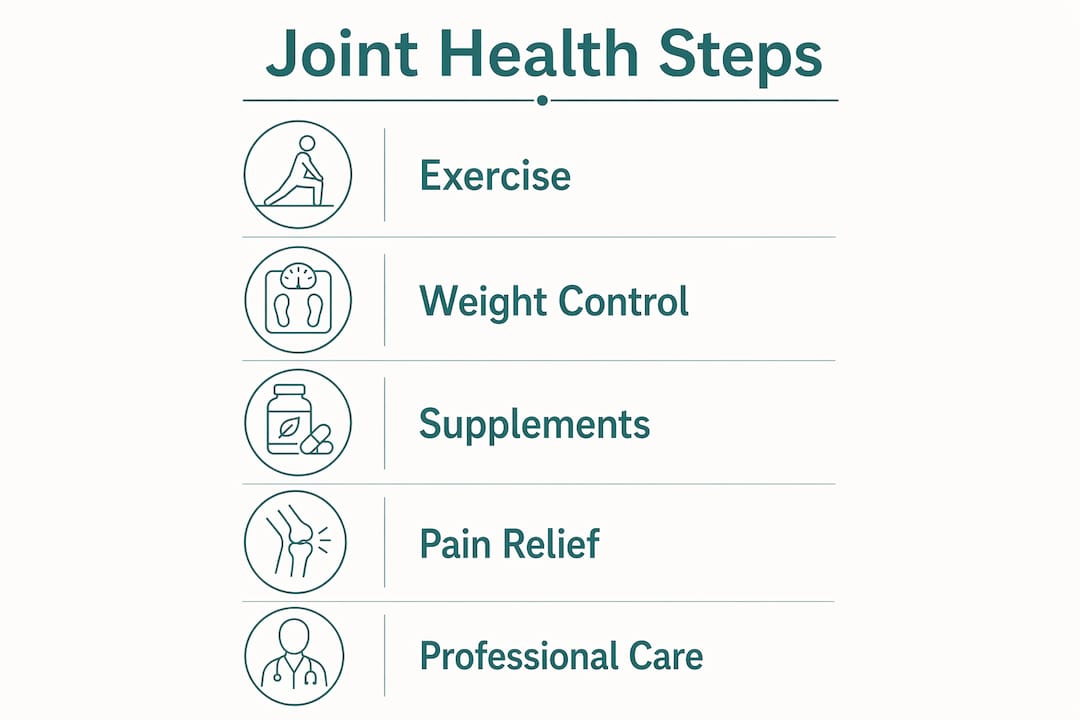
Joint health is defined as the ability to move freely, bear load, and function without persistent pain. For the millions of people living with joint discomfort, that definition can feel very far from daily reality. Knowing how to support joint health means addressing four interconnected pillars: targeted exercise, weight management, nutrition and supplementation, and appropriate pain relief. This guide draws on the latest 2026 clinical guidelines and physiotherapy evidence to give you a clear, practical plan you can start applying today.
What types of exercise best support joint health?
Exercise is the single most effective tool for maintaining joint function. Targeted low-impact exercise nourishes cartilage by improving synovial fluid circulation, which is critical because cartilage has no direct blood supply. Without regular movement, cartilage degrades faster.
EULAR 2026 recommends at least 150 minutes of moderate aerobic activity or 75 minutes of vigorous aerobic activity per week, combined with resistance training. That translates to roughly 30 minutes of brisk walking five days a week, plus two sessions of strength work.
Low-impact aerobic options
The following exercise types are well-tolerated by people with joint pain and carry a low injury risk:
- Walking on flat or cushioned surfaces, starting with 10–15 minutes and building gradually
- Cycling (stationary or outdoors) to reduce impact on knees and hips
- Swimming and aqua aerobics, which offload body weight almost entirely
- Yoga and tai chi, which combine gentle movement with balance and flexibility work
Strengthening and mobility work
Strengthening the muscles around a joint reduces the mechanical load the joint itself must bear. Focus on the quadriceps and glutes for knee support, and the rotator cuff muscles for shoulder stability. Two resistance sessions per week, using bodyweight or light resistance bands, are sufficient to see measurable improvement.

Mobility work, such as controlled range-of-motion exercises and gentle stretching, maintains joint flexibility and reduces morning stiffness. Spend five to ten minutes on mobility each morning before other activity.
Staying safe during exercise
Pain is a signal, not a verdict. Sharp or persistent pain lasting more than two hours after exercise means you have done too much. Dull muscle fatigue is normal and expected. Progress gradually, adding no more than 10% to your weekly activity volume at a time.
Pro Tip: Track your pain score out of ten and your step count each week. If pain stays below five out of ten during exercise and returns to baseline within two hours, your current level is appropriate.
How does weight management reduce joint stress?
Body weight directly determines how much load your joints carry with every step. A 5–10% reduction in body weight produces measurable decreases in mechanical stress on load-bearing joints such as the knees and hips. For a person weighing 90 kg, losing just 4.5–9 kg can noticeably reduce pain and improve mobility.
Slow, consistent weight loss combined with a nutrient-rich diet supports joint function and reduces inflammation. Rapid weight loss through very low-calorie diets strips muscle mass alongside fat, which worsens joint stability rather than improving it.
Sustainable habits that support both weight and joint health include:
- Increasing vegetable and legume intake to reduce dietary inflammation
- Choosing quality protein sources (fish, eggs, pulses) to maintain muscle mass
- Reducing ultra-processed foods and added sugars
- Eating regular meals to avoid energy crashes that lead to poor food choices
- Combining dietary changes with the low-impact exercise described above
Pro Tip: Aim for 0.5–1 kg of weight loss per week. Faster than that and you risk losing muscle, which your joints depend on for support.
Which supplements have evidence for joint health benefits?
The best supplements for joints work slowly. Most joint supplements require 4–12 weeks of consistent use before any clinical benefit becomes apparent. Stopping after two weeks and concluding they do not work is one of the most common mistakes people make.
The table below summarises the supplements with the strongest evidence base, their typical dosages, and key safety considerations.
| Supplement | Typical daily dose | Expected onset | Safety notes |
|---|---|---|---|
| Glucosamine sulphate | 1,500 mg | 6–12 weeks | Avoid if shellfish allergy |
| Chondroitin sulphate | 800–1,200 mg | 6–12 weeks | May interact with anticoagulants |
| Collagen peptides | 5–10 g | 4–8 weeks | Generally well tolerated |
| Curcumin (turmeric extract) | 500–1,000 mg | 4–8 weeks | Avoid with blood thinners |
| Boswellia serrata | 300–500 mg | 4–8 weeks | Avoid with anticoagulants |
| Omega-3 fatty acids | 1,000–3,000 mg EPA/DHA | 6–12 weeks | Monitor with blood thinners |
Glucosamine sulphate and chondroitin sulphate are recognised as slow-acting symptomatic drugs for osteoarthritis by ESCEO, though NICE 2022 and ACR 2019 do not routinely recommend them. The evidence supports a cautious individual trial rather than blanket use or blanket avoidance.
People taking anticoagulants such as Warfarin must consult a healthcare professional before using curcumin, chondroitin, or boswellia due to bleeding risk and the need for INR monitoring. This is a firm safety requirement, not a precaution to skip.
For guidance on choosing between supplement forms and combinations, the Vivetus supplement comparison guide covers the key differences in bioavailability and suitability for healthy ageing.
Pro Tip: Commit to a full 12-week trial before evaluating any joint supplement. Keep a simple weekly log of your pain and stiffness scores so you have objective data to assess.
What medications and topical treatments help with joint pain?
Medication plays a supporting role in joint health management, not a central one. The goal is to reduce pain enough to allow exercise and daily function, not to replace the lifestyle work.
Topical NSAIDs such as diclofenac gel at 1–2% concentration, applied 2–4 times daily, are recommended as first-line treatment for localised joint pain. They deliver anti-inflammatory effects directly to the affected area with a much lower risk of gastrointestinal side effects than oral alternatives.
Key points on medication use:
- Topical NSAIDs first. Use diclofenac gel for hand and knee pain before considering oral options.
- Oral NSAIDs short-term only. Use for flare-ups when topical treatment is insufficient, and always with food to protect the stomach.
- Paracetamol has limited effect on joint pain and is not recommended as a primary treatment for osteoarthritis by current guidelines.
- Opioids carry significant risks and are not appropriate for long-term joint pain management.
- Heat therapy (a warm pad or bath) relaxes muscles and reduces stiffness, particularly in the morning.
- Cold therapy (an ice pack wrapped in cloth) reduces acute inflammation and swelling after activity.
Topical treatments and heat or cold therapy are most effective when used alongside exercise and weight management. Medication alone does not slow joint deterioration or rebuild muscle strength. Use it to manage symptoms while you do the work that actually changes the underlying condition.
Common mistakes that slow joint health progress
The most damaging mistake people make is stopping movement because of pain. Fear of movement leads to muscle atrophy and joint degradation. The less you move, the weaker the supporting muscles become, and the more the joint suffers. Finding the right movement level, not avoiding movement altogether, is the goal.
Other common pitfalls include:
- Treating supplements as quick fixes. No supplement replaces exercise or weight management. Supplements complement a lifestyle approach.
- Ignoring pain signals during exercise. Sharp pain during movement is a warning. Dull fatigue is not.
- Inconsistency. Sporadic bursts of exercise followed by days of inactivity produce worse outcomes than moderate daily movement.
- Skipping progress monitoring. Tracking weekly pain scores, morning stiffness, and step counts gives you the data to adjust your approach rather than guessing.
Seek professional advice if pain persists at rest, if you notice significant swelling or joint deformity, or if your mobility declines despite consistent effort over 6–8 weeks. A physiotherapist can provide a personalised movement plan that accounts for your specific joint condition.
Pro Tip: Set a monthly review date. Check your pain score, step count, and weight against the previous month. Small, measurable improvements confirm you are on the right track.
Key takeaways
Effective joint health management combines exercise, weight control, targeted supplementation, and appropriate pain relief. No single strategy works in isolation.
| Point | Details |
|---|---|
| Exercise is non-negotiable | Aim for 150 minutes of moderate aerobic activity weekly plus two resistance sessions. |
| Weight loss reduces joint load | A 5–10% reduction in body weight measurably decreases stress on knees and hips. |
| Supplements need time | Allow 4–12 weeks of consistent use before evaluating any joint supplement. |
| Topical NSAIDs come first | Diclofenac gel is the recommended first-line treatment for localised joint pain. |
| Track your progress | Monitor pain scores, stiffness, and step counts weekly to guide adjustments. |
My view on what actually works for joint health
I have spent a long time looking at the evidence on joint health, and the pattern is consistent. The people who manage their joint pain best are not the ones taking the most supplements. They are the ones who move regularly, manage their weight, and treat medication as a tool rather than a solution.
The biopsychosocial approach to joint management, combining physical activity, nutrition, education, and tailored resistance exercise, has the strongest evidence base. Supplements alone are insufficient. That is not a criticism of supplements. It is a statement about what the evidence actually shows.
What I find underappreciated is the importance of personalised exercise dosage. The EULAR 2026 guidelines give you a target, but your starting point matters enormously. Someone with significant knee pain cannot begin with 150 minutes of walking per week. They need to start at ten minutes and build. Respecting that progression is not weakness. It is how you avoid setbacks that derail the whole plan.
The other thing worth saying plainly: physical activity and weight management remain the gold standard for joint health. New research is promising, but current evidence points clearly to these two pillars above everything else. Build those first, then layer in supplementation and nutritional support once the foundation is solid.
— Jord
Vivetus and your joint health support plan
Joint health requires a consistent, layered approach. Lifestyle changes do the heavy lifting, and the right nutritional support can help fill the gaps.
Vivetus offers the Energy & Vitality bundel, a combination of supplements designed to support overall vitality and physical function, which complements the exercise and weight management strategies covered in this guide. For those looking to build a broader supplement foundation for healthy ageing, the Vivetus nutritional supplements guide provides a structured overview of how to select and combine products effectively. Supplements work best when they sit alongside consistent movement and a balanced diet, not instead of them.
FAQ
What exercises are best for joint health?
Low-impact aerobic exercises such as walking, cycling, swimming, and yoga are the most suitable for people with joint pain. EULAR 2026 recommends at least 150 minutes of moderate aerobic activity per week, combined with resistance training.
How long do joint supplements take to work?
Most joint supplements, including glucosamine sulphate, chondroitin, and collagen peptides, require 4–12 weeks of consistent daily use before effects on joint comfort become apparent.
Can losing weight improve joint pain?
A 5–10% reduction in body weight produces measurable decreases in mechanical stress on load-bearing joints such as the knees and hips, directly reducing pain and improving mobility.
Are topical gels better than oral painkillers for joint pain?
Topical NSAIDs such as diclofenac gel are recommended as first-line treatment for localised joint pain because they deliver anti-inflammatory effects with significantly lower systemic risk than oral alternatives.
When should I see a professional about joint pain?
Seek professional advice if pain persists at rest, if swelling or joint deformity develops, or if mobility continues to decline after 6–8 weeks of consistent lifestyle management.