

Sublingual NMN: what the 2026 evidence actually shows
Sublingual NMN gets NAD±related metabolites into your bloodstream faster than swallowed capsules, but faster is not the same as more. Human trial data confirm the speed advantage within the first hour of dosing, while the actual amount of intact NMN reaching your cells stays largely unproven and constrained by saliva flow and rapid liver metabolism. Short trials report good tolerability, and product quality (independent testing, verified dosing) matters more to your outcome than the delivery route alone. Vivetus builds its NMN capsules around the dose ranges used in these trials, which gives you a starting point grounded in actual research rather than marketing claims.
TL;DR:
- Sublingual NMN provides a faster early rise in blood metabolites but does not necessarily increase the total amount of NMN reaching tissues compared to capsules.
- Human trials with oral NMN doses between 250 mg and 1,200 mg show good short-term tolerability, but long-term effects remain unstudied beyond 12 weeks.
- Trial differences and small sample sizes limit the ability to draw definitive conclusions about the superiority of sublingual versus oral NMN or optimal dosing strategies.
- Proper sublingual technique, such as avoiding early swallowing and holding the dose under the tongue for 60 to 90 seconds, enhances absorption but cannot overcome dilution by saliva or first-pass metabolism.
- For long-term or significant functional benefits, consistent use over at least 12 weeks targeting established dose ranges is more important than the delivery method itself.
Table of Contents
- What clinical studies actually show about sublingual NMN
- How sublingual NMN enters the body and what the pharmacokinetics tell us
- Dosing ranges used in trials and what the safety data show
- Practical steps for taking NMN sublingually
- Who should consider sublingual NMN, and key precautions
- How Vivetus positions its NMN products and the evidence behind them
- What I’ve learned watching how people actually use NMN
- Choosing your NMN format and the next step
- Sources
What clinical studies actually show about sublingual NMN
Most of what we know about NMN in humans comes from oral capsule trials, not sublingual formats, and that gap matters when you’re weighing the sublingual pitch. The strongest data point is a 12-week, randomised, double-blind trial that gave older men 250 mg of NMN daily. It raised whole-blood NAD+ metabolites and produced small but measurable gains in gait speed and grip strength. That’s a real functional signal, not just a blood marker moving in the right direction.
A separate 12-week trial took a different dosing approach, giving middle-aged adults a twice-daily dose of NMN. It also raised nicotinamide metabolites and was well tolerated, and arterial stiffness measures trended toward improvement. But the between-group differences weren’t statistically significant, which is a polite way of saying the vascular benefit is plausible but not proven.
Here’s where sublingual dosing enters the picture directly. A 2026 randomised two-period crossover trial compared sublingual against oral administration and found that sublingual dosing produced measurable metabolites within 60 minutes, faster than the oral route. That’s a genuine pharmacokinetic finding, but it measures speed of appearance, not total delivery to tissue.
Three things temper how much weight you should put on any of this:
- Sample sizes across these trials run small, typically dozens of participants rather than hundreds.
- None of them track outcomes beyond 12 weeks, so nobody has data on what happens after a year or more of daily use.
- Trial designs differ enough in dose, duration and population that stacking results together risks comparing apples to oranges.
The heterogeneity problem is bigger than most articles admit. A 2026 systematic review looked at NMN alongside its cousin compound NR (nicotinamide riboside) and concluded that the evidence bases for the two are structurally asymmetric — meaning there isn’t enough comparable data to run a fair head-to-head. The review’s authors recommend future trials use matched, equimolar dosing before anyone draws firm conclusions about which precursor works better. Until that happens, claims that one form or delivery method is definitively superior to another are getting ahead of the data.
Review literature on NMN metabolism reinforces why results vary so much between studies. NMN consistently converts into nicotinamide and other metabolites once it enters the body, which helps explain why blood markers rise reliably while functional outcomes (grip strength, vascular measures) show a more mixed picture. The molecule doesn’t sit still waiting to be measured. It gets broken down and repurposed almost immediately, and that biochemical reality shapes every result you’ll read about NMN, sublingual or otherwise.
How sublingual NMN enters the body and what the pharmacokinetics tell us
The mouth’s underside, particularly the tissue beneath your tongue, is thin and richly supplied with blood vessels sitting close to the surface. That’s why sublingual delivery works for some drugs: a compound absorbed there can enter the bloodstream directly, skipping the liver’s first-pass metabolism that breaks down a large share of what you swallow.
In theory, that should give NMN an advantage. In practice, the 2026 crossover trial found the sublingual route did speed things up. Circulating catabolites, the breakdown products of NMN, showed up within 60 minutes when taken sublingually versus orally. But the researchers were careful to frame this as evidence of faster early systemic exposure, not proof that more intact NMN reaches your tissues. Speed of appearance and total delivery are two different questions, and only one of them has been answered.
Two practical constraints limit how much sublingual dosing can achieve:
- Saliva production dilutes and washes away the dose. Your mouth produces saliva continuously, and that fluid carries a portion of any sublingual dose toward swallowing well before it’s fully absorbed through the tissue.
- Whatever gets swallowed still faces liver metabolism. A large fraction of any sublingual dose ends up in your stomach anyway, subject to the same first-pass breakdown as a capsule.
Pro Tip: If you’re using a sublingual powder or fast-dissolve format, avoid drinking water or swallowing for at least 60 to 90 seconds after dosing. Swallowing early defeats the entire purpose of taking it sublingually in the first place.
Compared conceptually, liposomal and standard oral capsule strategies each try to solve the same problem from a different angle. Liposomal formats aim to shield the compound in a fat-based carrier so more survives digestion intact. Sublingual dosing tries to bypass digestion altogether for a portion of the dose. Neither approach has been shown in trials to deliver dramatically more usable NMN to tissue than a well-formulated capsule. What sublingual dosing does deliver, reliably, is a faster early rise in blood metabolites. That’s worth something if your goal is quick onset. It’s not the same as guaranteed superior absorption.
Dosing ranges used in trials and what the safety data show
Human trials have tested a narrower range of NMN doses than most marketing suggests, and knowing those numbers helps you calibrate expectations rather than guess.
- 250 mg once daily for 12 weeks in older men raised NAD+ metabolites and nudged gait speed and grip strength upward.
- a twice-daily dose of NMN (250 mg total) for 12 weeks in middle-aged adults raised nicotinamide metabolites with good tolerability, though vascular improvements didn’t reach significance.
- Short-duration tolerability studies have tested doses up to 1,200 mg per day without major adverse events reported, though these trials ran for limited durations and shouldn’t be read as an endorsement of high daily dosing over the long term.
None of the trials cited here ran longer than 12 weeks. That’s the single most important caveat in this entire dosing conversation. Short-term tolerability at 250 mg to 1,200 mg per day looks reassuring, but nobody has published data on what a year or two of continuous use looks like, for NAD+ markers or for anything else.
Reported side effects across these trials skew mild: occasional nausea, flushing or headache, similar to what you’d see with other B-vitamin-adjacent supplements. No trial reported serious adverse events tied directly to NMN at these dose levels.
If you’re pregnant, managing a chronic illness, or taking medication that affects liver metabolism, talk to your doctor before adding NMN to your routine. The absence of documented harm in short trials isn’t the same as a clean bill of health for every situation, and special populations deserve a conversation with someone who knows their full medical picture.
Practical steps for taking NMN sublingually
If you’ve decided to try the sublingual route, technique affects how much benefit you actually get from the format. Getting it wrong just turns an expensive sublingual product into an expensive way to swallow NMN.
- Start with a dry mouth. Avoid drinking water immediately before dosing so saliva doesn’t dilute the dose on contact.
- Place the powder or dissolving tablet directly under your tongue, not against your cheek or gum, where absorption is less efficient.
- Hold still and avoid talking or swallowing for 60 to 90 seconds to maximise contact time with the sublingual tissue.
- Let any remainder dissolve naturally rather than chewing or swirling it, which pushes more of the dose toward swallowing.
- Take it on an empty mouth, ideally away from meals, coffee or anything else competing for the same absorption window.
Formulation matters here. Fast-dissolve tablets and fine powders tend to clear faster than sublingual films, which can extend contact time but cost more to produce and store. Powders are more prone to degradation from humidity, so keep them in a sealed, dark container away from your bathroom cabinet’s steam and temperature swings.
Pro Tip: If maintaining sublingual contact for a full 60 seconds feels impractical on busy mornings, a well-formulated capsule taken consistently will likely beat an inconsistently-used sublingual product. Adherence beats theoretical absorption advantage every time.

Capsules remain the more practical choice if you travel often, take multiple supplements at once, or simply want a format that doesn’t require standing still with your mouth closed for a minute and a half.
Who should consider sublingual NMN, and key precautions
Sublingual NMN suits a fairly specific profile: middle-aged and older adults already tracking NAD±related markers, and people who want the quickest possible onset for short-term use, such as ahead of a defined training block or recovery period.
It’s a poor fit if you’re expecting dramatic, visible anti-ageing results. The trial evidence supports blood marker changes and modest functional signals over 12 weeks, not transformation.
A few precautions worth taking seriously:
- Speak with a clinician before starting if you take medication metabolised by the liver, since NMN’s breakdown pathway overlaps with common drug metabolism routes.
- Avoid starting during pregnancy or while managing a serious chronic illness without medical guidance first, since none of the human trials included these populations.
- Treat NMN as a supplement to sleep, exercise and nutrition, not a substitute for them. None of the functional improvements seen in trials happened in isolation from participants’ baseline health status.
How Vivetus positions its NMN products and the evidence behind them
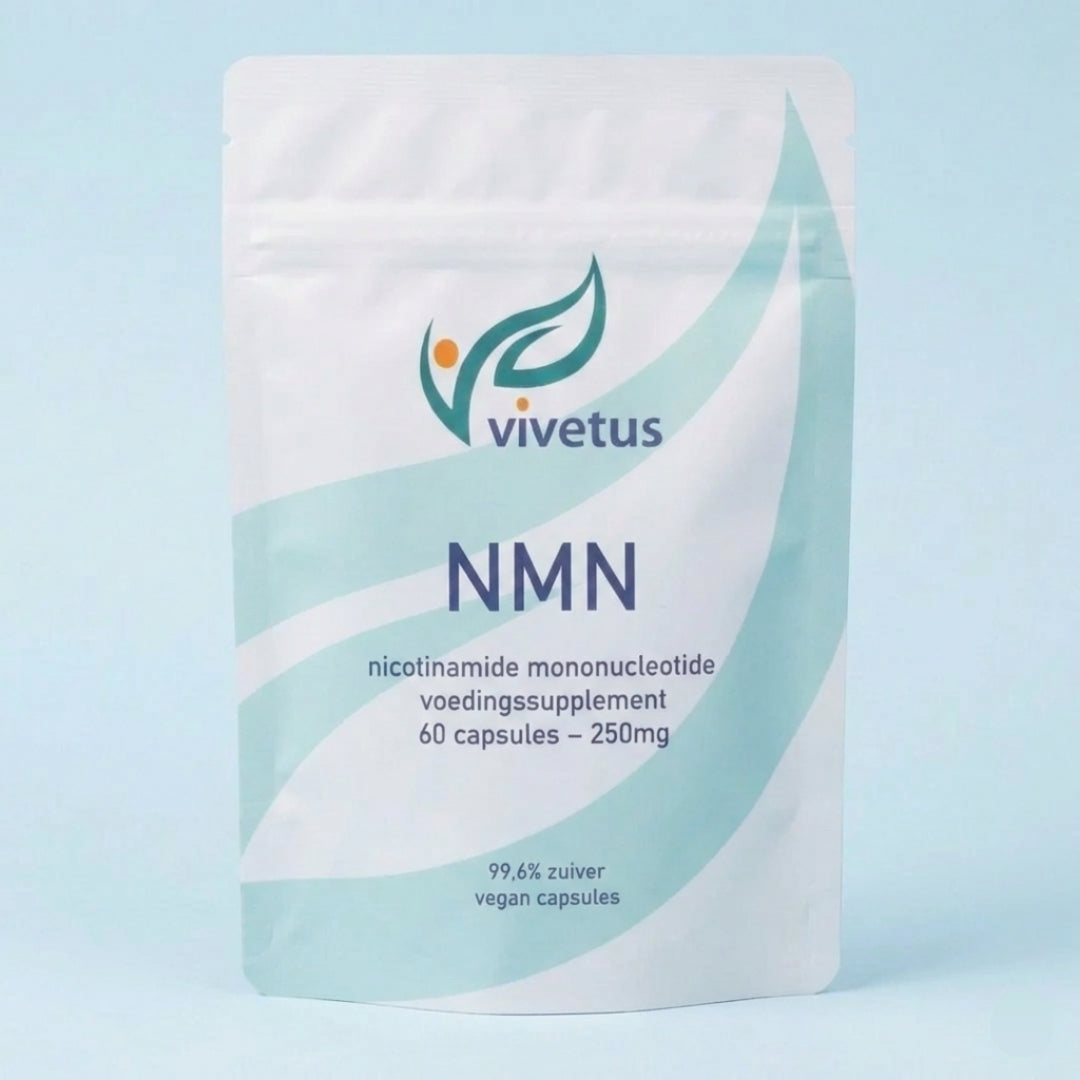
Vivetus builds its NMN range around the dose brackets that actually appear in human trials, rather than arbitrary round numbers chosen for shelf appeal. The Vivetus® NMN 500mg capsules sit close to the upper range tested for short-term tolerability, while the 250mg capsule format mirrors the exact daily dose used in the 12-week gait speed and grip strength trial.
When you’re comparing NMN products generally, a few transparency signals are worth checking before you buy anywhere:
- Third-party testing, confirming the capsule contains what the label claims and nothing it doesn’t.
- GMP (Good Manufacturing Practice) statements, indicating the facility follows consistent quality and hygiene standards.
- Clear dose disclosure per capsule, rather than vague blends that hide the actual NMN content.
Vivetus discloses dosage per capsule plainly and formulates its products vegan across the range, which matters if you’re also taking companion compounds like resveratrol or TMG as part of a broader NAD+ support routine.
What I’ve learned watching how people actually use NMN
The customers who get the most out of NMN, sublingual or otherwise, aren’t chasing a dramatic before-and-after. They’re the ones who pick a 12-week window, similar to the trial durations that actually generated data, and track something concrete: energy through the afternoon, recovery after exercise, sleep quality. That’s a realistic timeframe grounded in what the evidence covers.
What tends to disappoint people is expecting the sublingual format itself to be the breakthrough. It’s a faster onset, not a different outcome. Monitor how you feel, loop in your doctor if you’re on other medication, and judge the product on consistency of use rather than the delivery method’s marketing story.
— Jord
Choosing your NMN format and the next step
If you’ve read this far, you already know sublingual NMN offers faster early exposure, not a guaranteed bigger dose delivered to your cells, so the format decision comes down to your routine and what dose bracket the trials actually support. Vivetus stocks NMN capsules at 250mg and 500mg, matching the exact ranges used in the human trials covered above, each independently tested and formulated vegan.
For a broader NAD+ support routine, the Longevity Core bundle pairs NMN with complementary compounds like resveratrol, while the Longevity Plus bundle extends that further for readers wanting a more complete stack. If your priority is daily energy rather than long-term longevity tracking, the Energy & Vitality bundle is built around that specific goal. Whichever you choose, pick a single dose bracket, commit to a 12-week window similar to the trials cited here, and consider a subscription if you’d rather not think about reordering partway through.
Sources
- Chronic nicotinamide mononucleotide supplementation elevates blood nicotinamide adenine dinucleotide levels and alters muscle function in healthy older men | npj Aging
- Nicotinamide adenine dinucleotide metabolism and arterial stiffness after long-term nicotinamide mononucleotide supplementation: a randomized, double-blind, placebo-controlled trial | Scientific Reports
- Nicotinamide Mononucleotide Supplementation - PMC - NIH
- Mapping Evidence Gap Between NMN and NR for Metabolic Outcomes: A Systematic Review, Transitivity Assessment, and Indirect Comparison Meta-Analysis