

What are dietary supplements and how do they support vitality
Dietary supplements promise enhanced vitality and longevity, yet many overestimate their transformative power. These products contain vitamins, minerals, herbs, and other nutrients designed to complement your diet, not replace it. Understanding what supplements truly are and their evidence-based benefits helps you make informed choices. This article clarifies realistic expectations, examines scientific evidence, addresses safety concerns, and offers practical guidance for incorporating supplements wisely into a health-focused lifestyle. You’ll discover how supplements fit into vitality strategies whilst avoiding common misconceptions.
Table of Contents
- Key takeaways
- What dietary supplements are and how they work
- Regulation and quality challenges in dietary supplements
- Scientific evidence on supplements for vitality and longevity
- Risks, contraindications, and best practical advice for supplement use
- Explore Vivetus supplements for vitality support
- Frequently asked questions
Key Takeaways
| Point | Details |
|---|---|
| Supplements complement diet | They add nutritional value to your meals rather than replacing healthy eating. |
| Modest benefits | Benefits are limited to addressing deficiencies or specific needs rather than transforming health. |
| Regulation and safety gaps | Regulation treats supplements as foods with post market safety reporting rather than pre market approval. |
| Food remains primary source | Food remains the primary source of nutrients with supplements playing a supplementary role. |
What dietary supplements are and how they work
Dietary supplements are products you consume orally that contain one or more dietary ingredients. These include vitamins, minerals, herbs, amino acids, enzymes, and other botanicals. The Office of Dietary Supplements defines them as products labelled as supplements and intended to add nutritional value to your diet.
Supplements come in various forms:
- Pills and capsules for convenient dosing
- Tablets that dissolve or chew easily
- Liquids and powders for flexible administration
- Soft gels containing oil-based nutrients
Active ingredients vary enormously depending on intended purpose. Vitamin D supports bone health and immune function. Omega-3 fatty acids promote cardiovascular wellness. Protein powders provide amino acids for muscle synthesis. Herbal extracts like ginkgo biloba target cognitive support. Each ingredient addresses different physiological needs through distinct biological pathways.
How supplements work depends on their composition. Research shows multiple mechanisms including nutrient gap filling, antioxidant activity, anti-inflammatory effects, and muscle protein synthesis stimulation. For example, leucine directly triggers muscle building signals. Antioxidants like vitamin C neutralize free radicals that damage cells. B vitamins enable energy metabolism by serving as enzyme cofactors.
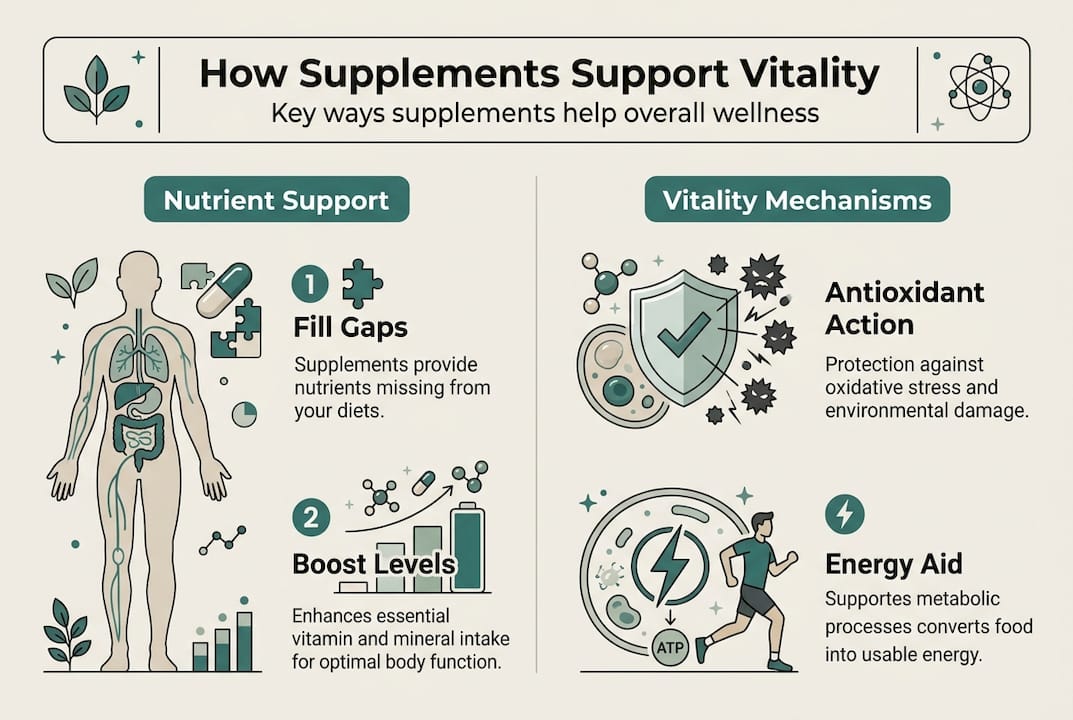
Understanding these mechanisms helps set realistic expectations. Supplements work best when addressing specific deficiencies or supporting particular biological functions. They cannot override poor dietary habits or sedentary lifestyles. Think of them as targeted support rather than comprehensive health solutions.
The body absorbs and utilises supplement nutrients similarly to food-derived nutrients, though bioavailability varies. Fat-soluble vitamins require dietary fat for absorption. Some minerals compete for uptake, affecting effectiveness when taken together. Timing and dosage significantly influence outcomes.

Pro Tip: Take fat-soluble vitamins like A, D, E, and K with meals containing healthy fats to maximise absorption and effectiveness.
Recognising what supplements can and cannot do prevents disappointment. They complement healthy foundations like balanced nutrition and lifestyle habits, not replace them. This understanding guides smarter supplement choices aligned with your actual needs.
Regulation and quality challenges in dietary supplements
Dietary supplements face less rigorous oversight than pharmaceutical drugs. Under the Dietary Supplement Health and Education Act, supplements are regulated as food products. This means manufacturers don’t need pre-market approval to demonstrate efficacy or safety before selling products.
Key regulatory differences include:
- No requirement to prove effectiveness before marketing
- Manufacturers responsible for ensuring safety without government pre-approval
- Claims about structure and function allowed without efficacy evidence
- Post-market surveillance rather than pre-market testing
Manufacturers must report serious adverse events to regulatory authorities. However, the burden of proof for safety lies with companies, not independent testing. This creates potential gaps in consumer protection compared to prescription medications.
Quality inconsistency poses significant challenges. The Merck Manual highlights that lack of standardisation causes variability in active ingredient amounts. One bottle might contain substantially more or less than the label states. Some products contain unlisted ingredients or contaminants like heavy metals, pesticides, or prescription drugs.
| Quality issue | Consumer impact |
|---|---|
| Ingredient variability | Inconsistent dosing, reduced effectiveness |
| Contamination | Exposure to harmful substances |
| Mislabelling | Consuming unintended ingredients |
| Adulteration | Unknown drug interactions |
Third-party certification programs offer some assurance. Organizations like NSF International, USP, and ConsumerLab independently test products for purity, potency, and quality. Products bearing these seals have undergone verification that contents match labels and meet safety standards.
Pro Tip: Look for NSF Certified for Sport or USP Verified marks on supplement labels to ensure third-party quality testing and ingredient verification.
The regulatory landscape means you bear more responsibility for vetting supplement quality. Research brands thoroughly. Check for transparency about sourcing, manufacturing practices, and testing protocols. Reputable companies voluntarily submit to third-party testing and publish certificates of analysis.
When choosing supplements for healthy aging, prioritize brands with robust quality control. Read reviews from independent testing organizations. Consult healthcare providers familiar with supplement quality issues. This diligence protects you from ineffective or potentially harmful products whilst maximizing benefits from high-quality supplements.
Scientific evidence on supplements for vitality and longevity
Research on supplements’ anti-aging effects shows modest but measurable benefits for specific nutrients. A comprehensive Nature Medicine study found that multivitamins modestly slow epigenetic aging markers. Omega-3 fatty acids, CoQ10, and collagen amino acids demonstrate some telomere protection, suggesting cellular age reduction.
Key findings on supplement efficacy:
- Multivitamins affect DNA methylation patterns linked to biological age
- Omega-3 supplementation shows anti-inflammatory benefits
- CoQ10 supports mitochondrial function and energy production
- Collagen peptides may improve skin elasticity and joint health
- Vitamin D deficiency correction improves multiple health markers
However, evidence comes with important caveats. The same research revealed that centenarians use supplements at low rates, only 10-12% regularly. This suggests factors beyond supplementation dominate extreme longevity. Genetics, lifelong dietary patterns, physical activity, social connections, and stress management likely matter more.
| Supplement type | Evidence strength | Primary benefit |
|---|---|---|
| Multivitamins | Moderate | Modest epigenetic age markers |
| Omega-3 | Strong | Cardiovascular and inflammatory support |
| Vitamin D | Strong | Bone health, immune function |
| CoQ10 | Moderate | Mitochondrial energy production |
| Collagen | Emerging | Skin and joint support |
Supplements show clearer benefits when correcting specific deficiencies rather than providing general anti-aging effects. Someone with vitamin D insufficiency gains substantially from supplementation. A person with adequate nutrient status sees minimal additional benefit from the same supplement.
Context matters enormously. Supplements supporting healthy aging work best alongside foundational health practices. They cannot compensate for poor sleep, chronic stress, sedentary behavior, or inadequate nutrition. Think of them as optimization tools, not transformation solutions.
Researchers emphasize realistic expectations. As one review notes, “Supplements offer promise but are no substitute for a balanced diet and lifestyle.” The evidence supports targeted supplementation for specific needs rather than blanket recommendations for everyone.
Individual variation affects outcomes significantly. Genetics influence how you metabolize nutrients. Existing health conditions alter requirements. Age changes absorption and utilization. What benefits one person might prove unnecessary or even harmful for another.
Current evidence suggests supplements play a supporting role in vitality strategies. They address nutritional gaps, support specific biological functions, and potentially slow some aging markers. Yet they remain complementary to comprehensive lifestyle approaches. The most robust longevity evidence still points to whole food diets, regular movement, quality sleep, stress management, and social engagement as primary drivers.
Risks, contraindications, and best practical advice for supplement use
Supplements carry potential risks alongside benefits. Common side effects include gastrointestinal discomfort like nausea, bloating, or diarrhea. High doses of certain nutrients cause more serious problems. Fat-soluble vitamins A and D accumulate in body tissues, potentially reaching toxic levels with excessive intake.
Specific high-risk scenarios include:
- Vitamin K interfering with anticoagulant medications
- St John’s wort reducing the effectiveness of antidepressants and birth control
- Calcium supplements increasing cardiovascular risk at high doses
- Iron causing oxidative stress when unnecessary
- Herbal products containing undisclosed pharmaceutical ingredients
Drug interactions pose serious concerns. Supplements can enhance or diminish the effects of prescription medications. Vitamin E increases the risk of bleeding when combined with anticoagulants. Magnesium reduces antibiotic absorption. Grapefruit extract affects numerous drug metabolism pathways.
Special populations face unique risks. Pregnant women must avoid excess vitamin A, which causes birth defects. People with chronic kidney disease risk mineral imbalances from supplements. Cancer patients may experience treatment interference from antioxidant supplementation. These groups require particularly careful medical supervision.
Practical expert recommendations for safe supplementation:
- Prioritise nutrient-dense whole foods as your primary source
- Choose products with third-party certification like NSF or USP
- Monitor blood levels of key nutrients through periodic testing
- Consult healthcare providers before starting new supplements
- Disclose all supplements to doctors and pharmacists
- Start with lower doses to assess tolerance
- Research potential interactions with medications
Pro Tip: Keep a supplement diary listing products, doses, and timing alongside any symptoms or changes you notice, then share this with your healthcare provider at appointments.
Research emphasises informed decision-making through medical consultation, especially with multiple medications. Your doctor can identify potential interactions, assess actual deficiencies through testing, and recommend appropriate products and doses.
Quality verification protects against contamination and mislabelling. Third-party tested products undergo independent analysis confirming label accuracy and purity. This reduces exposure to heavy metals, pesticides, or undeclared ingredients.
Dosing matters significantly. More isn’t better with supplements. Exceeding recommended amounts increases toxicity risk without additional benefits. Follow label instructions unless a healthcare provider advises otherwise based on your specific needs.
Timing optimises absorption and minimises side effects. Take iron on an empty stomach but calcium with food. Separate minerals that compete for absorption. Consider how supplements interact with meal timing and other nutrients.
Regular reassessment ensures continued appropriateness. Your needs change with age, health status, diet, and lifestyle. What made sense initially might become unnecessary or require adjustment. Periodic blood work reveals whether supplementation achieves intended effects.
Understanding supplement safety and common myths empowers better choices. Reject the notion that natural always means safe. Recognise that supplements are biologically active substances requiring the same caution as medications. Approach supplementation strategically rather than casually.
Explore Vivetus supplements for vitality support
If you’re ready to incorporate evidence-based supplementation into your vitality strategy, Vivetus offers carefully selected products aligned with scientific research. Our Energy & Vitality bundle combines nutrients supporting metabolic health and cellular energy production.
For targeted methylation support, Vivetus TMG helps maintain healthy homocysteine levels, a marker linked to cardiovascular and cognitive wellness. These products complement the balanced diet and lifestyle foundation essential for healthy ageing.
We prioritise quality and transparency in every product. Each supplement undergoes rigorous testing to ensure purity and potency. When you choose Vivetus, you’re selecting scientifically-backed formulations designed to support your health goals effectively.
Remember that supplements work best as part of comprehensive wellness strategies. Consult your healthcare provider to personalise supplementation based on your unique needs, existing conditions, and current medications. This ensures safe, effective support for your vitality journey.
Frequently asked questions
What exactly are dietary supplements?
Dietary supplements are products containing vitamins, minerals, herbs, amino acids, or other nutrients intended to complement your diet. They come as pills, capsules, powders, or liquids and are labelled as supplements rather than foods or drugs.
Are dietary supplements safe for everyone?
Not universally. Whilst generally safe when used appropriately, supplements can cause side effects, interact with medications, or pose risks for pregnant women, those with kidney disease, or cancer patients. Always consult healthcare providers before starting supplementation.
Do supplements actually improve longevity?
Evidence shows modest benefits for specific nutrients like omega-3 and vitamin D in addressing deficiencies. However, centenarian studies reveal low supplement use, suggesting lifestyle factors matter more than supplementation for extreme longevity.
How do I choose quality supplements?
Look for third-party certification from NSF International or USP, which verify ingredient accuracy and purity. Research manufacturer transparency about sourcing and testing. Avoid products making exaggerated health claims or lacking clear ingredient lists.
What’s the difference between supplements and medicines?
Supplements are regulated as foods with less rigorous pre-market testing, whilst medicines undergo extensive efficacy and safety trials before approval. Supplements cannot legally claim to treat, cure, or prevent diseases like medications can.
Should I take supplements if I eat a balanced diet?
Most nutrients come best from whole foods. Supplements help address specific deficiencies, support particular health goals, or meet increased needs during certain life stages. Blood testing reveals whether supplementation is necessary for your situation.