

Food Wins for Resveratrol: 400 mg Study Delays Peak to 2 Hours
Take resveratrol with a normal meal. It is generally better tolerated that way, and food only delays how quickly it peaks in your blood, not how much of it your body eventually absorbs. The real fix isn’t hunting for the “perfect” fasted or fed window. It’s picking one time of day and keeping it there.
TL;DR:
- Taking resveratrol with a normal meal delays its peak blood concentration from about 30 minutes to two hours without reducing overall absorption.
- Consistent daily intake at the same time of day matters more than the timing relative to fasting or fed states, especially if mild nausea occurs.
- Natural sources like grapes and red wine produce mainly metabolites, not the free resveratrol dose found in supplements, making them unreliable for precise dosing.
- Check supplement labels for trans-resveratrol content, dose per capsule, formulation details, and third-party testing to ensure product quality and accurate intake.
- Start with the dose recommended on the label, take it with a meal, and monitor for gastrointestinal discomfort or drug interactions before considering higher amounts or different routines.
Table of Contents
- Resveratrol met eten: how food changes absorption in practice
- Why grapes and red wine can’t replace a measured supplement
- What to check on a resveratrol supplement label
- How to start safely and what to watch for
- Three simple routines to build the habit
- Why consistency beats bioavailability chasing
- Vivetus resveratrol capsules: a straightforward next step
- Sources
- FAQ
Resveratrol met eten: how food changes absorption in practice
The clearest data on this comes from a randomised cross-over trial of 24 healthy adults who took a single 400 mg dose of trans-resveratrol either with a high-fat meal or on an empty stomach. Food pushed the median time to peak concentration (tmax) from around 30 minutes out to roughly two hours, but total exposure, measured as area under the curve (AUC), was not meaningfully different between the two conditions, according to the pharmacokinetic study on food and trans-resveratrol.
That distinction between rate and extent matters more than most people realise. A slower climb to peak concentration isn’t a smaller dose reaching your system, it’s the same dose arriving more gradually. For most people, that gentler curve is actually the more comfortable option.
What happens after absorption explains why. Resveratrol is converted rapidly into glucuronide and sulfate metabolites, so unchanged resveratrol only ever shows up in plasma in trace amounts, as human bioavailability research confirms. Whatever meal you eat, most of what circulates in your bloodstream isn’t “raw” resveratrol at all.
Practical guidance follows from this:
- Follow the dose and timing stated on your product’s label rather than improvising your own schedule.
- If you notice any stomach sensitivity, take your capsule with a normal meal rather than fasting.
- Don’t force a high-fat meal purely to try to boost absorption. The evidence doesn’t support that as a meaningful bioavailability strategy.
Resveratrol taken with a 400 mg dose and a high-fat meal showed a delayed peak but statistically similar total exposure compared with fasting, which is the single most useful number in this entire conversation.
Pro Tip: If you get mild nausea on an empty stomach, switch that day’s dose to whichever meal you’re about to eat rather than skipping it. Consistency of intake beats precision of timing.
Why grapes and red wine can’t replace a measured supplement
Resveratrol occurs naturally in grape skins, peanut skins, and red wine, but none of these are reliable ways to hit a specific dose. Research on red wine consumption found that free resveratrol appears in serum only in trace amounts, with glucuronide metabolites dominating regardless of how fatty the accompanying meal was, according to the study on red wine and resveratrol bioavailability.
The mismatch is worth spelling out plainly:
- A glass of red wine contains variable small amounts of resveratrol depending on grape variety, region, and vintage.
- Almost none of what you drink survives as free resveratrol by the time it reaches your bloodstream.
- Comparing wine milligrams directly to supplement milligrams is misleading, since dietary intake mostly produces metabolites rather than the parent compound.
- Individual gut microbiota also shape how resveratrol gets metabolised, adding further variability between people, a factor explored in research on resveratrol metabolism and microbial pathways.
Treat wine and grapes as part of a generally sensible diet, not as a dosing method. If you want a specific, repeatable intake for research-aligned reasons, a labelled supplement is the only route that gives you that consistency.
What to check on a resveratrol supplement label
Not every resveratrol product behaves the same way in your body, and formulation is a big part of why. Clinical trial registrations are actively comparing unformulated extracts against cyclodextrin complexes and other delivery systems to see whether they change pharmacokinetics, including the randomised cross-over study on three resveratrol products and a separate biokinetic comparison of grape-extract formulations.
Before buying, check the label for these details:
- The amount of trans-resveratrol per capsule, not just “resveratrol extract” as a vague total.
- Total milligrams per serving, and whether that matches the dose used in the studies you’re relying on.
- Any formulation notes, such as cyclodextrin complexing or other bioavailability claims.
- Evidence of third-party testing or purity statements, which signal the manufacturer is willing to be checked.
A related Vivetus analysis of resveratrol absorption walks through why oral bioavailability is naturally limited and how different products attempt to address it. Be wary of extrapolating pharmacokinetic results from one branded formulation onto a completely different product. Two capsules that both say “resveratrol 500 mg” on the front are not guaranteed to behave identically once swallowed.
How to start safely and what to watch for
There’s no single dose proven to be optimal for every person, so the label on your product and the clinical evidence behind it are your best reference points rather than internet folklore. A Vivetus guide to resveratrol dosing covers this in more depth if you want the fuller picture.
Mild gastrointestinal discomfort is the most commonly reported side effect, and taking your dose with food usually resolves it. If you take anticoagulant medication or any other prescription drug, treat that as a reason to check with a pharmacist or doctor before starting, since interactions are possible. A Vivetus overview of resveratrol side effects sets out the safety picture in full.
A simple way to start:
- Begin at the dose stated on the product label, not a higher amount you’ve seen recommended elsewhere.
- Take it with the same meal every day for two to four weeks and note how you feel.
- Stop and speak to a clinician if you’re on regular medication or notice anything unusual, such as persistent stomach upset or unexpected bruising.
Three simple routines to build the habit
Pick one of these and stay with it rather than switching between them:
- With breakfast: fits naturally into a morning routine and works well if you take other supplements at the same time, though it can feel rushed on busy mornings.
- With lunch: gives steady midday consistency and suits people who eat a proper meal in the middle of the day rather than grabbing something quick.
- With dinner: often the easiest to remember, and practical if you already take evening medication, since you can anchor everything to one point in the day.
Take your capsule with a full glass of water, and keep any other supplements at the same fixed time. The goal is a routine you don’t have to think about after the first fortnight.
Why consistency beats bioavailability chasing
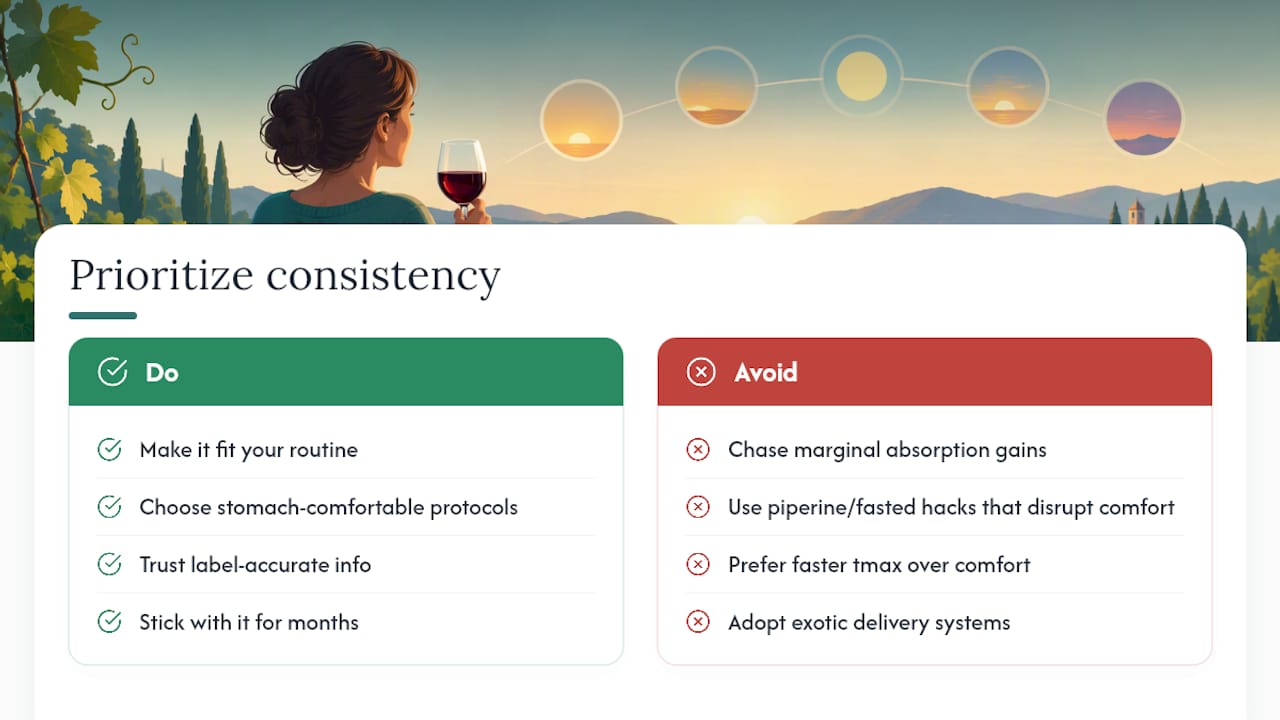
Most of the noise around resveratrol focuses on squeezing out marginal absorption gains, piperine combinations, fasted-state protocols, exotic delivery systems, and so on. I think that misses the point for almost everyone reading this. The food study everyone cites shows a delayed peak, not a smaller one, and chasing a faster tmax at the cost of stomach comfort is a poor trade.
What actually predicts whether someone sticks with a supplement for months rather than weeks is whether it fits painlessly into a routine they already have. That’s a duller answer than “take it fasted with black pepper for maximum absorption,” but it’s the one the pharmacokinetic evidence actually supports. Vivetus product pages and the accompanying blog posts exist precisely to give people label-accurate information rather than speculative hacks, because a routine you abandon after ten days delivers nothing however clever the formulation.
— Jord
Vivetus resveratrol capsules: a straightforward next step
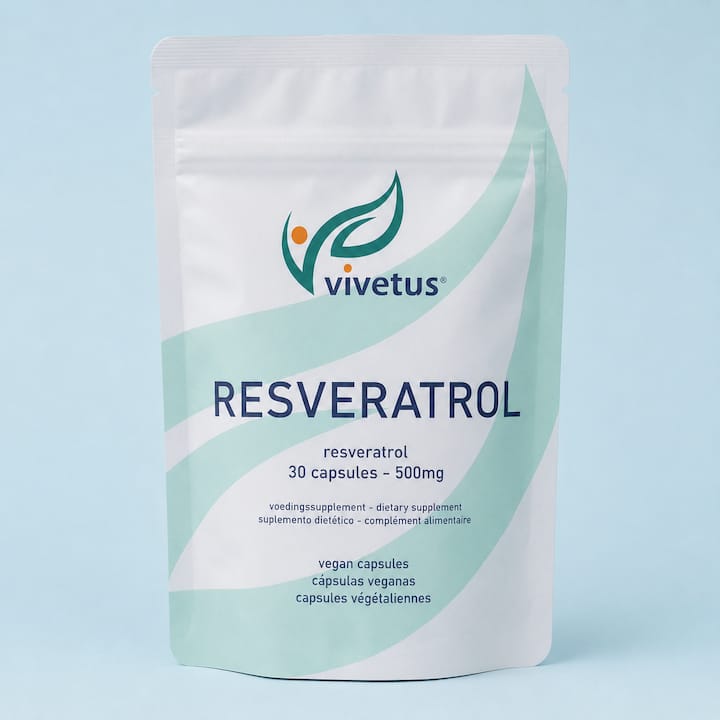
If you want a resveratrol product that keeps to the guidance above, Vivetus® Resveratrol comes as capsules formulated to be taken with a normal meal at a consistent time each day.
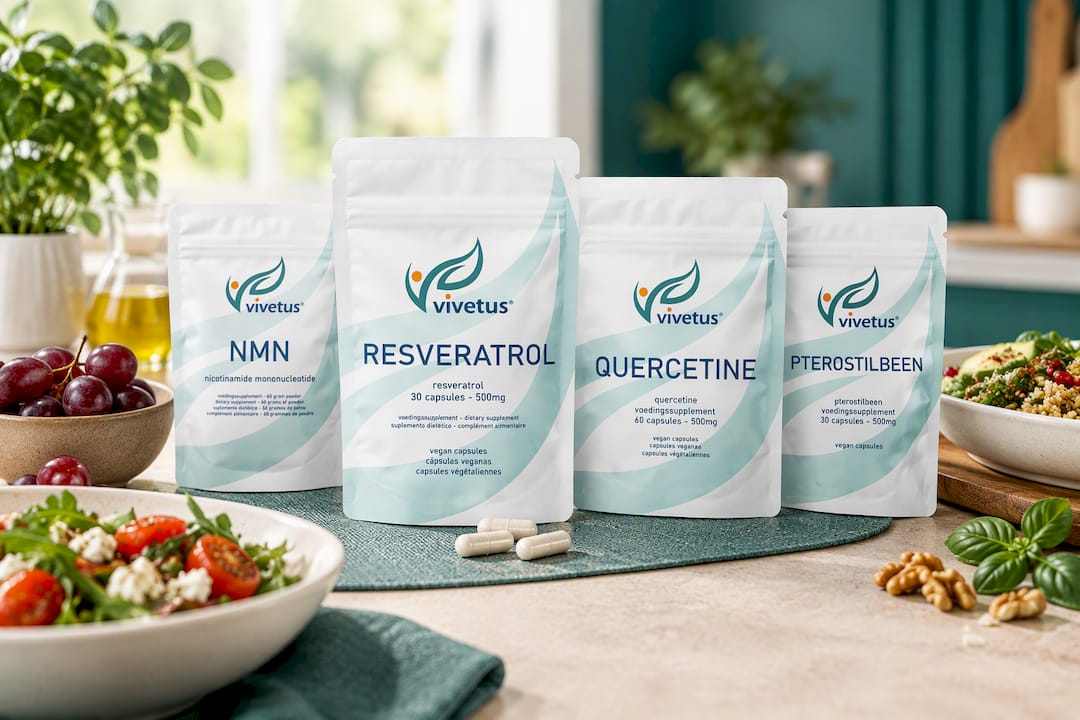
Each capsule states its trans-resveratrol content clearly on the label, so you’re not left guessing what’s inside, which matters given how much formulations vary across the wider market. For anyone building a broader longevity routine rather than a single supplement, the 🔬 Vitaal Basis bundel pairs core ingredients together, while the 🛡 CelBescherming bundel focuses on cellular protection alongside resveratrol. Supplements such as NMN, fisetin, quercetin, and pterostilbene are available for readers looking to expand beyond a single ingredient. These products are vegan and assembled in the Netherlands with transparent formulations. If you’re buying more than one product, ordering together is worth considering: Free shipping is offered on orders over €50. Subscription options may be available to avoid manual reordering every month, and the Resveratrol collection is a place to compare formats before purchase.
Sources
- Effect of food on the pharmacokinetic profile of trans-resveratrol
- High absorption but very low bioavailability of oral resveratrol in humans
- Bioavailability of trans-resveratrol from red wine in humans
FAQ
Can I take resveratrol on an empty stomach?
Yes, but it may cause mild stomach discomfort in some people. Taking it with a normal meal delays the time to peak concentration without meaningfully changing total exposure, according to pharmacokinetic research on food timing.
Does eating grapes give the same effect as a resveratrol supplement?
No. Grapes and red wine mostly deliver resveratrol metabolites rather than the parent compound, since free resveratrol appears only in trace amounts after consumption, as shown in research on red wine bioavailability. A labelled supplement gives a measured, repeatable dose that food sources cannot.
What is the best time of day to take resveratrol?
There is no single best time; consistency matters more than the specific hour. Choose breakfast, lunch, or dinner based on which meal fits your routine and any evening medication, and keep it fixed day to day.
How much resveratrol does Vivetus offer per capsule?
A resveratrol product is sold as 30 capsules containing 500 mg each. Follow the dose stated on the product label rather than adjusting it yourself.
Can resveratrol interact with medication?
It may interact with certain medications, including anticoagulants, so speak with a doctor or pharmacist before starting if you take prescription drugs. Watch for mild gastrointestinal symptoms in the first few weeks and stop use if anything unusual develops.