Skip to product information
1 of 4

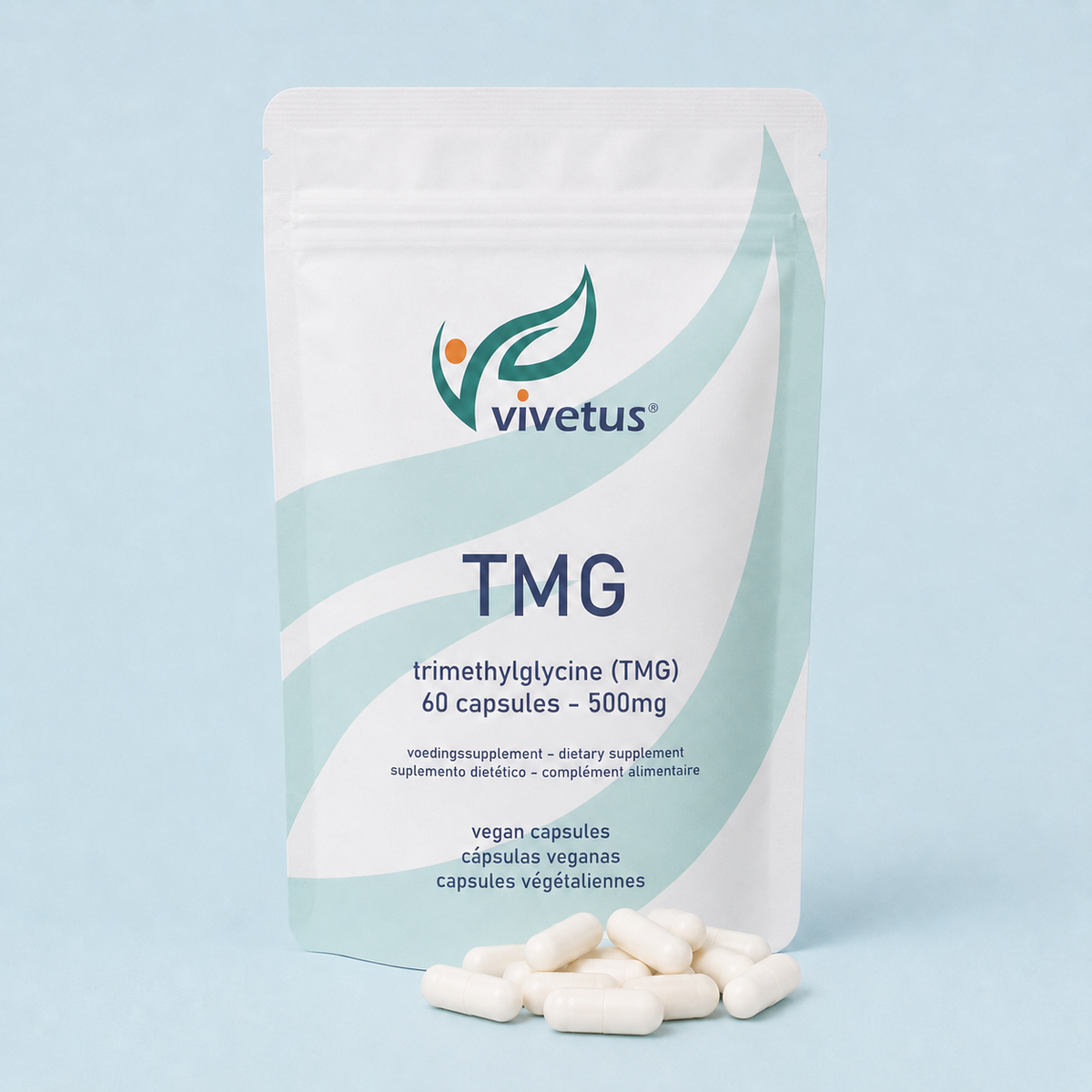
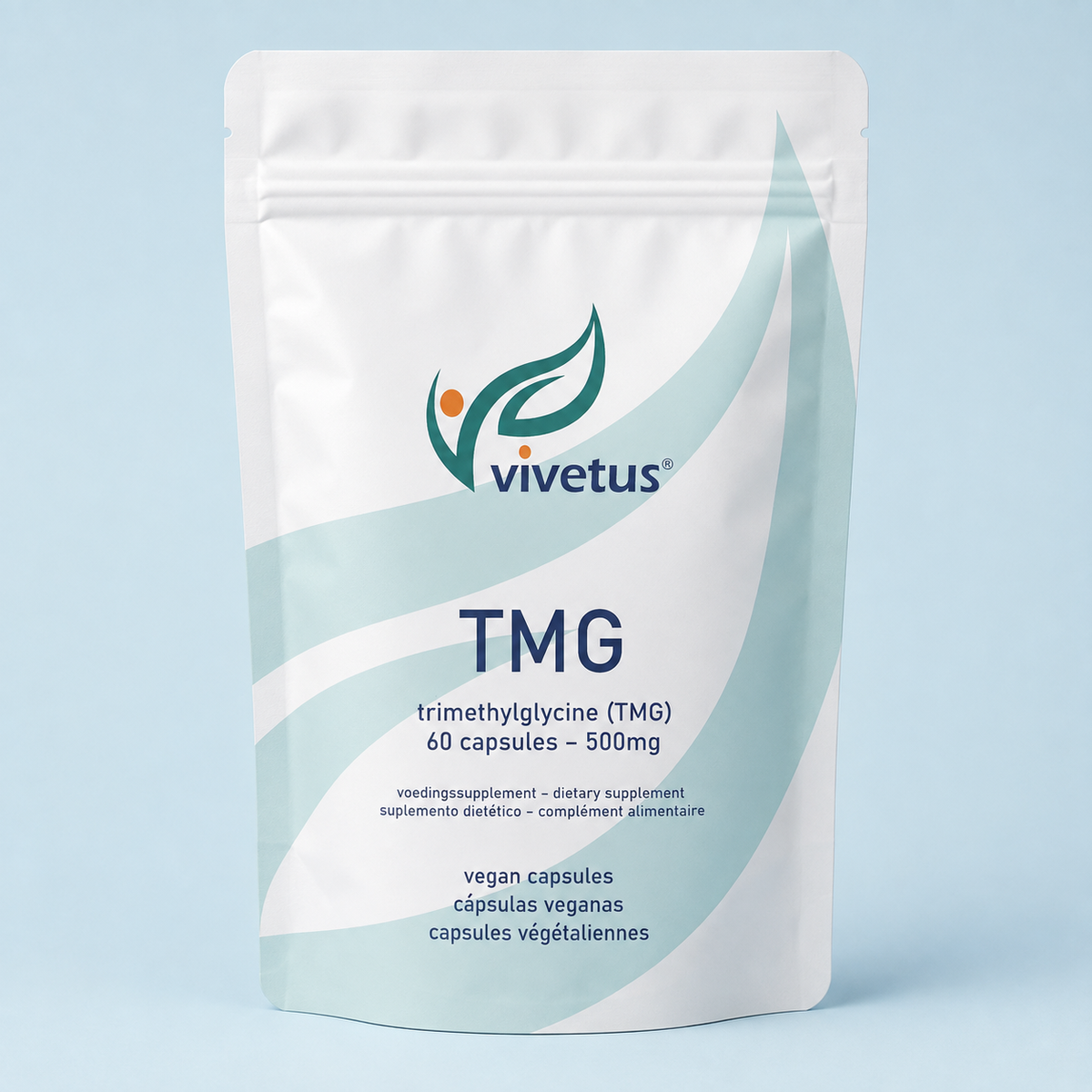
Vivetus® Trimethylglycine (TMG) - 60 capsules - 500mg

Vivetus® Trimethylglycine (TMG) - 60 capsules - 500mg

Regular price €19,00
Regular price Sale price €19,00
Unit price €0,63/g
Sale Sold out
Taxes included. Shipping calculated at checkout.
Quantity

TMG (trimethylglycine), also known as betaine, occurs naturally in beetroot, spinach and whole grains. The body uses TMG as a methyl donor in metabolism, which is why many people who take NMN combine it with TMG.

  • 500 mg per vegan capsule
  • 60 capsules per pouch
  • Independently lab-tested

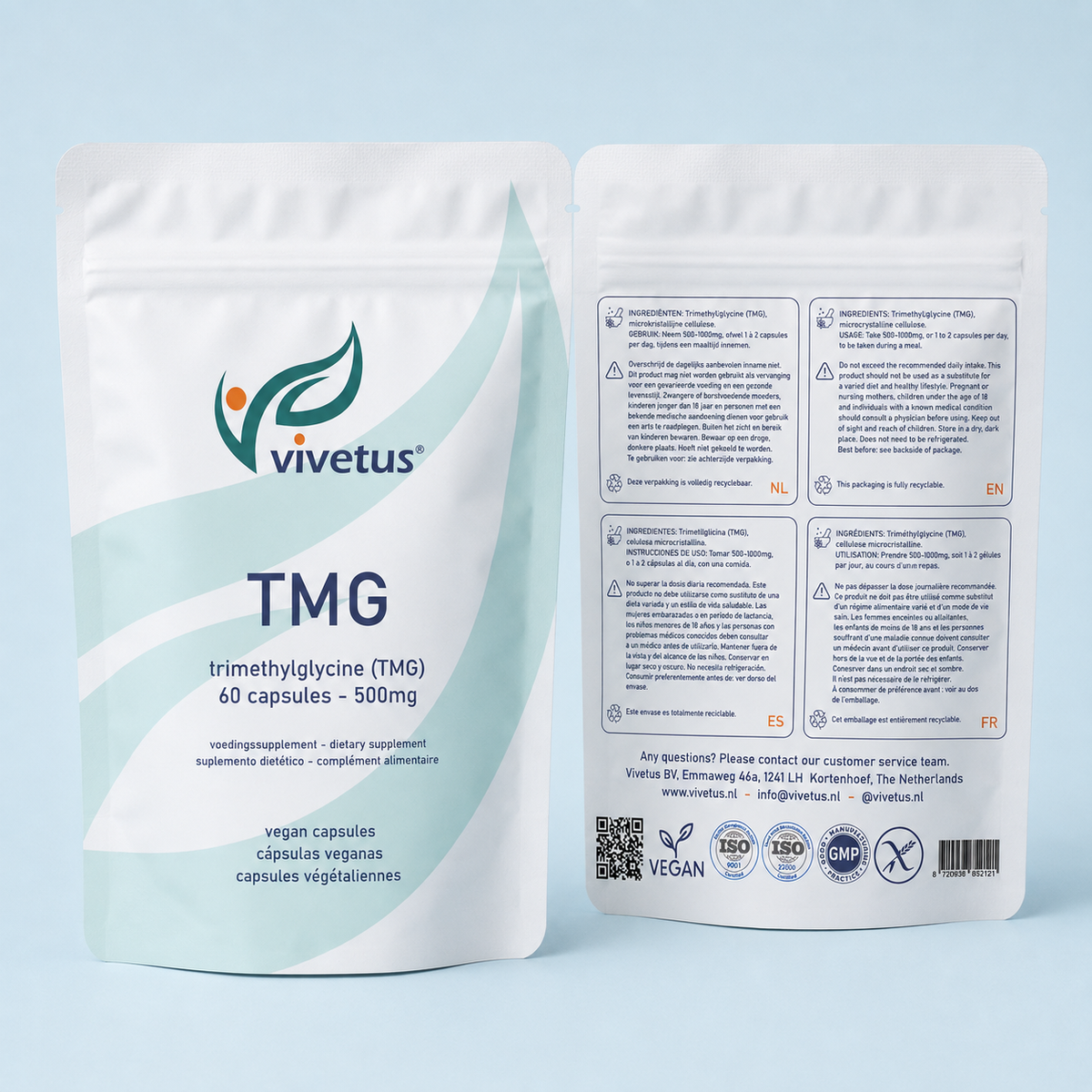
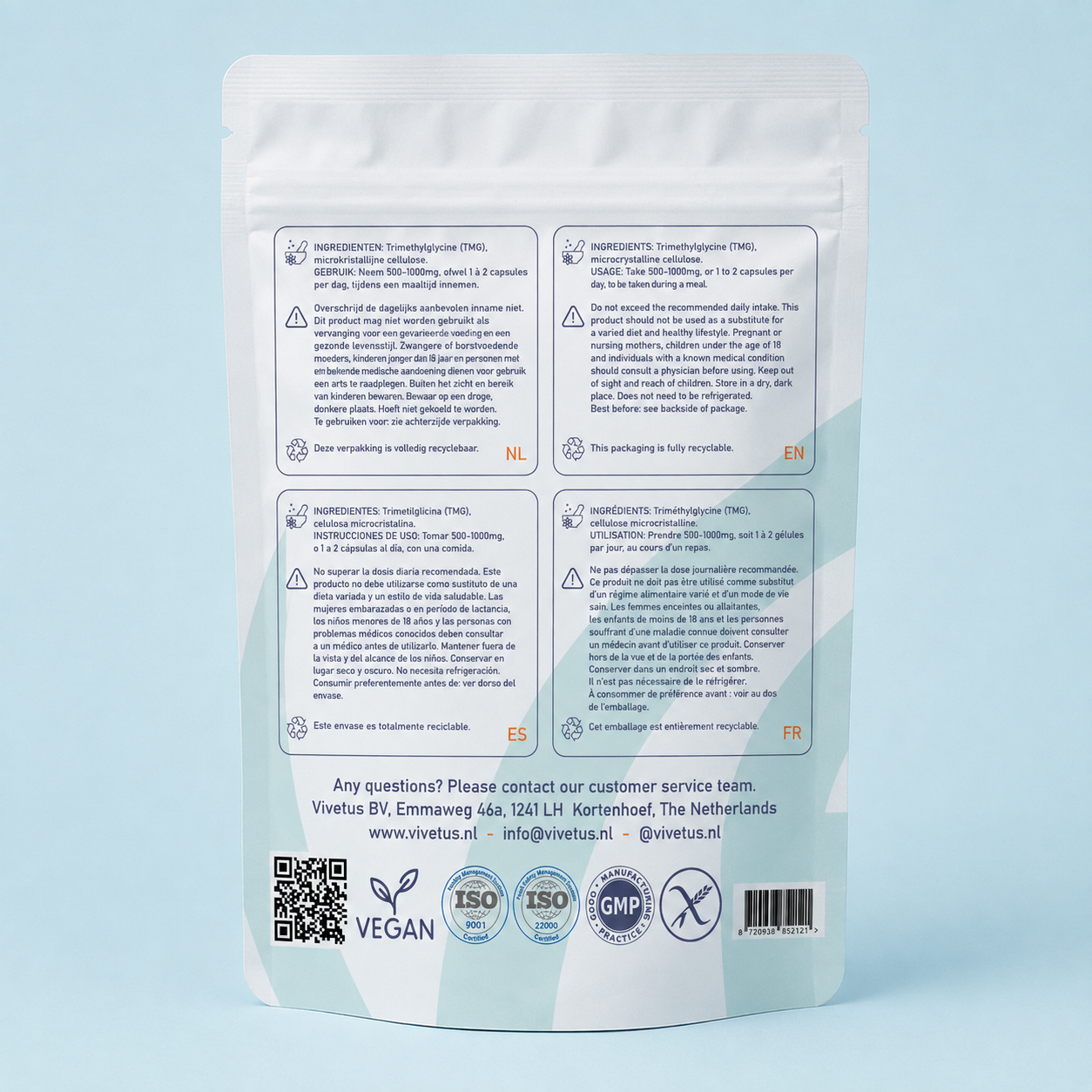
Recommended daily intake: 1 to 2 capsules (500 to 1,000 mg) per day, with a meal.

Do not exceed the recommended daily dose. A food supplement is not a substitute for a varied diet and a healthy lifestyle. Keep out of reach of young children.

The packaging is fully recyclable. The capsules are vegan and free from artificial ingredients, gluten, wheat, yeast, soy, corn, milk and preservatives.

Price includes VAT. Orders of €50 or more ship free to addresses in the Netherlands and Belgium.

Use it regularly? Choose a subscription at a lower price, so you never run out.

View full details
  • Infographic about Vivetus® TMG, with beetroot
  • Infographic about Vivetus® TMG, with the Vivetus® NMN and TMG pouches
  • Infographic about Vivetus® TMG, with hands around a leaf
  • Infographic about the ingredients of Vivetus® TMG, without artificial additives, with an older couple and beetroot
  • Infographic about the GMP, ISO 22000 and ISO 9001 certification of Vivetus® TMG, with laboratory glassware
  • Infographic about the sustainable production and recyclable packaging of Vivetus® TMG, with hands around a seedling
  • Infographic about the vegan composition of Vivetus® TMG, with fresh vegetables
  • Infographic about Vivetus® customer service
  • Vivetus® TMG pouch with GMP, vegan and recycling logos

Trimethylglycine (TMG), also known as betaine, is a substance found naturally in beetroot, spinach and wholegrains, among other foods. Your body uses betaine as a methyl donor: it donates a methyl group in the methylation process.

VIVETUS® supplies TMG in 500 mg capsules.

A bowl of supplement capsules surrounded by small dishes of herbs, seeds and oil on linen.

Betaine and homocysteine metabolism

What does betaine do in your body?

1. Methyl donor
Methylation is a biochemical process in which a methyl group (CH₃) is added to a molecule. Betaine is one of the substances that can supply such a methyl group.

2. Homocysteine metabolism
Betaine helps the body convert homocysteine into methionine. The European Union has authorised a health claim for betaine: betaine contributes to normal homocysteine metabolism. This claim applies to a daily intake of 1.5 grams of betaine.

3. Good to know
A daily intake of more than 4 grams of betaine may significantly increase blood cholesterol levels. So stick to the recommended daily amount on the pack. Taking medication, pregnant or breastfeeding? Talk to your GP or pharmacist first.

A pile of assorted capsules, tablets and softgels with a mint leaf on a dark surface.

TMG and research on healthy ageing

Betaine is studied in relation to methylation and homocysteine metabolism. There is also interest in the role of betaine in the body's production of creatine.

Many people combine TMG with NMN, because the body uses methyl groups when processing NAD⁺ precursors. Whether this combination offers extra benefits has not yet been studied in humans.

Conclusion: TMG is not a quick fix, but an addition for those who pay conscious attention to diet and lifestyle. Healthy ageing starts with the basics: good sleep, exercise and a varied diet.
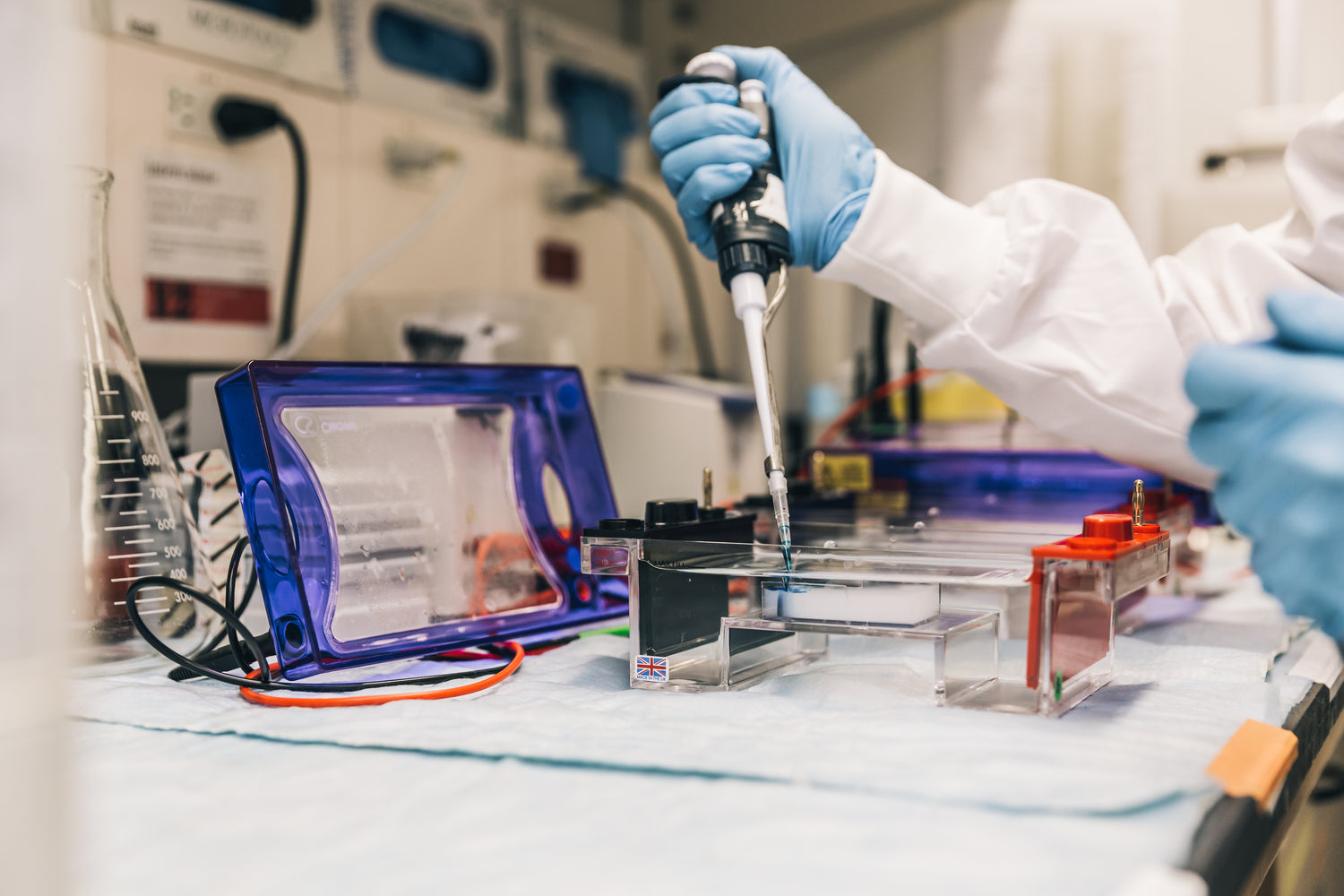
A scientist in protective clothing pipetting liquid into laboratory equipment.

Scientific background - TMG as a methyl donor

1. Betaine and homocysteine in healthy adults

Summary:
This randomised, placebo-controlled study examined the effect of betaine (1.5 to 6 grams a day) on blood homocysteine levels in healthy adults.

Results:
After six weeks, homocysteine levels fell compared with the placebo group: 12% at 1.5 grams a day, 15% at 3 grams and 20% at 6 grams. Note: more than 4 grams of betaine a day may raise cholesterol levels.

Combining TMG with other supplements

Woman waking up in bed and stretching her arms up with a smile.

TMG and NMN

Many NMN users add TMG, because the body uses methyl groups when processing NAD⁺ precursors. Whether this combination offers extra benefits has not yet been studied in humans. Stick to the recommended daily amount on the pack of each product.

TMG and berberine

Combining TMG with berberine? Berberine can affect how medicines work. Taking medication, for example for blood sugar or cholesterol? Talk to your GP or pharmacist first.

TMG with quercetin or fisetin

Quercetin and fisetin are flavonoids that are widely studied in research on healthy ageing. There are no human studies yet on combining them with TMG. Stick to the recommended daily amount of each product and talk to your GP or pharmacist first if you take medication.

  • Vegan icon

    100% VEGAN

    Our range is not only suitable for a vegan diet, but is also free from artificial ingredients, gluten, wheat, yeast, soy, corn, milk and preservatives.

  • GMP logo (Good Manufacturing Practice)

    GMP, ISO 22000 and ISO 9001

    Our products comply with GMP (Good Manufacturing Practices), ISO 22000, and ISO 9001 standards, which ensure quality and food safety. In addition, the products are extensively tested by independent organizations.

  • Recycling icon

    Sustainable

    Sustainability is very important. Our supplements are sustainably produced and packaged in recyclable packaging. The bags are optimally sized in terms of weight and volume, allowing them to be shipped easily, quickly, and as economically as possible.

    Vivetus® & sustainability 
1 of 3

Order directly

We're happy to help you choose the option that best suits your personal needs. Send us a chat message or visit our Service & contact page.