

Reduce berberine side effects in the Netherlands with 500 mg dosing
Most berberine side effects are mild, gastrointestinal, and directly tied to dose: nausea, diarrhoea, constipation, cramps and wind. The main groups who should avoid it or seek medical advice first are pregnant or breastfeeding people, infants, and anyone taking prescription medicines that interact with it. Choosing a correctly dosed, third-party tested supplement reduces most of the practical risk.
TL;DR:
- Proper dosing of berberine involves starting with 500 mg once or twice daily and gradually increasing, while avoiding high doses that worsen gastrointestinal side effects.
- People who are pregnant, breastfeeding, infants, or have certain health conditions like G6PD deficiency or severe liver disease should avoid berberine or consult a healthcare professional before use.
- Berberine interacts with liver enzymes CYP3A4 and CYP2D6, which can alter the metabolism of prescription drugs, especially anticoagulants, immunosuppressants, and blood sugar medications.
- Gastrointestinal side effects such as nausea, diarrhea, and cramps are dose-dependent and often transient, related to gut microbiota disruption and microbiome shifts caused by berberine.
- Choosing third-party tested supplements with transparent labeling reduces risks of contamination or inaccurate dosing; dose consistency and gradual introduction are key to minimizing side effects.
Table of Contents
- Common side effects: what people report and why they happen
- Who should avoid berberine or use it only under supervision
- Drug interactions and pharmacokinetic risks
- Dosing, timing and practical steps to reduce side effects
- Supplement quality and safety checks
- Who’s behind this guidance
- Weighing the benefits against the risks
- Vivetus® berberine: built around the same safety principles
- Sources
Common side effects: what people report and why they happen
Gastrointestinal upset dominates the berberine side-effect profile. Clinical research through 2025 identifies mild gastrointestinal issues as the most commonly reported problem: nausea, diarrhoea and constipation, usually transient and clearly dose-dependent. Cramping and wind often accompany these symptoms, particularly in the first one to two weeks.
The mechanism behind this is worth understanding, because it explains why the same capsule affects people so differently. Berberine has notoriously low oral bioavailability. Much of what you swallow never reaches your bloodstream intact. Instead, gut bacteria convert it into more absorbable forms, including dihydroberberine, and that conversion process reshapes your gut microbiota along the way. Berberine also has bacteriostatic activity, meaning it suppresses the growth of certain bacterial populations in the gut. That shift in your internal ecosystem, not some toxic effect on the gut lining, is usually what drives the cramping and irregular bowel habits.
Typical side effects include:
- Nausea, often within the first few doses
- Diarrhoea, linked to microbiota disruption
- Constipation, which can occur even alongside diarrhoea in the same person over time
- Abdominal cramps and bloating
- Flatulence, usually easing as the gut adjusts
A large randomised trial on berberine for type 2 diabetes, the PREMOTE study, found it improved glycaemic markers but caused more gastrointestinal adverse events than placebo. That trade-off between metabolic benefit and gut tolerability is the single most consistent finding across the berberine literature, and it’s why dosing strategy matters as much as the ingredient itself.
Who should avoid berberine or use it only under supervision
Certain groups face risks that go beyond a bit of stomach discomfort. Authoritative clinical overviews are consistent on this point: berberine is contraindicated in pregnancy and breastfeeding, largely because of concerns around neonatal jaundice and unclear effects on fetal and infant development, and it warrants extreme caution in infants and young children.
Beyond that core group, a few other categories need a conversation with a clinician before starting:
- Pregnant or breastfeeding people: avoid entirely due to jaundice and developmental risk concerns.
- Infants and young children: their metabolic and gut systems handle berberine unpredictably.
- People with G6PD deficiency: this enzyme deficiency raises the risk of complications from bacteriostatic compounds like berberine.
- People with seizure disorders or bleeding disorders: berberine’s effects on clotting and neurological pathways are not well enough mapped for these groups.
- People with severe liver disease or on narrow-therapeutic-index drugs: berberine’s impact on drug metabolism (covered below) can push these medicines outside their safe range.
If you fall into any of these categories, the sensible move isn’t to guess. Speak with a doctor or pharmacist before adding berberine to your routine.
Drug interactions and pharmacokinetic risks
Berberine doesn’t just act on your gut. It interferes with the enzymes your liver uses to process other medicines, which is where most of the serious risk sits. It inhibits CYP3A4 and CYP2D6, two of the liver’s main drug-metabolising enzymes, and it also affects P-glycoprotein (P-gp), a transporter protein that controls how much of a drug gets absorbed or pushed back out of cells. When berberine slows these pathways down, other drugs can build up to higher concentrations than intended.

Pro Tip: If you take any prescription medicine daily, list it out and check each one with a pharmacist before starting berberine, rather than relying on a quick online search.
Drug categories where this matters most include:
- Anticoagulants: altered clearance can shift bleeding risk in either direction.
- Immunosuppressants such as cyclosporine: documented interactions via CYP and P-gp pathways can raise blood levels unpredictably.
- Some antihypertensives and psychotropic medicines: metabolism through the same liver enzymes makes dose stability harder to predict.
Metformin deserves its own mention. Berberine can decrease metformin blood levels in some contexts while enhancing the hypoglycaemic effect of other antiglycaemic drugs, a genuinely confusing combination that makes self-adjustment dangerous. Anyone managing diabetes with prescription medication needs regular blood glucose checks and clinician oversight if adding berberine, not an assumption that “natural” means gentle.
Dosing, timing and practical steps to reduce side effects
Dose is the lever you actually control, and it’s the one most people ignore. Clinical guidance commonly points to regimens of around 500 mg taken two to three times daily, with total daily intake sometimes reaching roughly 1,500 mg divided across doses. Splitting the dose isn’t arbitrary. Berberine’s half-life is short, so dividing intake keeps blood levels steadier and avoids the sharp peaks that tend to trigger gastrointestinal symptoms.
A practical approach looks like this:
- Start low. Begin with a single 500 mg dose rather than jumping straight to three.
- Take it with food. This blunts the nausea many people experience on an empty stomach.
- Increase gradually. Add a second, then a third dose across one to two weeks if tolerated.
- Scale back if symptoms appear. Reducing to a lower dose or pausing for a few days usually resolves mild GI upset.
- Watch for red flags. Severe gastrointestinal bleeding, jaundice, fainting, or signs of severe hypoglycaemia (shakiness, confusion, cold sweats) warrant stopping immediately and seeking medical attention.
Pro Tip: Keep a simple daily note of dose, timing, and any symptoms for the first two weeks. Patterns that seem random day to day often turn out to be dose or timing related once you look back over a week.
Supplement quality and safety checks
Supplement manufacturing standards vary considerably between brands, and berberine is no exception. Because oversight is inconsistent across the industry, clinicians recommend third-party tested products with transparent labelling to reduce the risk of contamination or inaccurate dosing. A capsule that claims 500 mg should actually contain close to 500 mg. That’s not guaranteed unless someone outside the manufacturer has checked it.
A batch that hasn’t been independently verified is a guess dressed up as a supplement. The label tells you what the company intends; third-party testing tells you what’s actually in the capsule.
Before buying, check for:
- A standardised extract with a clearly stated percentage of active compound
- Exact milligrams per capsule, not a vague “proprietary blend”
- A batch certificate or certificate of analysis available on request
- Independent testing confirming absence of heavy metals or microbial contaminants
- A retailer with a track record of clinical research transparency
Vivetus applies these standards to its own berberine formulation, with lab-tested batches and clearly stated milligram content per capsule.
Who’s behind this guidance
This article was written by Jord, drawing on peer-reviewed pharmacology reviews and clinical overviews rather than anecdotal claims.
Vivetus formulates its berberine supplement with the same dose-clarity and testing principles laid out above: standardised extract, transparent labelling, and batch-level quality checks. For readers comparing formulations, the Vivetus berberine collection sets out strength options and how each is tested. Readers wanting a broader look at how supplement evidence gets validated can see the clinical research approach Vivetus applies across its range.
Weighing the benefits against the risks
Berberine earns its reputation as a genuinely active compound, not an inert wellness trend, and that’s precisely why it deserves respect rather than casual use. It can be a reasonable adjunct for people working on metabolic markers like blood sugar and cholesterol, provided a clinician is aware and monitoring the picture, especially for anyone already on prescription medication.
What separates a sensible approach from a risky one usually comes down to three things: choosing a properly tested product, starting at a low dose, and keeping a simple record of how your body responds. Berberine rewards patience far more than enthusiasm.
— Jord
Vivetus® berberine: built around the same safety principles
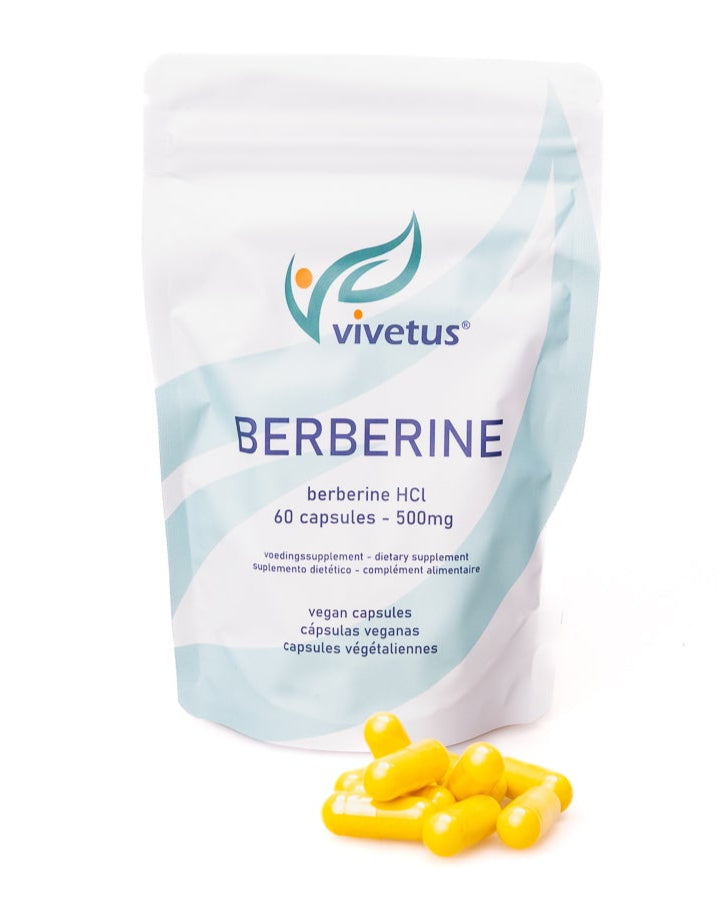
If everything above tells you what a well-managed berberine routine should look like, Vivetus® Berberine is formulated to match it: 60 capsules per bottle, 500 mg per capsule, so splitting doses across the day is straightforward rather than a guessing game with a pill cutter.

Each batch is lab tested for purity, and the label states exactly what’s inside, no vague blends, no ambiguity about strength. That transparency matters more than convenience once you consider what’s at stake if a supplement under or overdelivers on its stated dose. For anyone building a broader routine around metabolic health and daily energy, the Energy & Vitality bundel pairs berberine with complementary support in one order rather than several separate purchases. Start with a single bottle, follow the low-and-slow dosing approach outlined earlier, and check the product page for full batch and testing details before you order.
Sources
- Frontiers in Pharmacology: pharmacological properties and therapeutic potential of berberine (2025)
- Cleveland Clinic: Berberine — what it is, benefits & side effects (2025)
- Nature Communications: PREMOTE study on berberine and gut microbiome (2020)
This article is general information, not a substitute for advice from a qualified doctor. Consult a qualified healthcare professional about your own circumstances before acting on anything here.