

Berberine werking: how it affects blood sugar and cholesterol
Berberine lowers fasting glucose, HbA1c and HOMA‑IR in clinical trials, and modestly reduces LDL cholesterol and triglycerides too. Trials typically use around 500 mg two or three times daily, with measurable changes appearing within a few weeks to a few months. Gastrointestinal side effects are common, so anyone on statins, anticoagulants or diabetes medication should talk to a prescriber before starting.
TL;DR:
- Berberine modestly lowers LDL cholesterol and triglycerides mainly through PCSK9 suppression and LDL receptor stabilization, functioning as an adjunct to diet and medication.
- Gastrointestinal side effects such as nausea and diarrhea are common, especially at higher doses, so starting low and spreading doses across meals improves tolerability.
- People on statins, anticoagulants, or diabetes medications should consult a doctor before using berberine due to potential drug interactions involving CYP450 and P‑glycoprotein systems.
- Oral bioavailability of berberine is less than 1%, but gut bacteria convert it into active metabolites that likely drive systemic effects, emphasizing formulation quality and microbiome health.
Table of Contents
- What is berberine and where does it come from?
- How does berberine work in the body?
- What do meta-analyses show for blood sugar?
- What does the research say about cholesterol?
- How much berberine should you take and when will you notice a difference?
- Who should avoid berberine and what interacts with it?
- What side effects should you expect?
- Where does Vivetus fit into the evidence?
- How is berberine absorbed and processed by the body?
- Does berberine change your gut bacteria in specific ways?
- What else can berberine potentially help with?
- How does berberine compare with other options for the same goals?
- What matters most about berberine’s evidence base
- Try Vivetus® Berberine for blood sugar and cholesterol support
- Sources
What is berberine and where does it come from?
Berberine is an isoquinoline alkaloid, a bitter yellow compound found in the roots, stems and bark of several plants used for centuries in traditional Chinese and Ayurvedic medicine. It doesn’t come from one single source. The main botanical origins are:
- Berberis species (barberry) — the most widely studied source
- Coptis chinensis (Chinese gold thread), used traditionally for digestive complaints
- Phellodendron amurense (Amur cork tree bark)
Supplement manufacturers extract berberine as berberine hydrochloride or berberine sulfate, the two salt forms most commonly used in capsules. Some products use standardised extracts with a guaranteed alkaloid percentage, which matters because raw plant material varies wildly in potency. Oral bioavailability is genuinely poor, under 1% in some pharmacokinetic estimates, which means formulation quality and dosing schedule affect how much you actually get out of a capsule.
How does berberine work in the body?
Berberine’s headline mechanism is AMPK activation. AMPK (adenosine monophosphate‑activated protein kinase) is often described as the body’s cellular energy sensor. Switching it on pushes cells to take up more glucose and burn fatty acids rather than store them, which is the metabolic basis for berberine’s effects on both blood sugar and lipids.
The cholesterol story runs through a different but related pathway. Berberine stabilises LDL receptors (LDLR) on liver cell surfaces while suppressing PCSK9, a protein that normally marks LDL receptors for destruction. Fewer PCSK9 molecules means more LDL receptors survive to keep pulling LDL cholesterol out of the bloodstream. It’s the same target that expensive PCSK9‑inhibitor injectable drugs work on, though berberine’s effect is considerably milder.
What makes berberine’s biology unusual is how little of it actually reaches the bloodstream intact. A mechanistic review published on PMC points out that oral bioavailability is limited, yet clinical effects persist. The likely explanation is that gut bacteria convert berberine into metabolites such as berberrubine and thalifendine, and these active metabolites, along with berberine’s direct effect on the gut lining and microbiome composition, appear to drive much of the systemic benefit. Some evidence even suggests berberrubine has a stronger effect on LDLR and PCSK9 in the liver than the parent compound itself, which would explain why low plasma readings don’t rule out real clinical impact.
What do meta-analyses show for blood sugar?
A 2023 systematic review and meta-analysis of 18 clinical trials covering 1,761 participants found berberine reduced fasting glucose by −0.52 mmol/L, HbA1c by a clinically meaningful amount and HOMA‑IR (a marker of insulin resistance) by −0.85, all compared against placebo.
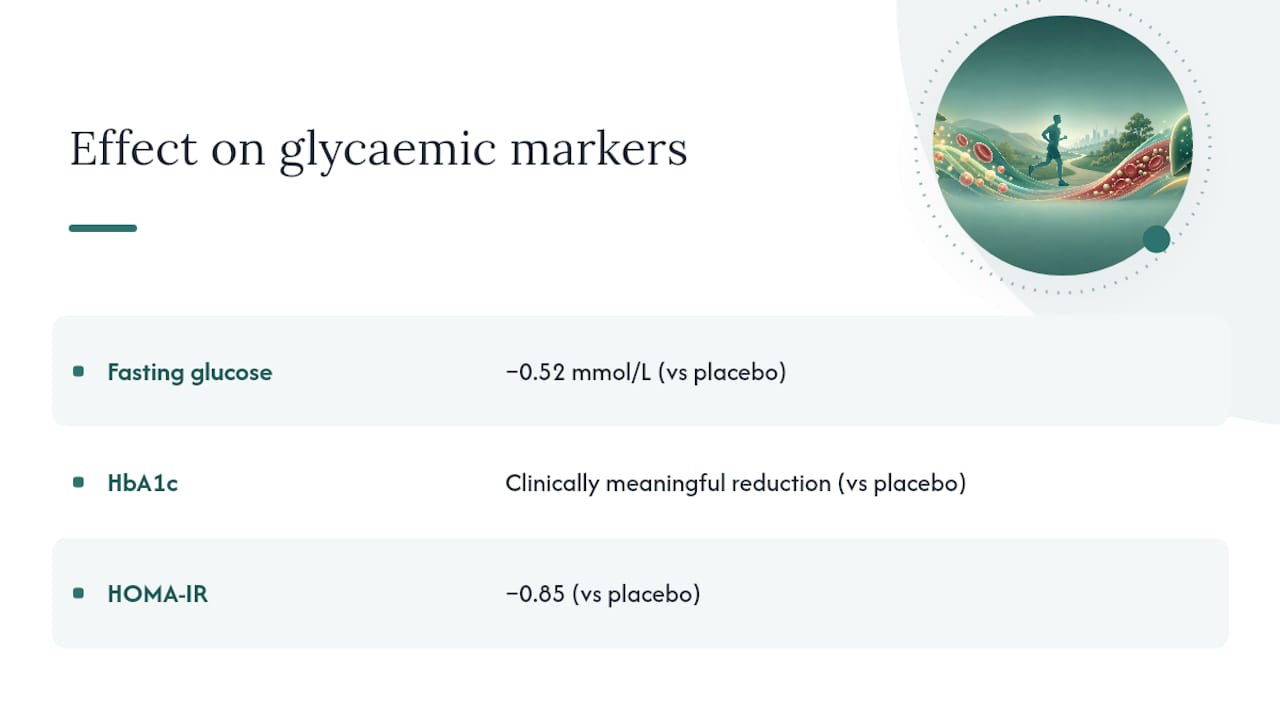
In numbers: across 18 pooled trials lasting between four and 24 weeks, berberine users saw meaningfully lower fasting glucose and HbA1c than placebo groups, with insulin resistance scores improving alongside.
A well-designed example is the 12‑week HIMABERB® trial in prediabetes, where participants taking 500 mg three times daily saw fasting plasma glucose drop from 6.75 to 5.33 mmol/L and HbA1c fall from 6.40% to 5.43%, with no severe adverse events recorded. A separate 12‑week trial in people with type 2 diabetes using 500 mg twice daily found similar improvements in HOMA‑IR and HbA1c alongside better cardiometabolic markers.
The caveats matter. Many trials are relatively short, run in smaller cohorts, and a large share originate from mainland China and Hong Kong. Larger, longer, more geographically diverse multicentre trials would strengthen confidence in the effect size, even though the direction of the evidence is now fairly consistent.
What does the research say about cholesterol?
Lipid effects are smaller than the glycaemic ones but still clinically relevant. A PROSPERO‑registered meta-analysis pooling 18 randomised controlled trials found berberine reduced LDL cholesterol and triglycerides by modest amounts, with smaller effects on total cholesterol.
The mechanism lines up with the biology. Suppressed PCSK9 and stabilised LDLR explain the LDL drop, while berberine’s effect on bile acid excretion in the gut likely contributes to the broader lipid changes. None of this positions berberine as a replacement for prescribed lipid-lowering therapy. The trial evidence supports it as an adjunctive option, something used alongside diet, exercise and, where relevant, medication, rather than instead of it.
How much berberine should you take and when will you notice a difference?
Trial dosing clusters fairly tightly around 900 to 1,500 mg per day, split into two or three doses. The HIMABERB® trial used 500 mg three times daily; other studies used 500 mg twice daily with comparable glycaemic benefit. A practical approach based on how these trials were structured:
- Start at 500 mg once daily with a meal for the first few days to see how your gut tolerates it.
- Increase to 500 mg twice daily, ideally with breakfast and dinner, once tolerance is confirmed.
- Move to three times daily (500 mg with each main meal) if you’re following a higher-dose protocol similar to the trials above.
- Reassess after 4 to 12 weeks, since most trials measuring fasting glucose, HbA1c and lipid panels reported changes within that window.
Pro Tip: Splitting your daily dose across meals rather than taking it all at once tends to reduce nausea and digestive upset, and it also matches how nearly every successful trial protocol was structured.
Monitoring matters here. If you already track blood glucose or have regular lipid panels done, keep that routine going while you use berberine so you can actually see whether it’s making a difference for you.
Who should avoid berberine and what interacts with it?
Berberine isn’t suitable for everyone, and it isn’t inert alongside other medicines. Avoid it, or seek medical guidance first, if any of the following apply:
- Pregnancy and breastfeeding — berberine crosses biological barriers in ways not adequately studied in these populations, so it should be avoided.
- Young children — trial data in this group is essentially absent.
- You take statins, anticoagulants or prescription antidiabetic medication — berberine interacts with CYP450 enzymes and P‑glycoprotein transporters, the same systems many common drugs rely on for metabolism.
- You’re already managing tightly controlled blood sugar or blood clotting — combined effects with insulin, sulfonylureas or warfarin-type medication could push levels lower or higher than intended.
If you’re on any prescribed medication, speak to your prescriber before adding berberine, and ask about monitoring blood glucose or INR (a clotting marker) more closely in the first few weeks.
What side effects should you expect?
Gastrointestinal symptoms dominate the safety data. Nausea, diarrhoea, constipation and abdominal discomfort are the most frequently reported issues, appearing in an estimated 2% to 23% of trial participants depending on the study and dose used. Serious adverse events were uncommon across the shorter trials reviewed so far.
What’s missing is long-term data. Most trials run for a matter of weeks, not years, so safety over extended use, or at higher doses combined with other supplements, is less well characterised. Practical mitigation is straightforward: start at a lower dose, take it with food rather than on an empty stomach, and split the daily total across two or three meals instead of one large dose. This is broadly how practitioners manage tolerability issues in practice, and it mirrors how most successful trial protocols were designed in the first place.
Where does Vivetus fit into the evidence?
Vivetus publishes product pages and educational articles that walk through the mechanisms behind ingredients like berberine, rather than making unsupported claims. The Vivetus® Berberine collection sets out formulation details for readers who want to check dosage per capsule against the trial ranges discussed above.
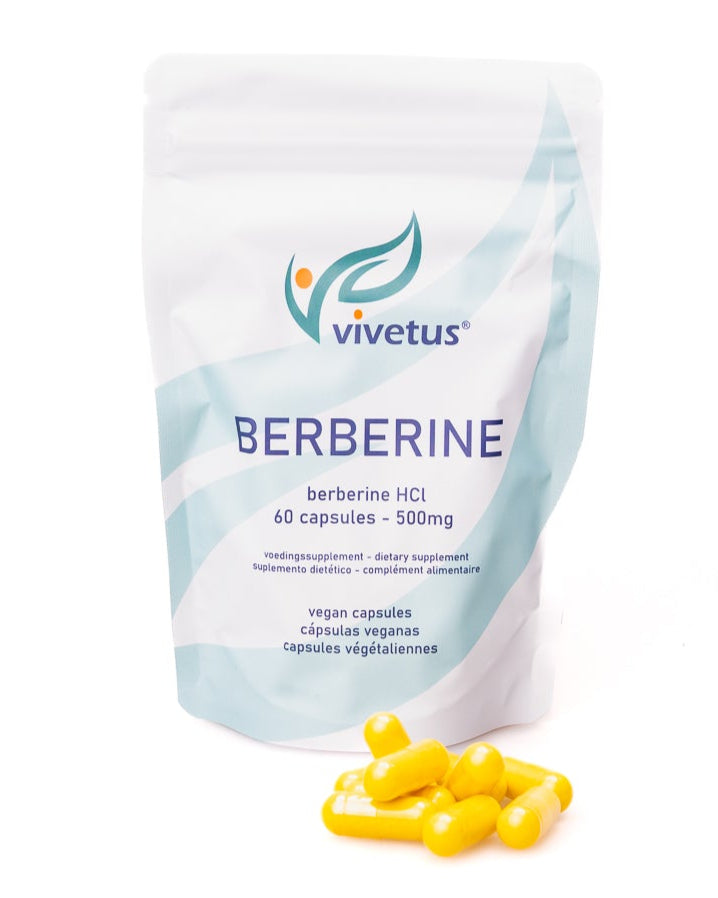
For readers building a broader metabolic-support routine, Vivetus also offers the Energy & Vitality bundle and Vivetus® Apigenine, both discussed further in the sections that follow. Background reading on metabolic ageing adds further context for anyone weighing up where berberine fits into a longer-term health plan.
How is berberine absorbed and processed by the body?
Berberine’s pharmacokinetic profile is unusual for a supplement with measurable clinical effects. Oral bioavailability sits below 1% in several pharmacokinetic estimates, meaning the vast majority of an ingested dose never reaches systemic circulation intact. Three factors explain this: poor intestinal absorption across the gut wall, rapid first-pass metabolism in the liver, and active efflux back into the gut by P‑glycoprotein transporters, the same transport system implicated in several of berberine’s drug interactions.
This creates an apparent paradox that the Frontiers review on molecular mechanisms addresses directly: how can something so poorly absorbed produce consistent, measurable effects on glucose and lipids across dozens of trials? Part of the answer lies in gut-level action. Berberine doesn’t need to reach the bloodstream at high concentration to affect gut bacteria, intestinal AMPK signalling and local metabolic pathways, all of which happen before absorption is even relevant. The rest of the answer lies in metabolites. Gut bacteria and liver enzymes convert berberine into compounds like berberrubine, which some evidence suggests acts more potently on liver LDLR and PCSK9 pathways than berberine itself.
Practically, this means peak plasma concentration and half-life figures you might see quoted for berberine tell you relatively little about its actual clinical effect. Formulation still matters, though. Standardised extracts and consistent dosing schedules appear to produce more predictable outcomes than inconsistent raw extracts, simply because absorption variability gets compounded by dosing variability.
Does berberine change your gut bacteria in specific ways?
Berberine’s relationship with the gut microbiome goes well beyond a general “it modulates bacteria” statement. Research summarised in mechanistic reviews points to specific shifts: increases in short-chain fatty acid producing bacteria, changes in the ratio between Firmicutes and Bacteroidetes phyla, and reductions in certain bacterial groups linked to gut permeability and low-grade inflammation.
These shifts matter clinically because gut bacteria are the organisms actually converting berberine into its more bioactive metabolites, berberrubine among them. A person’s existing microbiome composition could plausibly affect how much benefit they get from a given dose, though this hasn’t been tested directly enough to guide individual dosing decisions yet.
There’s also a bile acid angle. Gut bacteria influence bile acid metabolism, and berberine’s interaction with this system appears to contribute to its lipid-lowering effect independently of the AMPK and PCSK9 pathways discussed earlier. This gives berberine a genuinely dual mechanism for cholesterol reduction: direct liver receptor effects and indirect gut-mediated bile acid effects working together.
The practical implication is that berberine’s benefits may compound over time as gut bacterial populations adjust to repeated exposure, one plausible reason some trials report stronger effects after eight to twelve weeks than at four. It also means factors that damage gut bacterial diversity, such as recent antibiotic use, could plausibly blunt berberine’s effectiveness, though this remains an area for further study rather than settled fact.
What else can berberine potentially help with?
Blood sugar and cholesterol dominate the clinical literature, but researchers have investigated several other angles. Anti-inflammatory activity is one of the better-supported extensions: berberine appears to dampen certain inflammatory signalling pathways connected to metabolic syndrome, which may partly explain why its cardiovascular benefits seem to exceed what lipid changes alone would predict.
Weight management is another area of interest, though the evidence here is more modest than for glucose or lipids. AMPK activation increases fatty acid oxidation, which provides a plausible mechanism for supporting fat metabolism, but berberine shouldn’t be mistaken for a dedicated weight-loss compound. Any effect on body composition in trials tends to be secondary to the metabolic improvements already discussed, not a standalone outcome.
Cardiovascular benefits beyond LDL and triglycerides are also plausible given berberine’s anti-inflammatory action and its effect on vascular function, though this is an area where mechanistic promise currently outpaces large-scale outcome trial data (heart attacks and strokes prevented, rather than markers improved).
One clarification worth making: berberine is sometimes compared casually to GLP‑1 receptor agonist medications because both affect blood sugar. Biologically, that comparison doesn’t hold up. Berberine works through AMPK activation and gut microbiome effects, an entirely different pathway from GLP‑1 hormone receptor stimulation. It’s not a natural substitute for those medications, and shouldn’t be treated as one.
How does berberine compare with other options for the same goals?
Berberine sits in a crowded field of nutraceuticals aimed at metabolic health, and it’s worth being honest about where it stands relative to alternatives rather than overselling it.
Compared with metformin, the most commonly prescribed first-line medication for type 2 diabetes, berberine’s glucose-lowering effect size in trials is generally described as comparable in some smaller head-to-head studies, though metformin has a vastly larger evidence base spanning decades and millions of patients. Berberine is not positioned as a replacement for prescribed diabetes medication; it’s better understood as a complementary option, particularly for people in prediabetic ranges who aren’t yet on pharmaceutical treatment.
Against other lipid-focused nutraceuticals such as red yeast rice or plant sterols, berberine’s mechanism (PCSK9 suppression and LDLR stabilisation) is genuinely distinct rather than overlapping, which is part of why the Frontiers review on metabolic targets notes that combining berberine with other lipid-lowering nutraceuticals can allow lower doses of each while preserving additive benefit and potentially improving tolerability.
Against PCSK9‑inhibitor drugs, the comparison is one of scale, not mechanism. Both work through the same LDLR/PCSK9 pathway, but injectable PCSK9 inhibitors are considerably more potent and reserved for higher cardiovascular risk cases under specialist care. Berberine’s role is milder, adjunctive support for people managing borderline glucose and lipid markers, not a substitute for pharmaceutical intervention where that’s clinically indicated.
What matters most about berberine’s evidence base
The conventional wellness narrative around berberine treats it as “nature’s metformin”, a catchy line that oversimplifies what the trial data actually shows. Berberine’s glycaemic effects are real and reasonably consistent across the meta-analyses reviewed here, but the effect sizes are modest, not dramatic, and the evidence base still leans heavily on shorter trials from a limited number of regions.
What gets underestimated is the lipid story. Most conversations about berberine focus on blood sugar, yet the PCSK9/LDLR mechanism is arguably the more mechanistically elegant part of the picture, and it deserves equal attention from anyone managing borderline cholesterol alongside glucose concerns.
What I’d prioritise first, if I were advising a reader rather than writing about one: get baseline blood work done before starting, choose a formulation with a clearly stated alkaloid content, start low, and treat the four to twelve week mark as your genuine checkpoint rather than judging results after a week or two. Berberine rewards patience and consistency far more than it rewards a high starting dose.
— Jord
Try Vivetus® Berberine for blood sugar and cholesterol support
Vivetus makes it straightforward to put the trial-based dosing discussed throughout this article into practice, without hunting through inconsistent extracts or guessing at alkaloid content. Vivetus® Berberine comes in 500 mg capsules, the same strength used across the clinical trials cited here, making it simple to build a two or three times daily regimen that matches the evidence.
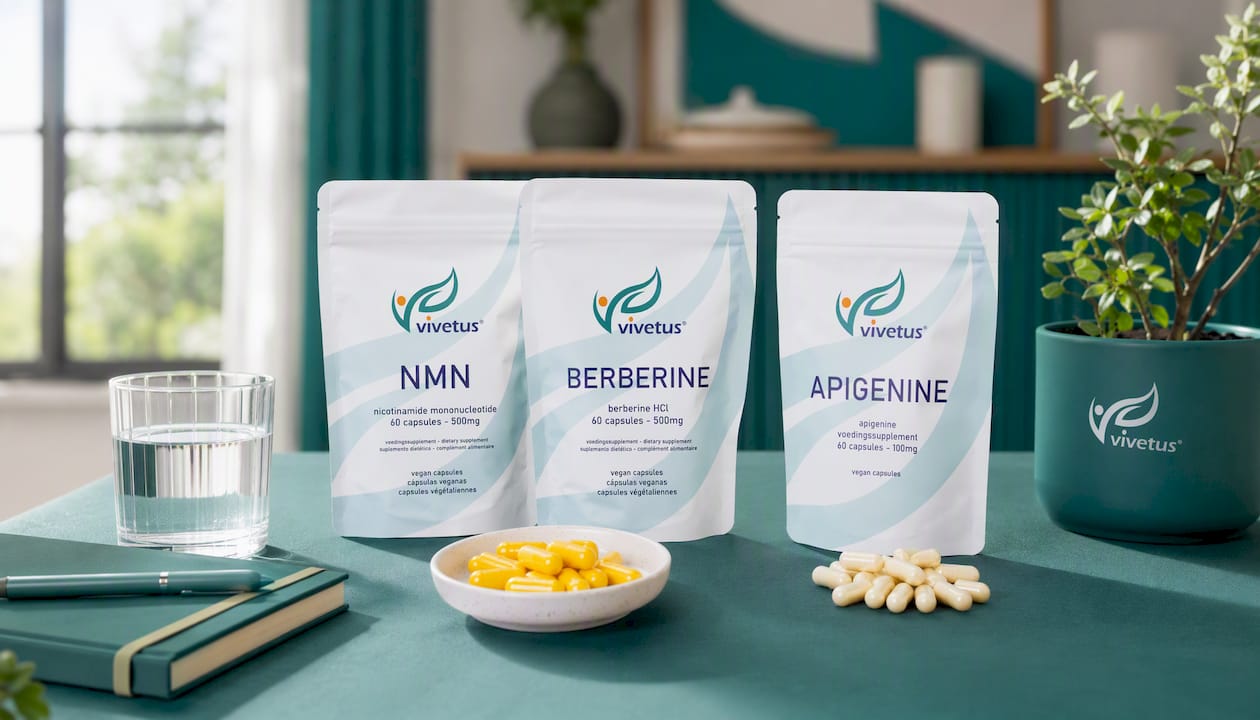
For readers building a broader metabolic and healthy-ageing routine, the Energy & Vitality bundle pairs berberine with complementary ingredients aimed at supporting energy metabolism, while Vivetus® Apigenine offers additional support for healthy ageing pathways discussed elsewhere on the site. All Vivetus supplements are vegan and tested for purity. If you’re ready to align your supplement routine with what the trial evidence actually supports, start with the berberine collection page and check the capsule strength against the dosing guidance above before your first order.
Sources
For readers who want to check the primary literature rather than take summaries at face value, four sources anchor this article’s claims. The 2023 meta-analysis of 18 trials is the strongest single source for glycaemic effect sizes. The PROSPERO‑registered lipid review does the same job for cholesterol and triglycerides. The PMC mechanistic review explains the AMPK and PCSK9/LDLR biology in far more depth than any single blog post can. The HIMABERB® prediabetes trial offers a concrete, well-controlled example of what a 12‑week course actually looks like in practice.
- Meta-analysis (2023) — glycaemic effects of berberine
- Meta-analysis — berberine for dyslipidaemia (PROSPERO-registered review)
- Berberine in cardiovascular and metabolic diseases: mechanistic review (PMC)
- HIMABERB® trial — berberine in prediabetes (BMC Endocrine Disorders)