

Q10 supplements reviewed: what users and trials actually show
CoQ10 supplements may be worth trying if you are over 50, taking statins, or managing heart failure under medical supervision. For younger, metabolically healthy adults with no specific clinical indication, the evidence is thinner and user reviews reflect that variability. The formal name is coenzyme Q10 (ubiquinone or ubiquinol), a fat-soluble compound the body produces naturally but in declining quantities from around age 40 onwards.
Three things the evidence supports with reasonable confidence:
- Heart failure (adjunct use): The Q‑SYMBIO trial showed reductions in symptoms and major cardiac events at 100 mg three times daily over two years.
- Statin-associated muscle symptoms (SAMS): Cleveland Clinic clinicians recommend a therapeutic trial as an adjunct; many patients report relief, though trial results vary.
- Safety: Toxicity is unlikely at typical consumer doses of 100–200 mg per day. The main caution is a clinically meaningful interaction with warfarin.
If you meet one of those profiles, the practical next step is a product with verified third-party testing, a clear Certificate of Analysis (COA), and a formulation designed for absorption. The sections below walk through user ratings, trial data, formulation choices, safety, and where to buy in Central Europe.
Table of Contents
- What clinical trials show about coenzyme Q10 benefits
- Ubiquinone, ubiquinol, or phytosome: which formulation should you choose?
- Side effects and drug interactions you should know about
- How to assess whether a CoQ10 product and its reviews are trustworthy
- Where to buy CoQ10 supplements in Central Europe
- Key takeaways
- The gap between what reviews promise and what the evidence actually supports
- Vivetus’s Energy & Vitality bundel: a vetted option for Central European shoppers
- Useful sources
What clinical trials show about coenzyme Q10 benefits
The clinical picture for CoQ10 is more nuanced than most supplement marketing suggests, and more positive than blanket scepticism implies. The evidence is strongest for two indications: chronic heart failure and statin-associated muscle symptoms.
Heart failure is where the highest-quality trial data sits. The Q‑SYMBIO trial, published in the Journal of the American College of Cardiology, tested 100 mg three times daily in patients with moderate-to-severe heart failure over two years. It reported significant reductions in major adverse cardiovascular events and improved symptom scores. A pooled analysis of randomised controlled trials covering 11 RCTs and 1,573 participants found moderate-quality evidence for reduced all-cause mortality and hospitalisation, though the reviewers noted heterogeneity across studies and wide variation in dosing. The JACC review provides the most detailed breakdown of Q‑SYMBIO methodology and outcomes for readers who want the primary data.
Statin-associated muscle symptoms have a plausible biological rationale: statins reduce endogenous CoQ10 synthesis, and supplementation may partially restore depleted levels. Trial results are mixed, but Cleveland Clinic cardiologists describe a therapeutic trial as a pragmatic adjunct approach. A phytosome-formulated CoQ10 RCT published in PMC found measurable improvements in physical performance in older adults with statin-associated asthenia at eight weeks, which is a more specific finding than general fatigue claims.
Migraine prevention has supporting data from several RCTs using doses of 100–300 mg per day, but the evidence base is smaller and the effect sizes more variable. It is a reasonable adjunct to discuss with a neurologist, not a first-line treatment.
General anti-ageing and performance claims have the weakest trial support. Supplementation is most likely to produce measurable effects where baseline CoQ10 levels are genuinely low, which correlates with older age, statin use, and certain chronic conditions. Using it as a general performance booster in healthy young adults is not well supported by the broader clinical review literature.
| Indication | Trial dose used | Duration tested |
|---|---|---|
| Chronic heart failure | 100 mg three times daily (300 mg/day) | 2 years (Q‑SYMBIO) |
| Statin-associated asthenia | Phytosome equivalent; 100–200 mg/day | 8 weeks |
| Migraine prevention | 100–300 mg/day | 3 months |
| General maintenance | 100–200 mg/day (consumer standard) | Varies |
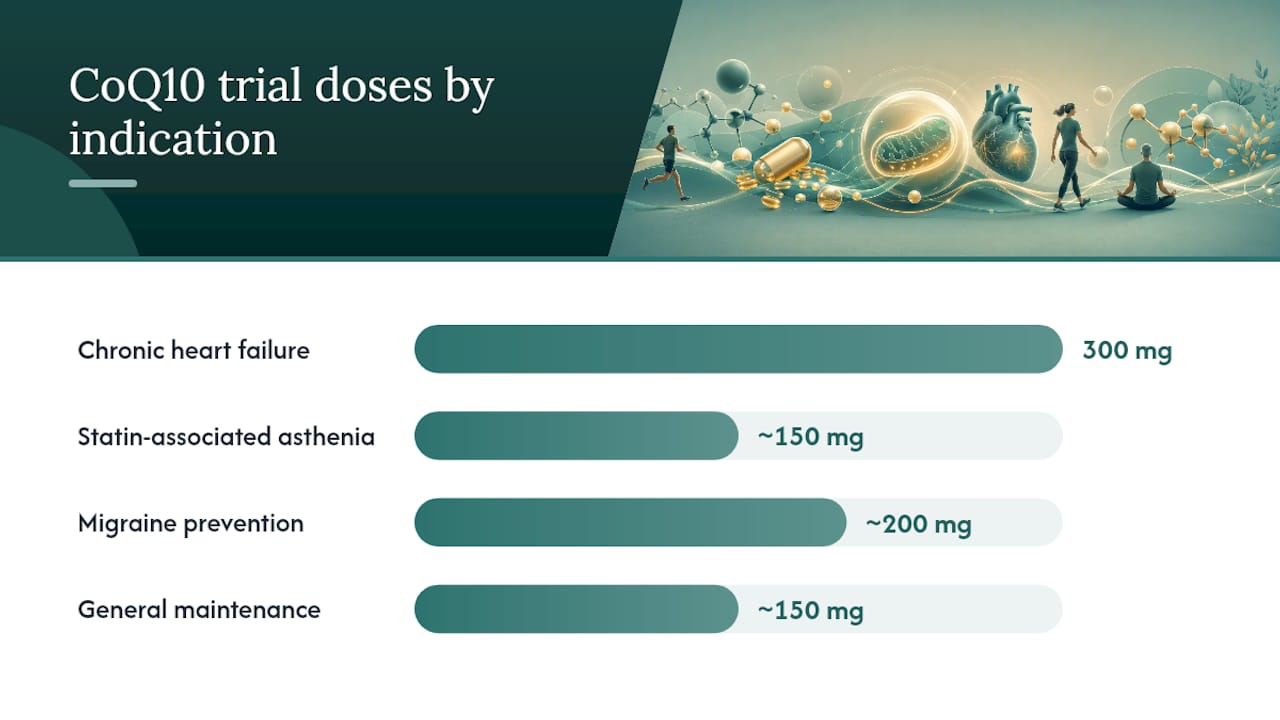
A recurring limitation across the literature is formulation heterogeneity: trials using standard ubiquinone powder, oil-based soft gels, and phytosome formats are not directly comparable because absorption differs substantially between them. This is why the NCBI Bookshelf clinical review flags dosage variation as a primary source of inconsistency across meta-analyses.
Ubiquinone, ubiquinol, or phytosome: which formulation should you choose?
The form of CoQ10 in a product matters more than most product labels acknowledge. All three main formats contain the same active compound, but their oral bioavailability differs considerably.
Ubiquinone is the oxidised form and the most widely available. It is the form used in most clinical trials, including Q‑SYMBIO. Standard ubiquinone powder in a capsule has relatively modest absorption because CoQ10 is fat-soluble and poorly water-soluble. Taking it with a fat-containing meal is the single most practical step to improve uptake.
Ubiquinol is the reduced, active form. Some evidence suggests it may be better absorbed than standard ubiquinone, particularly in older adults whose conversion efficiency may be lower. It is typically more expensive per milligram.
Phytosome and oil-based soft gel formats use delivery systems that bind CoQ10 to phospholipids or dissolve it in oil, substantially increasing oral bioavailability compared to dry powder capsules. The PMC phytosome RCT demonstrated measurable performance improvements in a population where standard formulations had shown inconsistent results. The MSD Manual confirms that fat-soluble delivery vehicles materially affect how much CoQ10 reaches systemic circulation.
| Formulation | Relative absorption | Typical cost | Best suited to |
|---|---|---|---|
| Ubiquinone powder capsule | Moderate (improved with fat) | Lowest | General maintenance, trial-tested doses |
| Ubiquinol soft gel | Good | Moderate–high | Adults 50+, lower conversion efficiency |
| Phytosome / oil-based | High | Moderate–high | SAMS, clinical-grade absorption targets |
| Liquid | Variable | Moderate | Those who cannot swallow capsules |
Practical dosing guidance:
- Statin-associated muscle symptoms: — 100–200 mg per day; allow 8–12 weeks before assessing response
Pro Tip: Take CoQ10 with your largest meal of the day, ideally one that includes a source of fat such as olive oil, nuts, or avocado. This single step can substantially increase the amount that reaches your bloodstream, regardless of which formulation you choose.
The CoQ10 safety review confirms that typical consumer doses of 100–200 mg per day sit well within the range studied in trials, where toxicity was not observed up to 1,200 mg per day.
Side effects and drug interactions you should know about
CoQ10 has a good safety record at standard doses, but there are specific interactions and populations where caution applies.
Common side effects (generally mild and dose-related):
- Nausea, loose stools, or reduced appetite, particularly on an empty stomach
- Headache and dizziness, reported less frequently
- Insomnia when taken late in the evening (CoQ10 may have mild stimulant properties at higher doses)
The Mayo Clinic lists gastrointestinal symptoms as the most commonly reported adverse events and confirms that the warfarin interaction is the most clinically significant concern.
Drug interactions to flag with your clinician:
- Warfarin (and other anticoagulants): CoQ10 may reduce warfarin’s anticoagulant effect, raising clotting risk. Anyone on anticoagulation therapy should have their INR monitored if they start or stop CoQ10.
- Statins: Statins reduce endogenous CoQ10 synthesis. Supplementation is generally considered safe alongside statins and may address SAMS, but inform your prescriber.
- Antihypertensives: CoQ10 may have a mild blood-pressure-lowering effect. Combining it with antihypertensive medications warrants monitoring.
- Diabetes medications: Some evidence suggests CoQ10 may affect blood glucose regulation; people on insulin or oral hypoglycaemics should monitor accordingly.
Pregnancy and breastfeeding: Safety data is insufficient. Avoid supplementation unless advised by a clinician.
When to stop and speak to a clinician:
- You are taking warfarin, heparin, or any anticoagulant
- You develop persistent gastrointestinal symptoms beyond the first two weeks
- You notice unexplained changes in blood pressure or blood glucose
- You are pregnant, planning pregnancy, or breastfeeding
- You have a thyroid condition or are on thyroid medication
Pro Tip: Bring a complete medicines list to your appointment, including any other supplements. Specifically flag anticoagulant or antihypertensive status. A clinician can check whether CoQ10 is appropriate and whether any monitoring is needed before you start.
How to assess whether a CoQ10 product and its reviews are trustworthy
Not all CoQ10 products are equivalent, and not all reviews reflect genuine user experience. A short checklist covers both.
Product quality signals to verify before buying:
- Certificate of Analysis (COA): The manufacturer or retailer should be able to provide a batch-specific COA from an independent laboratory confirming CoQ10 content, purity, and absence of contaminants. Ask for the batch number on your pack and request the matching COA.
- Third-party testing: Look for testing by a recognised independent laboratory, not just in-house quality control.
- GMP certification: Good Manufacturing Practice certification indicates the facility meets minimum production standards.
- Transparent labelling: The label should state the exact milligrams of CoQ10 per capsule, the form (ubiquinone or ubiquinol), and any excipients or carrier oils.
- Country of manufacture: EU-manufactured products are subject to food supplement standards applicable across Central Europe.
Review credibility signals:
- Verified purchase badge: prioritise these over unverified submissions
- Review distribution: a credible product shows ratings spread across 3–5 stars, not an implausible concentration at five stars
- Time-stamped review history: a steady accumulation over months is more credible than a sudden cluster
- Specificity: reviews that name a dose, a time frame, and a concrete change are more informative than generic praise
- Negative reviews: their presence and the seller’s response to them are both informative signals
Questions to ask a seller before purchasing:
- Can you provide the COA for the current batch?
- Which independent laboratory conducted the testing?
- What is the exact CoQ10 content per capsule and the total per pack?
Pro Tip: Search the product name alongside “COA” or “lab test” before buying. Reputable brands publish these documents on their website or provide them on request within 24 hours. A seller who cannot or will not supply a COA for a specific batch is a meaningful red flag.
Where to buy CoQ10 supplements in Central Europe
Central European buyers have several reliable purchase channels, each with practical trade-offs.
Local pharmacies stock CoQ10 in most Central European countries, typically in 30–60 capsule packs at 100 mg per capsule. The advantage is immediate availability and the ability to ask a pharmacist about interactions. The limitation is a narrower range of formulations, usually standard ubiquinone, and higher per-unit cost compared to direct brand sites.
EU-based e-retailers and direct brand websites offer the widest formulation range, including ubiquinol and phytosome formats, and typically provide better value on 60–90 day supply packs. Shipping within the EU is generally fast and tracked. Check that the retailer lists a registered EU business address and that product pages include full ingredient and dosage information.
Certified marketplaces (large EU-based general marketplaces with a health category) carry CoQ10 from multiple brands. The risk here is counterfeit or mislabelled products from third-party sellers. Stick to listings fulfilled by the brand directly or by the marketplace’s own fulfilment service, and verify COA availability before purchasing.
Typical price ranges in Central Europe (per 30–90 day supply):
- Standard ubiquinone 100 mg, 60 capsules: approximately €10–€20
- Ubiquinol 100 mg, 60 capsules: approximately €20–€35
- Phytosome or premium oil-based format, 60 capsules: approximately €25–€45
Value assessment should be based on milligrams of CoQ10 per day, not pack size alone. A 30-capsule pack at 200 mg per capsule delivers the same daily dose as a 60-capsule pack at 100 mg, but the per-day cost may differ substantially.
Subscription options from direct brand sites typically reduce the per-unit cost by 10–20% and remove the need to reorder manually. For a supplement where the evidence supports consistent use over months rather than weeks, a subscription makes practical sense once you have confirmed tolerability with a trial pack.
EU product packaging for supplements sold in Central Europe must list ingredients, allergens, and dosage in the language of the country of sale. If a product arrives with labelling only in a non-local language, that is worth querying with the seller before use.
Key takeaways
CoQ10 supplements deliver the clearest benefit where baseline levels are genuinely depleted: adults over 50, statin users, and people managing heart failure under medical supervision.
| Point | Details |
|---|---|
| Who benefits most | Adults 50+, statin users, and heart failure patients have the strongest evidence base for CoQ10 supplementation. |
| Formulation matters | Phytosome and oil-based soft gel formats absorb better than standard powder capsules; take any form with a fat-containing meal. |
| Allow sufficient time | Most user-reported benefits and trial outcomes appear after 4–12 weeks of consistent daily use. |
| Check safety before starting | Warfarin interaction is the most significant clinical concern; bring a full medicines list to your clinician before starting. |
| Vivetus Energy & Vitality bundle | Vivetus’s bundle meets the COA, third-party testing, and vegan formulation criteria outlined in this article’s buying checklist. |
The gap between what reviews promise and what the evidence actually supports
CoQ10 is one of the more honestly reviewed supplements on the market, in the sense that user reports and clinical data point in roughly the same direction: meaningful benefit for specific populations, modest or no benefit for others. The problem is not that reviews lie. It is that they aggregate across populations where the compound behaves very differently.
A 58-year-old on a statin who reports dramatically reduced muscle soreness after eight weeks is almost certainly describing a real physiological response. A 32-year-old who reports no change after three weeks of a standard 100 mg capsule is also reporting accurately. Both reviews land in the same star-rating pool, which is why aggregate scores tell you less than the demographic breakdown of who is reviewing.
The clinical evidence supports a similar conclusion. The evidence synthesis on CoQ10 and the heart failure trial data are not weak. They are population-specific. Applying heart-failure trial results to a general wellness claim is the kind of category error that inflates expectations and then produces disappointed reviews.
For practical buying decisions, the most useful question is not “does CoQ10 work?” but “does it work for someone with my profile?” Age, statin use, and any cardiovascular history are the three variables that most reliably predict whether you are in the group likely to see a response. If you fit that profile, a well-formulated product at a clinically relevant dose, taken consistently for at least eight weeks, is a reasonable trial. If you do not, the evidence does not strongly support supplementation as a general vitality measure, and the evidence-backed supplement guidance for over-50s is worth reading before committing to a purchase.
Vivetus’s Energy & Vitality bundel: a vetted option for Central European shoppers
For buyers who have worked through the checklist in this article, the 💪 Energy & Vitality bundle from Vivetus is a direct match. The bundle is formulated to vegan standards, third-party tested with COA documentation available, and transparently labelled with per-capsule dosage. It addresses the two buyer priorities that matter most: bioavailability through a quality-focused formulation, and batch-level testing that lets you verify what you are taking.
Vivetus ships across Central Europe, with free shipping on orders over €50. Subscription purchase reduces the per-order cost and keeps supply consistent across the 8–12 week window where most users and trials report measurable effects. A single trial pack is available for first-time buyers who want to confirm tolerability before committing to a longer supply.
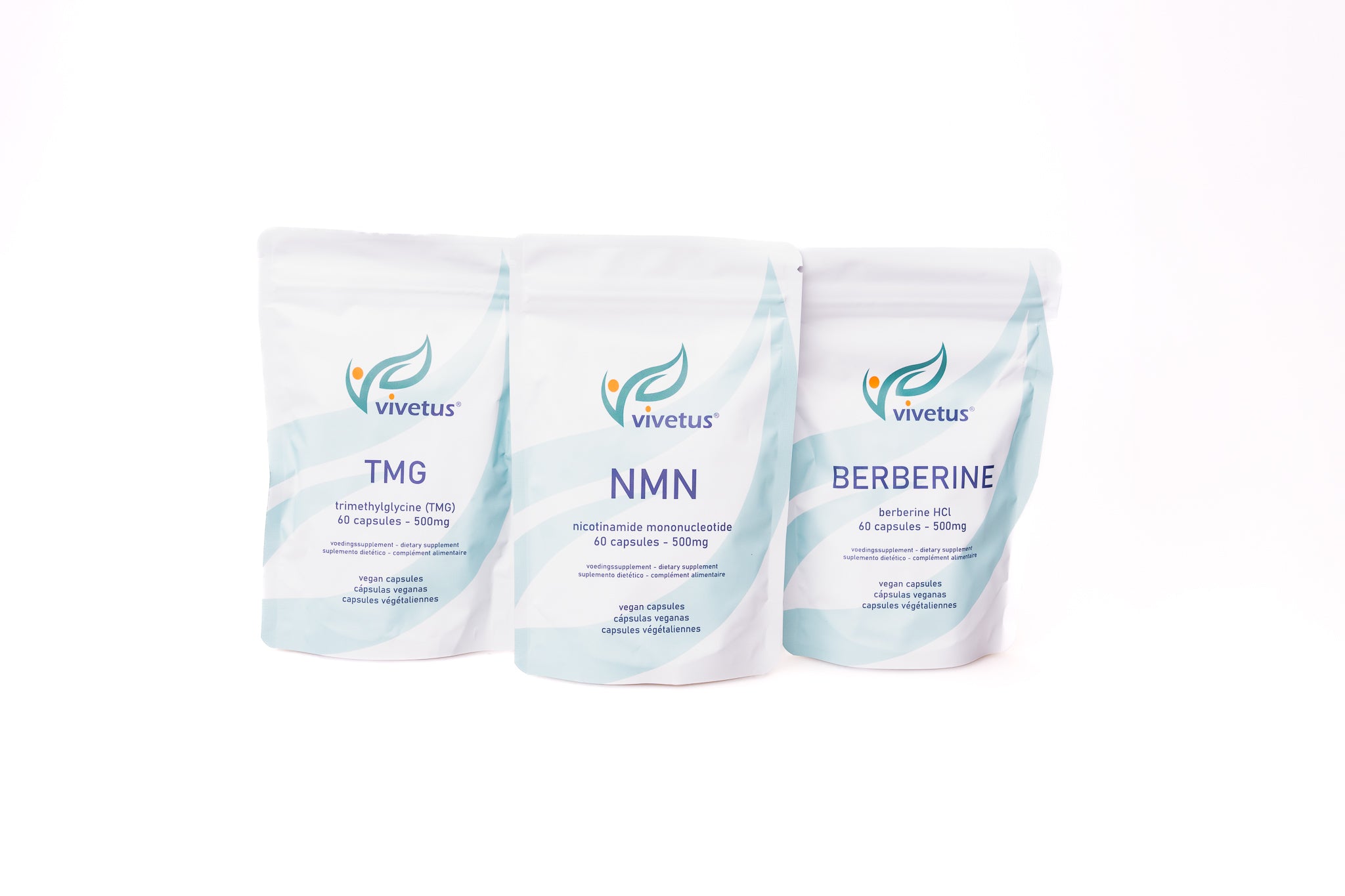
For buyers comparing options across EU e-retailers, the combination of vegan credentials, COA availability, and subscription flexibility puts the Energy & Vitality bundel in a practical position relative to pharmacy-shelf alternatives that typically offer none of those features. Visit the Vivetus product page to check current pack sizes, pricing in your currency, and subscription terms.
Useful sources
The sources below are the primary references used in this article. Each is worth consulting directly if you want to verify trial methodology, dosing data, or safety guidance.
-
Q‑SYMBIO trial — JACC: The primary source for heart-failure trial data, including the 100 mg three-times-daily dose and two-year outcomes. Read this if you want the full methodology and results behind the heart-failure evidence.
-
Pooled RCT analysis — American Family Physician: Covers 11 RCTs and 1,573 participants; useful for understanding the aggregate mortality and hospitalisation findings and their limitations.
-
CoQ10 phytosome RCT — PMC: The randomised trial on phytosome formulation and physical performance in statin-associated asthenia. Directly relevant to formulation choice.
-
NCBI Bookshelf clinical review: A broad synthesis of CoQ10 clinical trials across multiple indications. The most comprehensive single reference for understanding where evidence is strong and where it is mixed.
-
CoQ10 safety review — PMC 2018: Covers the safety profile, upper dose data, and trial heterogeneity. The source for the 1,200 mg/day upper-bound safety observation.
-
Mayo Clinic — CoQ10: Practical patient-facing summary of side effects and the warfarin interaction. Useful as a plain-language safety reference.
-
Cleveland Clinic — What is CoQ10?: Clinician perspective on SAMS and the rationale for a therapeutic trial. Accessible and evidence-grounded.
-
MSD Manual Professional — CoQ10: Covers formulation, dosing practicalities, and the fat-soluble absorption mechanism. The professional-grade reference for clinicians and informed buyers.