

Bone health: what it is and how to keep bones strong
Bone health is the state in which bone strength, structure and metabolic balance minimise fracture risk and support mobility throughout life. The most important actions for adults are straightforward: meet daily calcium and vitamin D targets, train with weights or resistance at least twice a week, and get a clinical assessment if you have risk factors.
Start here — your highest-impact daily priorities:
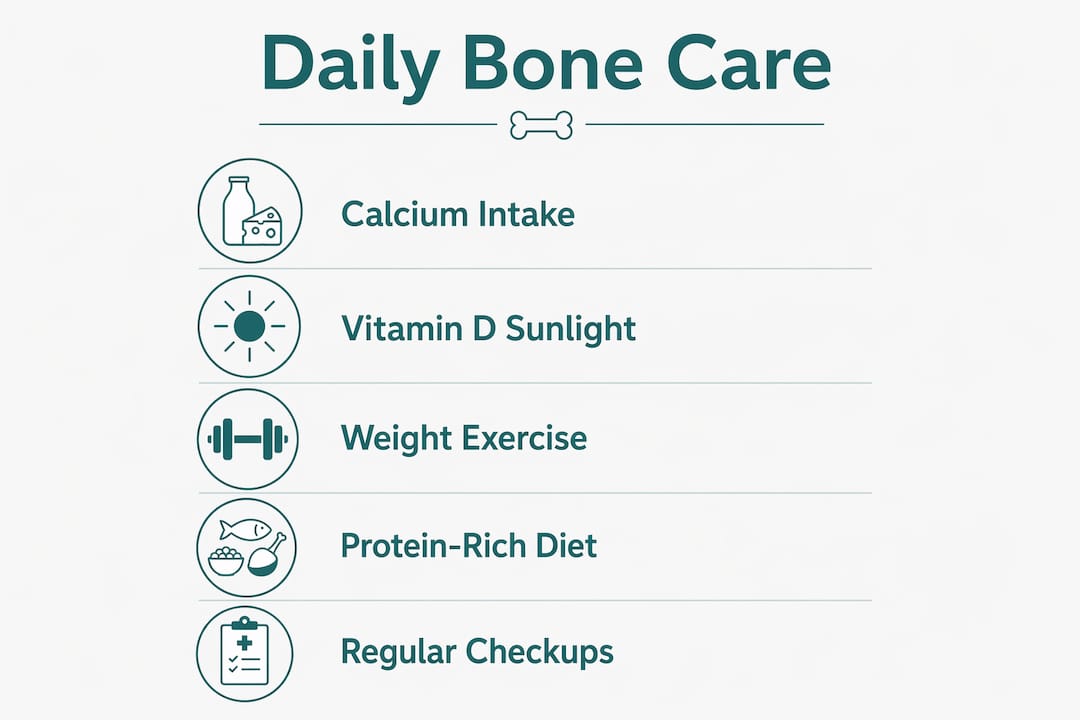
- Aim for adequate calcium intake daily from food sources such as dairy, fortified plant milks, leafy greens, and tinned fish with bones
- Maintain adequate vitamin D, particularly through winter in Central Europe when sunlight is insufficient
- Do weight-bearing or resistance exercise at least two to three times per week
- Avoid smoking and keep alcohol within recommended limits
- Ask your clinician about a DXA scan or FRAX assessment if you are over 50 or have known risk factors
Table of Contents
- What bone health means biologically and why it matters
- Key nutrients your bones need every day
- How exercise builds and maintains bone
- Who is at higher risk for poor bone health?
- How clinicians assess bone health
- Osteoporosis: what it is and why treatment matters
- A practical daily and weekly routine for bone health
- Bone health as a multi-system issue: what recent research shows
- Key takeaways
- A note on prevention and where supplements fit
- Vivetus and the Energy & Vitality bundle
- Useful sources and further reading
What bone health means biologically and why it matters
Bone is living tissue, not inert mineral. It is continuously broken down and rebuilt through a process called remodelling, in which osteoclasts resorb old or damaged bone and osteoblasts lay down new tissue. When this cycle stays balanced, bone mass and quality are preserved. When resorption outpaces formation, bone becomes progressively weaker.
Peak bone mass is reached at around age 30. After that point, the balance tips gradually towards resorption, and without countermeasures the skeleton loses density and structural integrity over time. The rate of loss accelerates sharply around the menopause in women due to falling oestrogen, and continues more slowly in men with age.
Fracture burden: Osteoporosis affects a substantial proportion of adults over 50, and osteoporosis remains under-diagnosed and under-treated despite effective preventive interventions being widely available. Hip fractures in particular carry serious consequences for mobility and independence.
Bone quality matters as much as density. The microarchitecture of trabecular bone, the porosity of cortical bone, and the presence of micro-damage all determine how well a bone resists fracture. Two people with identical bone mineral density (BMD) readings can have very different fracture risk depending on the structural integrity of their skeleton.
Key reasons bone health affects quality of life:
- Fractures, especially at the hip and spine, reduce mobility and independence
- Vertebral fractures cause chronic pain and height loss
- Poor bone health is linked to increased all-cause morbidity in older adults
- Maintaining bone mass supports muscle function and fall prevention
Key nutrients your bones need every day
A balanced whole-diet approach combining calcium, vitamin D and protein is the foundation of bone nutrition. Single-nutrient thinking misses the picture: these nutrients work together, and dietary patterns matter as much as individual intakes.
| Nutrient | General adult target | Key food sources |
|---|---|---|
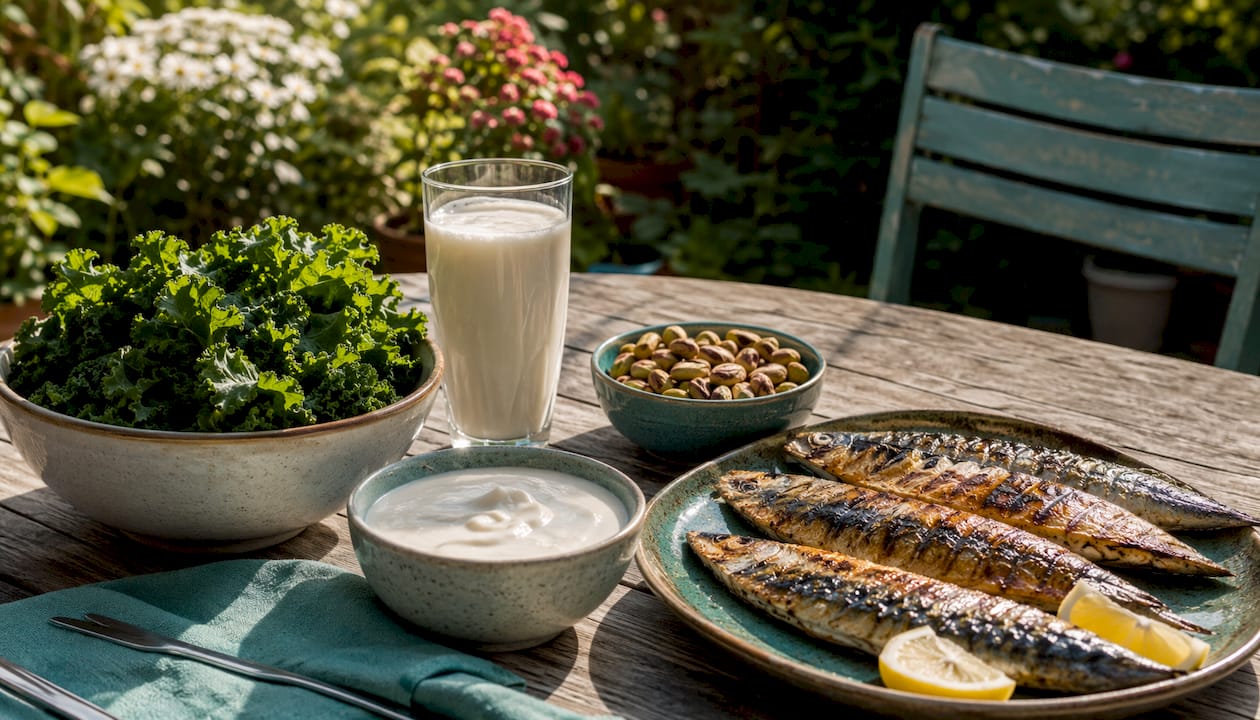
| Calcium | General adult daily intake targets vary by age and clinical advice | Milk, yoghurt, hard cheese, fortified plant milks, tinned sardines, kale, broccoli |
| Vitamin D | Adequate intake according to clinical guidance | Oily fish (salmon, mackerel), egg yolk, fortified foods; primarily sunlight |
| Protein | adequate protein intake (older adults) | Meat, fish, eggs, dairy, legumes, tofu |
| Magnesium | modest calcium amounts | Nuts, seeds, wholegrain, dark leafy greens |
| Vitamin K | Adequate intake from diet | Leafy greens (kale, spinach), fermented dairy, broccoli |
Intake targets are general guidance. Individual needs vary by age, health status and clinical assessment.
Top food sources to prioritise:
- Dairy and fermented dairy (yoghurt, kefir): linked to lower hip fracture risk in population studies
- Oily fish (salmon, sardines, mackerel): provide both vitamin D and calcium (tinned with bones)
- Leafy greens (kale, bok choy, broccoli): calcium and vitamin K without the saturated fat
- Fortified foods (plant milks, breakfast cereals): practical for those avoiding dairy
- Legumes and beans: magnesium, protein and modest calcium
- Eggs: one of the few dietary sources of vitamin D
Calcium’s role in ageing extends beyond bone: it supports nerve signalling and muscle contraction, which means deficiency has systemic consequences, not only skeletal ones.
Pro Tip: In Central Europe, seasonal vitamin D insufficiency is common from October through to March because sunlight intensity is too low for skin synthesis. A 25(OH)D blood test in late autumn gives you a baseline before supplementing. Most adults benefit from a daily vitamin D supplement through winter; your clinician can advise on appropriate dosing based on your level.
How exercise builds and maintains bone
Weight-bearing and muscle-strengthening exercise are the single most effective non-pharmacological stimuli for bone formation. Mechanical loading is sensed by osteocytes, the most abundant bone cells, which then signal osteoblasts to build new tissue. The result is not just higher density but improved bone geometry and microarchitecture — structural changes that reduce fracture risk beyond what a DXA scan captures.
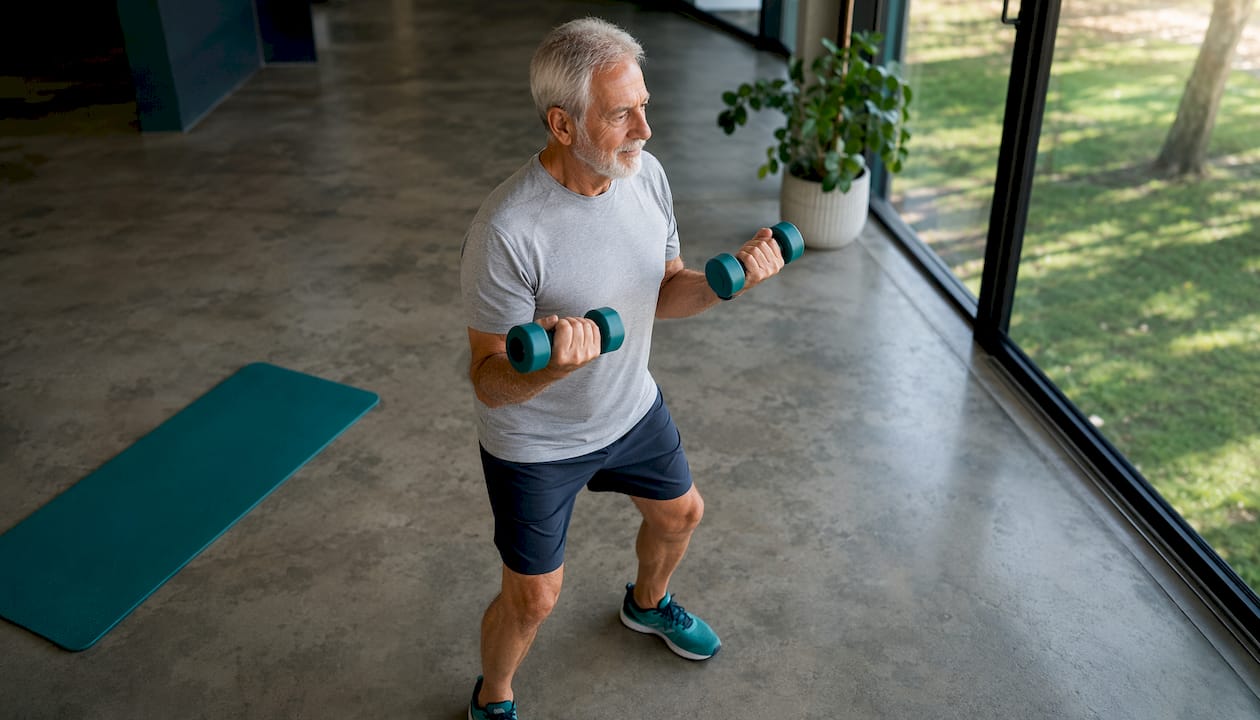
Progressive loading matters. Bone adapts to the stress placed on it; once it has adapted, the same stimulus produces no further benefit. Gradually increasing resistance, impact, or volume is what drives continued adaptation.
Practical exercise options:
- Brisk walking and hiking: accessible, weight-bearing, suitable for all fitness levels
- Jogging and running: higher impact than walking; more osteogenic stimulus for the lower limbs
- Stair climbing: combines impact and muscle load with no equipment needed
- Resistance training (free weights, machines, resistance bands): targets upper and lower skeleton; most evidence for preserving BMD in older adults
- Jumping and plyometrics: high-impact loading; particularly effective for younger adults building peak bone mass
- Dancing: combines impact, balance and coordination — useful for fall prevention in older adults
- Yoga and Pilates: lower osteogenic stimulus but support balance, posture and fall risk reduction
Aim for at least 30 minutes of weight-bearing activity on most days, with dedicated strength sessions two to three times per week. Physical activity is the only single intervention that simultaneously improves muscle mass, muscle strength, balance and bone strength.
Pro Tip: If you are new to resistance training or have existing bone loss, start with bodyweight exercises and progress slowly over six to eight weeks before adding external load. A physiotherapist or exercise physiologist can design a programme that matches your current bone status and avoids undue fracture risk.
Who is at higher risk for poor bone health?
Certain life stages and conditions raise fracture risk substantially. Knowing whether you fall into a higher-risk group is the first step towards earlier assessment and prevention.
Non-modifiable risk factors:
- Age over 50
- Female sex (accelerated bone loss post-menopause)
- Family history of osteoporosis or fragility fracture
- Previous fragility fracture (the strongest single predictor of future fracture)
- Early menopause (before age 45)
- Male hypogonadism
Modifiable risk factors:
- Smoking (directly impairs osteoblast function)
- Alcohol intake above recommended limits
- Low body weight or BMI below 19
- Physical inactivity
- Low calcium and vitamin D intake
- Long-term use of glucocorticoid (steroid) medications
Red flags that should prompt clinical review:
- A fracture from a minor fall or no trauma at all (fragility fracture)
- Long-term oral glucocorticoid use (three months or more)
- Rapid unintentional weight loss
- Conditions associated with malabsorption (coeliac disease, inflammatory bowel disease)
- Chronic kidney or liver disease
- Prolonged amenorrhoea in women of reproductive age
Chronic diseases including rheumatoid arthritis, type 2 diabetes and chronic obstructive pulmonary disease all affect bone metabolism independently of medication use. If you have any of these conditions, discuss bone health specifically with your clinician rather than assuming routine care covers it.
How clinicians assess bone health
DXA and FRAX are complementary tools. DXA measures bone mineral density at the hip and lumbar spine; FRAX integrates clinical risk factors with or without BMD to estimate the 10-year probability of a major osteoporotic fracture or hip fracture specifically.
Key assessment tools:
- DXA (dual-energy X-ray absorptiometry): the standard measure of BMD; results expressed as a T-score (comparison to young adult peak) and Z-score (comparison to age-matched peers). A T-score of −2.5 or below meets the WHO definition of osteoporosis.
- FRAX: a free online calculator developed by the University of Sheffield; inputs include age, sex, weight, height, prior fracture, parental hip fracture, smoking, alcohol, glucocorticoid use and secondary osteoporosis causes. It produces a percentage probability of fracture over 10 years.
- 25(OH)D blood test: measures vitamin D status; the most clinically useful test before starting supplementation.
- Serum calcium and PTH: ordered when calcium metabolism disorders are suspected or when DXA results are unexpectedly low.
- Trabecular bone score (TBS): a software analysis applied to DXA images that estimates bone microarchitecture; increasingly used alongside standard BMD to improve fracture prediction.
Pro Tip: Ask your clinician to run FRAX proactively if you are over 50 with any risk factor, rather than waiting for a fracture. FRAX should be used proactively for personalised risk assessment — earlier use in people with risk factors is now standard in clinical guidelines.
Osteoporosis: what it is and why treatment matters
Osteoporosis is low bone mass with structural deterioration that increases fragility and vulnerability to fractures. Prevention reduces the need for drug therapy, but when bone loss is established, effective treatments exist and should be discussed with a clinician.
Treatment categories:
- Lifestyle optimisation: the foundation at every stage — adequate calcium and vitamin D, resistance exercise, fall prevention, smoking cessation, alcohol reduction
- Calcium and vitamin D supplementation: indicated when dietary intake is insufficient; combined supplementation is associated with modest fracture risk reductions in some populations, particularly older adults in residential care
- Bisphosphonates and anti-resorptive agents (e.g. alendronate, zoledronic acid, denosumab): reduce osteoclast activity and slow bone resorption; first-line pharmacological options in most guidelines
- Anabolic agents (e.g. teriparatide, romosozumab): stimulate bone formation; reserved for severe osteoporosis or where anti-resorptives have failed
- Fall prevention programmes: balance training, home hazard assessment, vision correction; reduce fracture incidence independently of BMD
Osteoporosis is “a skeletal disorder characterised by compromised bone strength, predisposing to an increased risk of fracture.” Clinical decisions about pharmacological treatment should be made with a qualified clinician using current national or international guidelines (such as those from the International Osteoporosis Foundation). Self-treating with supplements alone is not a substitute for clinical assessment when bone loss is established.
This article provides general information only. For personalised assessment and treatment decisions, consult a qualified clinician.
A practical daily and weekly routine for bone health
Integrate nutrition, movement and simple checks into a repeatable weekly routine. Consistency over months and years is what drives measurable benefit.
Daily:
- Eat two to three portions of calcium-rich food (dairy, fortified plant milk, leafy greens, tinned fish)
- Include a source of protein at each main meal
- Spend 15–20 minutes outdoors in daylight when weather permits (April to September in Central Europe)
- Take a vitamin D supplement of 800–1,000 IU on days when sunlight exposure is limited
Weekly:
- Two to three resistance or weight-bearing sessions (30–45 minutes each)
- At least one higher-impact session (jogging, stair climbing, dancing) if your bone status allows
- Vary fruit and vegetable intake to cover magnesium and vitamin K alongside calcium
- Limit alcohol to within recommended limits; avoid smoking entirely
Periodic checks:
- 25(OH)D blood test in late autumn if you supplement or have risk factors
- FRAX assessment from age 50 onwards, or earlier with risk factors
- DXA scan as recommended by your clinician
Pro Tip: For adults over 40, minerals for healthy ageing — including calcium and magnesium — deserve specific attention because dietary surveys consistently show shortfalls in these nutrients in this age group. A food diary for three to five days can reveal gaps before you consider supplementation.
Bone health as a multi-system issue: what recent research shows
Bone health is shaped by systemic biology, not only mineral intake. Recent research frames skeletal ageing through what researchers call the Skeletal Aging Triangle: the convergence of cellular senescence, hormonal change (particularly oestrogen and androgen decline) and gut microenvironment disruption. Each of these drives remodelling imbalance independently of calcium status.
“Multisystem drivers such as cellular senescence, oestrogen deficiency and gut dysbiosis materially affect bone remodelling — and cannot be addressed by calcium and vitamin D alone.” The gut–bone axis is an active area of clinical research: dietary fibres, polyphenols and fermented foods support a microbiome that favours mineral absorption and reduces systemic inflammation, both of which influence bone turnover.
Implications for prevention:
- Anti-inflammatory dietary patterns (Mediterranean-style, high in polyphenols and fermented foods) support bone through gut and immune pathways, not only through calcium delivery
- Preserving muscle mass (preventing sarcopenia) is integral to fracture prevention — muscle and bone are metabolically linked
- Bone quality, not just density, determines fracture risk; BMD alone can underestimate risk in people with poor microarchitecture
- Under-diagnosis of osteoporosis remains a clinical problem; proactive use of FRAX and DXA in at-risk adults closes the gap between risk and treatment
Clinical note: Bone mineral density explains only part of fracture risk. Trabecular bone score and functional assessments are increasingly used alongside DXA to improve prediction — particularly in people with diabetes or on glucocorticoids, where BMD can appear deceptively normal.
Key takeaways
Strong bone health requires consistent nutrition, regular mechanical loading and timely clinical assessment — no single intervention replaces the combination.
| Point | Details |
|---|---|
| Calcium and vitamin D are the foundation | Aim for sufficient calcium intake daily from food; supplement vitamin D through winter in Central Europe. |
| Weight-bearing exercise is non-negotiable | Two to three resistance or weight-bearing sessions per week stimulate bone formation and improve microarchitecture. |
| Know your risk factors | Age over 50, prior fragility fracture, long-term steroid use and low BMI all warrant clinical assessment. |
| Use FRAX and DXA proactively | Request a FRAX calculation from age 50 with any risk factor; do not wait for a fracture to prompt assessment. |
| Vivetus supports dietary gaps | Where food intake falls short, Vivetus offers clinically-backed supplements to support bone and overall vitality. |
A note on prevention and where supplements fit
The evidence on bone health is consistent: prevention works, and the earlier you start, the more bone mass you protect. What the research also shows is that most adults in Central Europe fall short on vitamin D through winter, and many do not meet calcium targets from diet alone. Supplements are not a replacement for a balanced diet or clinical care, but they are a practical tool when dietary intake is genuinely insufficient.
Vivetus provides clinically-backed, vegan-certified nutritional supplements designed for adults focused on healthy ageing. The product range includes nutrients relevant to bone and overall vitality. For adults who want to address dietary gaps with evidence-backed products, the nutritional supplements guide for healthy ageing on the Vivetus site is a practical starting point. If you have established risk factors or a diagnosis, the right first step is always a conversation with your clinician.
Vivetus and the Energy & Vitality bundle
Dietary gaps are common, and filling them consistently is harder than it sounds. Vivetus offers a direct, no-subscription-required route to evidence-backed supplementation for adults who want to support their health without committing to a long-term plan.
The Energy & Vitality bundel brings together Vivetus’s core longevity-focused supplements in a single purchase, with free shipping on orders over €50. It is designed for health-conscious adults who want to address nutritional gaps in a practical, cost-effective way. All products are vegan, tested for purity and certified. Visit the Vivetus store to review the full contents of the bundel and decide whether it fits your current supplement routine.
Useful sources and further reading
The following sources were used to build this article and are recommended for readers and clinicians seeking more detail.
- Bone Health and Osteoporosis: A Report of the Surgeon General — NCBI Bookshelf: comprehensive US public-health reference covering lifestyle, biology and clinical management
- Physiology, Bone — StatPearls, NCBI Bookshelf: concise clinical reference on bone biology and remodelling
- Bone health and osteoporosis management in the elderly — PMC: recent review covering FRAX, DXA, under-diagnosis and treatment gaps
- Vitamin D and calcium in osteoporosis — PMC: narrative review on seasonal vitamin D variation and supplementation strategy
- Skeletal ageing mechanisms — Frontiers in Cell and Developmental Biology: research on the Skeletal Aging Triangle and multi-system drivers of bone decline
- Nutrition and osteoporosis prevention — Current Osteoporosis Reports, Springer: dietary pattern evidence including Mediterranean diet, dairy and gut–bone axis
- Calcium, protein and vitamin D — RACGP clinical guidance: clinical guidance on intake targets and supplementation indications
- Calcium and Vitamin D: Important for Bone Health — NIAMS: accessible patient-facing overview from the US National Institute of Arthritis and Musculoskeletal and Skin Diseases
- Bone health tips — Mayo Clinic: practical lifestyle guidance including peak bone mass and modifiable factors
- Food for healthy bones — NHS: NHS guidance on calcium and vitamin D food sources
Consult local clinical guidelines and a qualified clinician for personalised assessment and care. This article provides general information only.