

What is metabolic health: a practical guide
TL;DR:
- Improving metabolic health involves consistent habits like regular movement, meal reformulation, and regular testing. Monitoring key markers such as blood glucose, lipids, and blood pressure helps track progress and guide lifestyle adjustments. Sustained, small changes over time are more effective than short-term efforts for long-term health benefits.
Metabolic health describes how well your body manages blood sugar, lipids, blood pressure, and inflammation across daily life. You can measurably improve it through specific, sustainable habits applied consistently over months.
TL;DR: Increase daily movement, stabilise post-meal glucose by anchoring meals with protein and fibre, improve sleep quality, and book a baseline blood test with your GP.
Start this week:
- Walk for at least 30 minutes daily, ideally after meals
- Swap refined-carbohydrate-only meals for protein-and-fibre combinations
- Book a fasting blood glucose, lipid panel, and blood pressure check with your GP or local lab
Table of Contents
- What does metabolic health actually mean?
- Why poor metabolic health is worth taking seriously
- Which clinical measurements define metabolic health?
- How is metabolic health measured in practice?
- What signs suggest your metabolic health may be declining?
- What drives poor metabolic health?
- How to improve metabolic health: a practical, prioritised plan
- Key takeaways
- Vivetus metabolic-support supplements: an honest overview
What does metabolic health actually mean?
Metabolic health is not the same as having a fast metabolism. In clinical terms, it refers to your body’s ability to regulate blood sugar, blood fats, blood pressure, and inflammatory signals within healthy ranges, without requiring medication to do so. The distinction matters because someone can appear lean and still have poor metabolic health, just as someone with a higher body weight can have markers that sit well within healthy ranges.
The most useful way to think about metabolic health is as a continuous spectrum, not a binary pass or fail. At one end, all five clinical markers are optimal and the body switches efficiently between glucose and fat as fuel. At the other, multiple markers are outside healthy ranges and the risk of chronic disease rises sharply. Most people sit somewhere in between, and that position shifts over time depending on behaviour, age, and circumstance.
Metabolic flexibility is the practical expression of good metabolic health: the body’s capacity to switch efficiently between glucose and fat as fuel sources. Frequent large glucose spikes after meals, even when fasting measures look normal, can indicate impaired flexibility and early metabolic dysfunction.
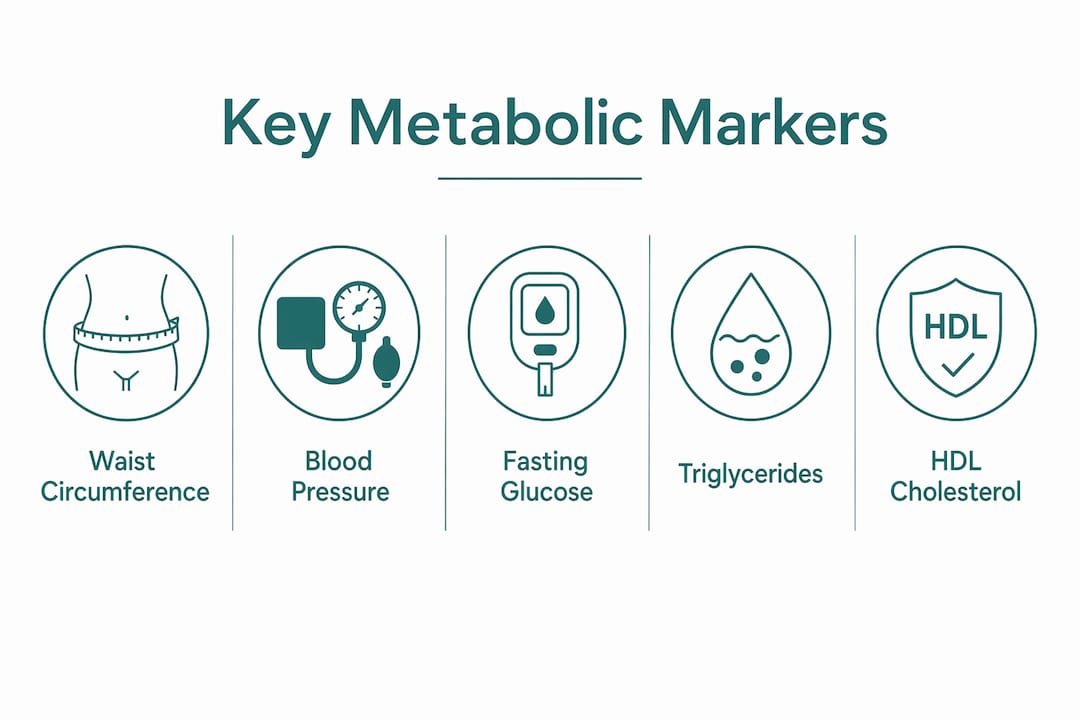
Metabolic health vs metabolic syndrome are related but distinct concepts. Metabolic syndrome is a clinical diagnostic label applied when a cluster of risk factors exceeds defined thresholds simultaneously. The five standard indicators used to define it are waist circumference, fasting blood glucose, blood pressure, triglycerides, and HDL cholesterol. Meeting three or more of the diagnostic thresholds for these markers constitutes a formal metabolic syndrome diagnosis. Metabolic health, by contrast, describes where you sit on the spectrum across all five, including subclinical ranges that do not yet meet diagnostic criteria but still carry meaningful risk.

Why poor metabolic health is worth taking seriously
The two most serious long-term consequences of poor metabolic health are type 2 diabetes and cardiovascular disease. Both develop through the same underlying mechanism: sustained insulin resistance forces the pancreas to produce progressively more insulin, blood glucose remains elevated, and chronic low-grade inflammation damages blood vessel walls over years. By the time a formal diagnosis is made, the process has typically been running for a decade or more.
Non-alcoholic fatty liver disease, polycystic ovary syndrome, obstructive sleep apnoea, and accelerated cellular ageing are also strongly associated with poor metabolic health, often appearing before diabetes or cardiovascular disease is diagnosed. This is why monitoring subclinical markers matters, not just waiting for a disease threshold to be crossed.
Metabolic syndrome affects a substantial proportion of adults across Central Europe. Polish clinical guidelines classify Poland as a high cardiovascular risk country, and metabolic syndrome is described as a significant health and social problem, with obesity, hypertension, and disordered glucose and lipid metabolism frequently co-occurring.
Pro Tip: Physical activity functions as a master signal for your metabolic environment. It improves insulin sensitivity and mitochondrial function simultaneously, making it the single highest-return habit for metabolic resilience at any age.
Which clinical measurements define metabolic health?
Clinicians assess metabolic health using five core measurements. These are the same markers used to diagnose metabolic syndrome, and tracking them over time gives you a clear picture of where you stand and whether you are improving.
| Marker | What it shows | Common risk threshold | Notes |
|---|---|---|---|
| Waist circumference | Visceral fat accumulation | >94 cm (men), >80 cm (women) | Lower cutpoints apply for South and East Asian populations (>90 cm men, >80 cm women) |
| Fasting plasma glucose | Blood sugar regulation | ≥5.6 mmol/L | HbA1c ≥5.7% indicates impaired glucose metabolism |
| Systolic blood pressure | Cardiovascular load | ≥130 mmHg | Diastolic ≥85 mmHg also used; either threshold is sufficient |
| Triglycerides | Blood fat clearance | ≥1.7 mmol/L | Elevated after high refined-carbohydrate intake |
| HDL cholesterol | Protective lipoprotein | <1.0 mmol/L (men), <1.3 mmol/L (women) | Higher is better; low HDL increases cardiovascular risk independently |
Beyond these five, a full lipid panel adds LDL and non-HDL cholesterol, which are primary targets in cardiovascular risk management. HbA1c reflects average blood glucose over the preceding 10–12 weeks and is more informative than a single fasting glucose reading. C-reactive protein (CRP) is the standard marker for systemic inflammation. Liver enzymes (ALT, AST, GGT) flag hepatic steatosis, which often develops silently alongside insulin resistance.
Age and sex both shift the clinical picture. Waist circumference thresholds are lower for women. Triglycerides tend to rise with age in both sexes. HDL cholesterol is naturally higher in women on average, so a low reading carries particular significance. Ethnicity adjustments for waist circumference are clinically meaningful: South and East Asian populations carry greater visceral fat risk at lower absolute measurements, and Polish clinical guidelines now recommend assessing non-HDL cholesterol as a primary lipid target alongside LDL.
How is metabolic health measured in practice?
A baseline metabolic health assessment requires a fasting blood draw, a blood pressure reading, and a waist measurement. Most GP surgeries and private labs across Central Europe offer these as a standard panel. In Poland, the Czech Republic, Hungary, and Austria, a basic fasting metabolic panel (glucose, full lipid panel, liver enzymes, CRP) typically costs in the range of €20–€60 at a private laboratory, with GP referrals often covered by public health insurance. These figures are indicative; actual costs vary by country, insurer, and provider.
For most healthy adults under 40 with no symptoms or family history, a full metabolic panel every two years is a reasonable baseline. Adults over 40, those with a family history of diabetes or cardiovascular disease, or anyone with abdominal obesity should check annually. After a significant lifestyle change, rechecking at three to six months gives you a practical signal of whether the intervention is working.
Continuous glucose monitoring (CGM) is increasingly used outside clinical settings to reveal post-meal glucose patterns that a single fasting measurement cannot capture. A CGM worn for two weeks can show how specific meals, sleep quality, and stress levels affect glucose variability in real time. This is particularly useful for people whose fasting glucose sits in the normal range but who suspect impaired metabolic flexibility.
When to seek specialist input: if fasting glucose exceeds 7.0 mmol/L, blood pressure is consistently above 140/90 mmHg, or multiple markers are simultaneously outside healthy ranges, a referral to an endocrinologist or cardiologist is appropriate rather than managing through lifestyle alone.
What signs suggest your metabolic health may be declining?
Many early signs of worsening metabolic health are non-specific and easy to attribute to ageing or stress. That is precisely why objective testing matters: subjective symptoms alone are unreliable.
Common early signals include:
- Increasing abdominal girth, particularly around the waist, even without significant overall weight gain
- Persistent fatigue after meals, especially carbohydrate-heavy ones
- Frequent energy crashes or difficulty concentrating in the mid-afternoon
- Elevated thirst or hunger that seems disproportionate to activity level
- Poor sleep quality, including difficulty staying asleep or waking unrefreshed
- Skin changes such as acanthosis nigricans (darkened skin folds at the neck or armpits), which can indicate insulin resistance
The challenge is that these symptoms overlap with many other conditions, including thyroid dysfunction, anaemia, and poor sleep hygiene unrelated to metabolic health. A blood test is the only reliable way to distinguish between them.
Pro Tip: Keep a simple daily log for two weeks: note energy levels at 10 AM, 2 PM, and 6 PM, sleep quality (1–5), and what you ate at each main meal. Patterns of post-meal fatigue or mid-afternoon crashes, when mapped against meal composition, often point directly to glucose instability before any test confirms it.
What drives poor metabolic health?
Insulin resistance sits at the centre of most metabolic dysfunction. When cells stop responding efficiently to insulin, the body compensates by producing more, blood glucose stays elevated, and the cascade of downstream effects on lipids, blood pressure, and inflammation follows. Insulin resistance itself is driven by a combination of factors, and they interact.
Modifiable drivers include sedentary behaviour, energy-dense highly processed diets, excess visceral fat, chronic sleep deprivation, and sustained psychological stress. Sleep loss is a particularly underappreciated factor: even a few nights of poor sleep measurably reduces insulin sensitivity and raises appetite-stimulating hormones, creating a cycle that is difficult to break without addressing sleep directly. Diets high in refined carbohydrates and low in fibre accelerate glucose instability and promote visceral fat accumulation independent of total calorie intake.
Non-modifiable factors include age, sex, family history, and ethnicity. Metabolic risk increases with age in both sexes, but the pattern differs: women often see a sharper deterioration in lipid profiles and insulin sensitivity after the menopause, while men tend to accumulate visceral fat earlier. First-degree family history of type 2 diabetes roughly doubles lifetime risk. Certain ethnic groups, including South Asian populations, carry greater cardiometabolic risk at lower body weight and waist measurements than European reference populations.
The interactions between causes matter as much as the causes themselves. Chronic stress raises cortisol, which promotes visceral fat deposition and directly impairs insulin signalling. Poor sleep raises cortisol and ghrelin simultaneously. Sedentary behaviour reduces the muscle’s capacity to clear glucose from the blood after meals, which is the primary mechanism by which physical activity protects metabolic health. Understanding why ageing affects metabolism helps set realistic expectations for how quickly markers can shift at different life stages.
How to improve metabolic health: a practical, prioritised plan
Lifestyle changes are effective at reversing metabolic syndrome when maintained consistently. The evidence strongly favours small, sustainable shifts over short-term intensive programmes that are abandoned within weeks.
Movement first
Physical activity is the single most effective lever. Aim for at least 150 minutes of moderate aerobic activity per week (brisk walking, cycling, swimming) combined with two resistance training sessions. Resistance training is particularly important for preserving and building muscle mass, which is the body’s primary glucose disposal site. Even short walks after meals reduce post-meal glucose spikes meaningfully.

Dietary priorities
Diet quality directly affects every metabolic biomarker. A Mediterranean-style pattern, rich in vegetables, legumes, whole grains, oily fish, and olive oil, consistently improves glucose regulation, lipid profiles, and inflammatory markers. The practical priority is meal composition: anchor every main meal with a protein source and fibre before adding carbohydrates. This slows glucose absorption and reduces post-meal spikes. A balanced dietary approach does not require eliminating food groups; it requires changing the order and proportion of what you eat.
Losing around 3–5% of body weight produces measurable clinical improvements in blood glucose, blood pressure, and lipid profiles. For a person weighing 90 kg, that is 2.7–4.5 kg, a realistic target within three to four months.
Sleep and stress
Seven to nine hours of sleep per night is the target for most adults. Practical interventions include a consistent sleep and wake time, reducing screen exposure in the hour before bed, and keeping the bedroom cool. For stress, structured breathing exercises, regular physical activity, and social connection all have evidence behind them for reducing cortisol and improving insulin sensitivity.
Monitoring timeline
| Timepoint | Action |
|---|---|
| Baseline | Fasting glucose, HbA1c, full lipid panel, CRP, liver enzymes, blood pressure, waist circumference |
| 3 months | Recheck blood pressure and waist; assess energy, sleep, and activity levels subjectively |
| 6 months | Repeat full blood panel; adjust dietary and activity plan based on results |
| 12 months | Full reassessment; set targets for the next year |
Numbered action plan:
- Book a baseline blood test this week (fasting glucose, lipid panel, CRP, liver enzymes, blood pressure).
- Add a 30-minute walk after your largest meal, starting today.
- Restructure one meal per day to lead with protein and vegetables before any refined carbohydrate.
- Set a consistent sleep time and wake time for the next four weeks.
- Recheck waist circumference and blood pressure at three months.
- Repeat the full blood panel at six months and review results with your GP.
Pro Tip: Pair carbohydrates with protein and fibre at every meal. Eating vegetables and a protein source before bread, rice, or pasta reduces the glucose spike from that meal by a clinically meaningful margin, preserving metabolic flexibility over time.
Key takeaways
Metabolic health is a measurable, improvable spectrum defined by five clinical markers, and movement combined with meal composition is the most evidence-backed starting point for most adults.
| Point | Details |
|---|---|
| Five markers to track | Waist circumference, fasting glucose, blood pressure, triglycerides, and HDL cholesterol define your metabolic position. |
| Movement is the master signal | Daily aerobic activity and resistance training improve insulin sensitivity and glucose clearance simultaneously. |
| Meal composition matters | Anchoring meals with protein and fibre before carbohydrates reduces post-meal glucose spikes and supports metabolic flexibility. |
| Test and monitor regularly | A baseline blood panel, then rechecks at 3, 6, and 12 months, gives you objective data to guide and adjust your plan. |
| Vivetus supplements as adjuncts | Vivetus offers clinically-backed polyphenol and metabolic-support supplements to complement a lifestyle-first approach to metabolic health. |
A practical perspective on metabolic health
The most common mistake people make with metabolic health is treating it as a project with a finish line. They do a blood test, make changes for eight weeks, see some improvement, and then gradually return to previous habits. The markers drift back. The cycle repeats.
What the evidence actually supports is less dramatic but more durable: small, consistent changes that become structural parts of daily life. A walk after dinner is not a temporary intervention; it is a permanent reclassification of what dinner looks like. Protein at breakfast is not a diet phase; it is a default. These are not motivational claims. They reflect the straightforward biology of how muscle mass, insulin sensitivity, and glucose clearance respond to repeated stimuli over months and years.
The clinical timeline is also worth stating plainly. Blood glucose and triglycerides respond relatively quickly to dietary and activity changes, often within six to twelve weeks. Blood pressure follows. HDL cholesterol and HbA1c take longer, typically three to six months of consistent change before the numbers shift meaningfully. Expecting dramatic results at four weeks and abandoning the plan when they do not appear is the single most common reason people conclude that lifestyle change “does not work for them.”
The practical philosophy is simple: get a baseline, make the smallest change you can sustain indefinitely, measure again at six months, and adjust from there. Combine that with annual monitoring and you have a system that works across decades, not just seasons.
Vivetus metabolic-support supplements: an honest overview
Lifestyle change is the primary therapy for poor metabolic health. No supplement replaces movement, meal composition, or sleep. That said, certain bioactive compounds have mechanistic evidence for supporting metabolic pathways as adjuncts to a well-structured lifestyle plan.

Polyphenols, including resveratrol, quercetin, fisetin, and berberine, have published evidence for reducing oxidative stress and supporting insulin signalling. NAD+ precursors such as NMN support mitochondrial function, which declines with age and is central to metabolic flexibility. The clinical benefit of any supplement depends on product quality, dose, and duration of use; not all products on the market meet the standards required for consistent effect.
Vivetus offers vegan, purity-tested supplements in these categories, including NMN, resveratrol, fisetin, quercetin, berberine, and bundled longevity products, available with one-time or subscription purchase options and free shipping on orders over €50. For anyone managing a diagnosed metabolic condition or taking medication, discuss supplement use with your clinician before starting.
Browse the Vivetus supplement range for product details, ingredient sourcing, and purity certification information.
Further reading and authoritative sources
The following sources support the key claims in this article and provide reliable further reading for Central European readers and those seeking primary evidence.
- Metabolic syndrome: Polish Society joint position paper — Central European clinical guidelines on metabolic syndrome diagnosis and management, including updated criteria for waist circumference, lipid targets, and cardiovascular risk classification.
- Diagnosis and Management of the Metabolic Syndrome, Circulation / AHA — Primary source for the five clinical markers and their diagnostic thresholds; widely cited in European clinical practice.
- Metabolic health and cardiometabolic risk clusters, The Lancet Diabetes & Endocrinology00086-4/abstract) — Supports the spectrum framing and the limits of binary metabolic health classification.
- Yale Medicine: Metabolic Syndrome — Accessible clinical overview linking metabolic syndrome to diabetes and cardiovascular disease; covers the evidence for lifestyle reversal.
- Harvard Health: The 5 pillars of longevity — Source for movement as a master signal for metabolic and cardiovascular health.
- Dietary Modulation of Metabolic Health, MDPI Metabolites — Evidence base for polyphenols, fibre, and bioactive compounds in improving metabolic biomarkers.
- NHLBI: Metabolic Syndrome — US National Heart, Lung, and Blood Institute overview; useful for threshold reference values and risk context.
- Vivetus: Why ageing affects metabolism — Explains age-related metabolic changes and realistic expectations for older adults.
- Vivetus: Balanced diet guide — Practical dietary advice aligned with the meal-composition recommendations in this article.
This article is general information, not medical advice. Confirm current thresholds and testing recommendations with your GP or a qualified clinician for your individual situation.