

Why monitor nutrient intake after 40: a practical guide
TL;DR:
- Monitoring nutrient intake with blood biomarkers is essential for adults over 40 to identify silent deficiencies that affect health.
- Combining food and supplement logs with targeted blood tests helps track absorption issues and prevent deficiencies related to aging.
Monitoring nutrient intake — combining food and supplement logs with targeted blood biomarkers — are the most direct way for adults over 40 to prevent the silent deficiencies that accelerate frailty, bone loss, and cognitive decline. The Proceedings of the Nutrition Society confirm that as energy intake falls with age, micronutrient requirements stay largely the same — a gap that monitoring closes.
Who should monitor: adults from their 40s onwards, particularly those using daily supplements or managing a chronic condition.
Three reasons to start now:
- Absorption changes from your 40s mean food intake no longer reliably predicts blood status
- Shrinking appetite reduces nutrient density without obvious symptoms
- Supplement interactions and upper limits require tracking to avoid excess as well as deficiency
Table of Contents
- Why does nutrient monitoring matter more from your 40s?
- Which nutrients and tests should you prioritise?
- How do you track nutrient intake practically?
- How do you interpret results and adjust safely?
- A six-week starter plan for adults 40+
- Key takeaways
- A note on monitoring and targeted supplementation
- Vivetus supplements for biomarker-led healthy ageing
- Useful sources for further reading
Why does nutrient monitoring matter more from your 40s?
Metabolic rate slows, appetite signals weaken, and the gut becomes less efficient — all from the fourth decade. Narrative reviews document reduced hunger signals, higher post-meal discomfort, and declining gut motility starting well before age 65. The practical result: many adults eat less, choose softer or more processed foods, and unknowingly reduce micronutrient density.

Absorption problems compound this. Atrophic gastritis — a condition that reduces gastric acid and impairs digestion — affects around 24% of people aged 60–69 and roughly 37% of those over 80. Vitamin B12 is particularly vulnerable because it requires gastric acid for release from food. A person eating adequate B12 can still be deficient if their stomach no longer processes it correctly.
The consequences are concrete: low vitamin D and calcium accelerate bone loss; inadequate protein intake raises sarcopenia risk; B12 shortfalls are linked to cognitive decline and peripheral neuropathy. A systematic review identified vitamin D, thiamin, riboflavin, calcium, magnesium, and selenium as nutrients of public health concern in community-dwelling older adults. Monitoring catches these shortfalls before they become clinical problems.
Which nutrients and tests should you prioritise?
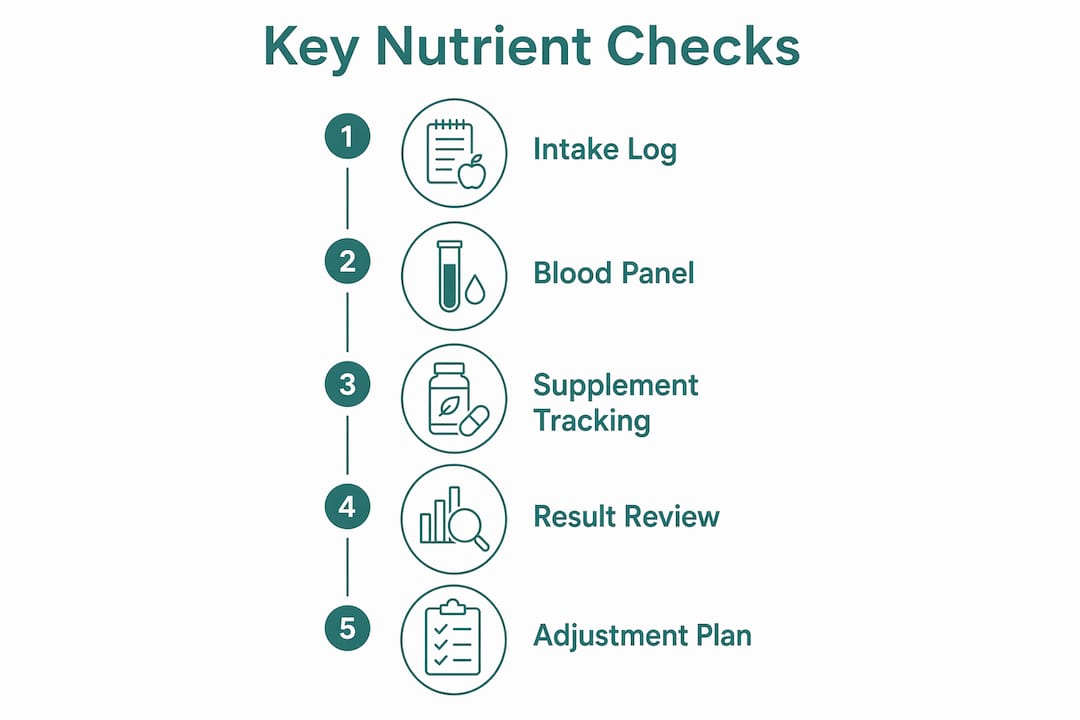
The most practical approach combines a short intake log with a focused blood panel. Food diaries capture what you eat; biomarkers reveal what your body actually absorbs. Clinical evidence consistently shows that intake estimates and blood status diverge in older adults, making biomarkers the gold standard.
| Nutrient / marker | Why it matters after 40 | Preferred test | Priority group |
|---|---|---|---|
| Vitamin D (25-OH D) | Bone density, immune function, mood | Serum 25-hydroxyvitamin D | All adults 40+ |
| Vitamin B12 | Nerve function, cognition, red blood cells | Serum B12; methylmalonic acid if borderline | All adults 40+; higher risk with low gastric acid |
| Ferritin / iron status | Energy, immune competence, anaemia risk | Serum ferritin, full blood count | Women pre-menopause; men with fatigue |
| Calcium | Bone health | Dietary assessment; serum calcium contextual | Post-menopausal women; low dairy intake |
| Magnesium | Muscle function, sleep, glucose metabolism | Serum magnesium | Adults with poor diet quality |
| Omega-3 index | Cardiovascular and cognitive health | Erythrocyte omega-3 index | Low oily fish intake |
| Lipid profile | Cardiovascular risk | Total cholesterol, LDL, HDL, triglycerides | All adults 40+ |
| Thyroid (TSH) | Metabolism, energy, weight regulation | Serum TSH | Adults with fatigue or weight changes |
| CRP (inflammation) | Chronic disease risk, immune status | High-sensitivity CRP | Adults with metabolic concerns |
| Albumin / grip strength | Protein status, sarcopenia screening | Serum albumin; functional tests | Adults 60+; low protein intake |
Supplement tracking matters equally. Research shows that standard nutrition surveys routinely omit supplement intakes, yet nearly 70% of adults over 60 use at least one daily supplement. Log the brand, dose, and frequency alongside food — supplements count towards your total intake and can push certain nutrients above safe upper limits.
How do you track nutrient intake practically?
The most effective workflow combines a 2–4 week intake log, a supplement audit, and a baseline blood panel — in that order.
- Choose a tracking method. A paper food diary works; apps such as Cronometer or MyFitnessPal offer nutrient breakdowns automatically. Log everything for at least two weeks, including portion sizes and supplement labels.
- Audit your supplements. List every product, dose, and frequency. Note which nutrients overlap between supplements and food sources.
- Book a baseline blood panel. In Central Europe, a GP referral covers many standard markers at low or no cost through public health systems. Private laboratory panels (vitamin D, B12, ferritin, lipid profile, TSH, CRP) typically cost €80–€200 depending on the country and number of markers. Bundled panels reduce cost per test.
- Prepare for the blood draw. Most lipid and glucose markers require an overnight fast (10–12 hours). Vitamin D, B12, and ferritin tests do not require fasting but are best taken in the morning for consistency.
- Set a retest date. For corrected deficiencies, retest after 3–4 months. For stable maintenance, an annual panel is generally sufficient.
Home test kits are available across Central Europe and offer convenience, but clinic-based tests provide more markers, better quality control, and clinician interpretation. Use home kits for interim checks between clinic visits, not as a replacement.
How do you interpret results and adjust safely?
Biomarkers personalise your next step. A low result does not automatically mean a high dose; the form, timing, and co-factors of a supplement determine how much reaches circulation.
- Low 25-OH D (below 50 nmol/L): supplement with vitamin D3, ideally with a meal containing fat to improve absorption. Retest after 12 weeks.
- Low or borderline B12: consider sublingual or liquid forms if atrophic gastritis is suspected, as these bypass gastric acid dependency. Injectable B12 is available via GP referral for confirmed malabsorption.
- Low ferritin with normal haemoglobin: dietary iron from haem sources (meat, fish) absorbs more readily than non-haem iron from plants. Pair plant sources with vitamin C. Avoid taking iron alongside calcium or zinc supplements.
- Elevated CRP: review omega-3 intake, sleep quality, and physical activity before adding anti-inflammatory supplements.
Exceeding upper limits carries real risk. Iron supplementation above 45 mg/day without medical oversight can cause gastrointestinal harm and interfere with zinc and copper absorption. Fat-soluble vitamins (A, D, E, K) accumulate in tissue; high-dose vitamin D without monitoring can raise serum calcium to harmful levels. Always confirm upper limits with a clinician before increasing doses significantly.
The European Commission JRC report positions supplements as a targeted strategy to address specific shortfalls — not a substitute for food quality or gut health. Improving gut health through fibre, fermented foods, and adequate hydration supports bioavailability across all nutrients.
Pro Tip: Take vitamin D3 with your largest meal of the day, particularly one containing healthy fats such as olive oil, nuts, or oily fish. Absorption can increase substantially compared with taking it on an empty stomach.
A six-week starter plan for adults 40+
A six-week plan delivers a baseline intake picture and allows one focused supplement or dietary change to be tested before the next blood draw.
- Weeks 1–2: log intake and audit supplements. Record all food, drink, and supplements daily. Note any symptoms (fatigue, muscle cramps, poor sleep).
- Week 3: baseline blood panel. Book through your GP or a private laboratory. Bring your supplement list and a note of any recent dietary changes or medications.
- Week 4: review results. Discuss findings with a GP, dietitian, or informed adviser. Identify the one or two markers furthest from optimal range.
- Weeks 5–6: implement one targeted change. Adjust a single supplement dose or add a specific food group. Note any symptom changes in a brief daily log.
- Plan your retest. Schedule a follow-up panel for 3–4 months after any supplement change, or annually if all markers are within range.
Before you start, gather:
- A full list of current medications and supplements with doses
- Any recent blood test results (within 12 months)
- A note of significant recent dietary changes
Seek medical advice promptly if you notice: unexplained weight loss, severe fatigue, symptoms of anaemia (pallor, breathlessness), or significant gastrointestinal symptoms. These warrant clinician assessment before self-directed supplementation.
Pro Tip: Book your blood draw for early morning, before eating, and avoid strenuous exercise the day before. Consistent timing makes year-on-year comparisons more reliable.
Key takeaways
Combining intake tracking with biomarker testing is the only reliable way to identify and correct nutrient shortfalls in adults over 40, where absorption changes mean food logs alone are insufficient.
| Point | Details |
|---|---|
| Biomarkers are the gold standard | Blood tests reveal actual absorption status; intake logs alone miss deficiencies caused by poor gut absorption. |
| Six nutrients of concern | Vitamin D, thiamin, riboflavin, calcium, magnesium, and selenium are flagged as potential shortfalls in older adults. |
| Count supplements in your total | Log every supplement by brand, dose, and frequency to avoid exceeding upper limits for fat-soluble vitamins and iron. |
| Retest on a realistic schedule | Retest corrected deficiencies after 3–4 months; stable markers warrant an annual panel. |
| Vivetus for targeted support | Vivetus offers evidence-based supplements for healthy ageing, selected to address the shortfalls most common in adults 40+. |
A note on monitoring and targeted supplementation
Supplementation works best when it follows data, not guesswork. At Vivetus, the position is straightforward: supplements are a targeted tool to address specific shortfalls identified through monitoring, not a replacement for food quality or gut health. The European Commission’s JRC research supports exactly this approach — food-based strategies first, supplements where gaps are confirmed.
Vivetus’s product range covers the nutrients most commonly flagged in adults over 40: NAD+ precursors including NMN, resveratrol, fisetin, quercetin, berberine, and TMG, all tested for purity and formulated with clinical evidence in mind. Subscription options make consistent use practical. Every formulation is vegan and available with international shipping across Central Europe and beyond.
For readers wanting to go deeper, the Vivetus supplement comparison guide covers bioavailability differences between supplement forms — useful reading before your first blood panel.
Vivetus supplements for biomarker-led healthy ageing
Once your blood results are in, the next step is matching confirmed shortfalls to well-formulated supplements. Vivetus makes that straightforward.

The range is built around the nutrients and longevity compounds most relevant to adults over 40: NMN, resveratrol, fisetin, quercetin, pterostilbene, apigenin, TMG, and berberine. All products are vegan, purity-tested, and available on a subscription basis so your supply stays consistent between retest cycles. Free shipping applies to orders over €50, with delivery across Central Europe and internationally.
The practical next step: complete the six-week plan above, review your blood panel with a clinician, then browse the Vivetus range to match targeted supplements to your confirmed gaps. Starting with data rather than assumptions is what separates effective supplementation from expensive guesswork.
Useful sources for further reading
These sources underpin the guide and are reliable starting points for clinicians and informed readers seeking primary evidence.
- Nutritional challenges for older adults in Europe — Proceedings of the Nutrition Society; accessible to lay readers; covers micronutrient shortfalls across European populations.
- Micronutrient intakes and potential inadequacies in community-dwelling older adults — PMC systematic review; free access; best for clinicians and informed readers wanting prevalence data.
- SACN Nutrition and older adults — UK government scientific advisory report; detailed reference nutrient intakes and absorption data; suited to clinicians.
- Nutritional and lifestyle management of the ageing journey — PMC narrative review; free access; practical overview of appetite and GI changes from midlife.
- Nutrition and active and healthy ageing — JRC / European Commission — EU policy-level report; positions supplementation as a targeted strategy; relevant for Central European readers.
- Micronutrient status and protein-energy malnutrition in free-living older adults — PMC; free access; links monitoring to frailty prevention.
- Supplement use and older adults — PMC evidence review; free access; covers why supplement tracking must be included in dietary assessment.
- EFSA Dietary Reference Values summary tables — European Food Safety Authority; authoritative reference for population intake targets across Central Europe; suited to clinicians and practitioners.
This article provides general information for educational purposes. Confirm current clinical guidance and your individual results with a qualified healthcare professional before making changes to your supplement or dietary regimen.