

Quercetin and Zinc: 500 mg, dosing and what Dutch buyers should know
Quercetin helps zinc get into your cells, where zinc can interfere with viral replication and calm inflammatory signalling. That mechanism, known as ionophore action, is the reason quercetin and zinc are so often paired in supplement form. The evidence behind it is genuinely promising but still mostly preclinical, so this guide walks through the mechanism, what the studies actually show, safe dosing, and what to check on a label before you buy. Speak to a clinician first if you take medication, are pregnant, or plan to use high-dose zinc long-term.
TL;DR:
- Supplementing with 500 to 1,000 mg of quercetin daily and 15 to 25 mg of zinc can enhance their synergy, but high doses may cause copper deficiency or medication interactions.
- Not all quercetin supplements are equally absorbed; phytosome or glycoside forms paired with vitamin C improve bioavailability and effectiveness.
- Most evidence for the antiviral and anti-inflammatory benefits of quercetin and zinc comes from cell and animal studies, with human trials still lacking definitive results.
- Older adults and individuals with zinc deficiency may see the most benefit, especially when doses align with those used in research, but safety must be monitored.
- It is advisable to start with lower doses, track side effects, and consult a healthcare professional before long-term or high-dose supplementation.
Table of Contents
- What is quercetin and zinc synergy, exactly?
- What the research actually shows: cells, animals, and people
- Dosing, safety, and interactions to know before you start
- Choosing a quercetin and zinc supplement that actually absorbs
- A practical routine and the red flags to watch
- Why I’d rather see caution than hype here
- Vivetus formulations built around this evidence
- Sources
What is quercetin and zinc synergy, exactly?
Quercetin is a plant flavonoid found in onions, capers, and apples. Zinc is a trace mineral your body needs for immune cell development and wound repair. On their own, each has a modest reputation. Together, they do something more interesting.
Zinc struggles to cross cell membranes unassisted. Quercetin acts as an ionophore, a molecule that shuttles zinc through the cell membrane and into the cytoplasm, where it can actually do its job. Laboratory work has demonstrated this ionophore activity directly, showing that quercetin measurably increases intracellular zinc levels in cell models. Separate experiments using cells and artificial membranes confirm that plant polyphenols like quercetin raise “labile” zinc, the loosely bound form that’s biologically active, when the two are combined in the same environment, as shown in polyphenol and zinc ionophore research published in the Journal of Agricultural and Food Chemistry.
Once zinc is inside the cell in higher concentration, a few things happen:
- It can inhibit the enzyme complex certain viruses use to replicate their RNA.
- It downregulates pro-inflammatory messengers, particularly IL-1 and IL-6.
- It supports the maturation and function of immune cells that rely on zinc as a cofactor.
That’s the biochemical case for pairing the two. The next question is whether it holds up outside a petri dish.
What the research actually shows: cells, animals, and people
The strongest data sits at the cellular and animal level, not yet in large human trials. A review of flavonoid and zinc research found consistent mechanistic support for quercetin interfering with viral entry and replication, and specifically flagged that older adults with low zinc status may see the most benefit from this kind of micronutrient support, since zinc deficiency becomes more common with age.
Animal research adds a second layer. In one cytokine-storm model, animals pretreated with a quercetin, zinc, and vitamin C complex showed measurably lower IL-1 and IL-6 levels, along with protected lung and kidney tissue compared with untreated animals, according to research on the anti-cytokine storm activity of this three-part complex. Separate animal work in disease models, including diabetes, found similar antioxidant and metabolic improvements from quercetin-zinc combinations, as reported in PLOS One’s analysis of quercetin-zinc complexes.
Vitamin C shows up repeatedly alongside quercetin in these studies, likely because it helps stabilise quercetin and supports its own antioxidant pathways. It’s worth reading as a formulation cue rather than a footnote.
Here’s the honest caveat: the concentrations that produce antiviral effects in vitro sometimes exceed what’s realistically achieved through oral supplementation, a translational gap that a 2020 Frontiers review on quercetin and vitamin C synergy raises directly. No large-scale human trial has yet confirmed clinical outcomes matching the lab data. That doesn’t invalidate the mechanism. It means the mechanism is ahead of the human proof.
Dosing, safety, and interactions to know before you start
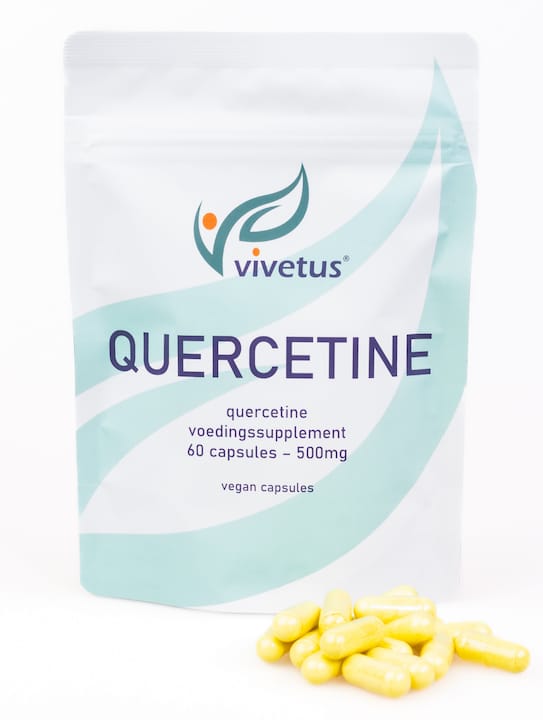
Most trials and reviews cite supplemental quercetin doses in the range of 500 to 1,000 mg per day. A Vivetus Quercetine capsule, for reference, delivers 500 mg, which sits at the lower, more conservative end of that studied range.
Zinc is a different story because the margin between helpful and excessive is narrower. Adult tolerable upper intake levels of elemental zinc are estimated to be approximately a few tens of milligrams per day, with the no-observed-adverse-effect level somewhat above that, according to figures summarised in the flavonoid and zinc COVID-19 review. Short courses at moderate doses are generally well tolerated; sustained high-dose use is where problems creep in.
Watch for:
- Nausea or a metallic taste, usually linked to taking zinc without food.
- Copper deficiency with prolonged high-dose zinc use, since the two minerals compete for absorption.
- Reduced absorption of certain antibiotics and interference with anticoagulants or immunosuppressants, so check your medication list first.
- Limited safety data in pregnancy and breastfeeding, so professional guidance matters more here than usual.
Pro Tip: Add up your total elemental zinc from food and every supplement you take, not just the quercetin-zinc capsule. Multivitamins and cold remedies often carry zinc too, and it’s easy to double up without noticing.
For more detail on stacking quercetin with vitamin C safely, Vivetus has covered the synergy and dosing considerations in more depth.
Choosing a quercetin and zinc supplement that actually absorbs
Not all quercetin is created equal. Standard quercetin has notoriously poor oral bioavailability, which is why phytosome (phospholipid-bound) or glycoside forms are increasingly preferred in supplement design, since they cross the gut wall more efficiently than plain quercetin powder. Pairing with vitamin C appears to help too, echoing what the animal studies used.
For zinc, the form matters almost as much as the dose. Bisglycinate, picolinate, and citrate are generally better absorbed and gentler on the stomach than zinc oxide, which is cheap but poorly utilised by the body.
Before buying, run through this:
- Check the elemental zinc figure on the label, not just the total compound weight.
- Confirm the quercetin form (phytosome, glycoside, or standard) and whether vitamin C is co-formulated.
- Look for third-party purity testing or a batch certificate.
- Read the contraindications section. If it doesn’t mention pregnancy, medication interactions, or upper limits, treat that as a gap, not reassurance.
- Confirm the daily dose matches ranges discussed in Vivetus’s quercetin dosage guidance.
A practical routine and the red flags to watch
A conservative regimen looks like 500 mg quercetin once daily with a meal, alongside a well-absorbed zinc form at 15 to 25 mg elemental zinc, ideally with vitamin C to support absorption. A short-term moderate approach might push quercetin to 1,000 mg daily for a defined stretch, never as an indefinite habit.
- Trial the routine for four to eight weeks, then reassess whether it’s still needed.
- Track digestion, taste changes, and energy as basic monitoring cues.
- Stop and consult a clinician if you notice persistent nausea, unusual fatigue, or signs suggesting copper deficiency, such as unexplained tiredness or pallor.
- Older adults or anyone managing a chronic condition should start at the lower end and adjust with medical input rather than guessing.
Why I’d rather see caution than hype here
The mechanism behind quercetin and zinc is one of the more genuinely interesting stories in supplement science right now, and that’s exactly why it gets overhyped. The ionophore effect is real and well documented at the cellular level. What’s missing is the large human trial that would let anyone say “proven” with a straight face. I’d rather see a brand undersell this than oversell it.
Vivetus builds its Quercetine capsules around the dose ranges actually used in the research, rather than rounding up for marketing reasons, and its blog on quercetin’s anti-inflammatory evidence is refreshingly upfront about where the science stops. That’s the standard I’d want from anyone selling into this space: match the label to the literature, not the other way round.
— Jord
Vivetus formulations built around this evidence
Vivetus designs its supplements to match the dosing and formulation logic covered above, not to chase round numbers.
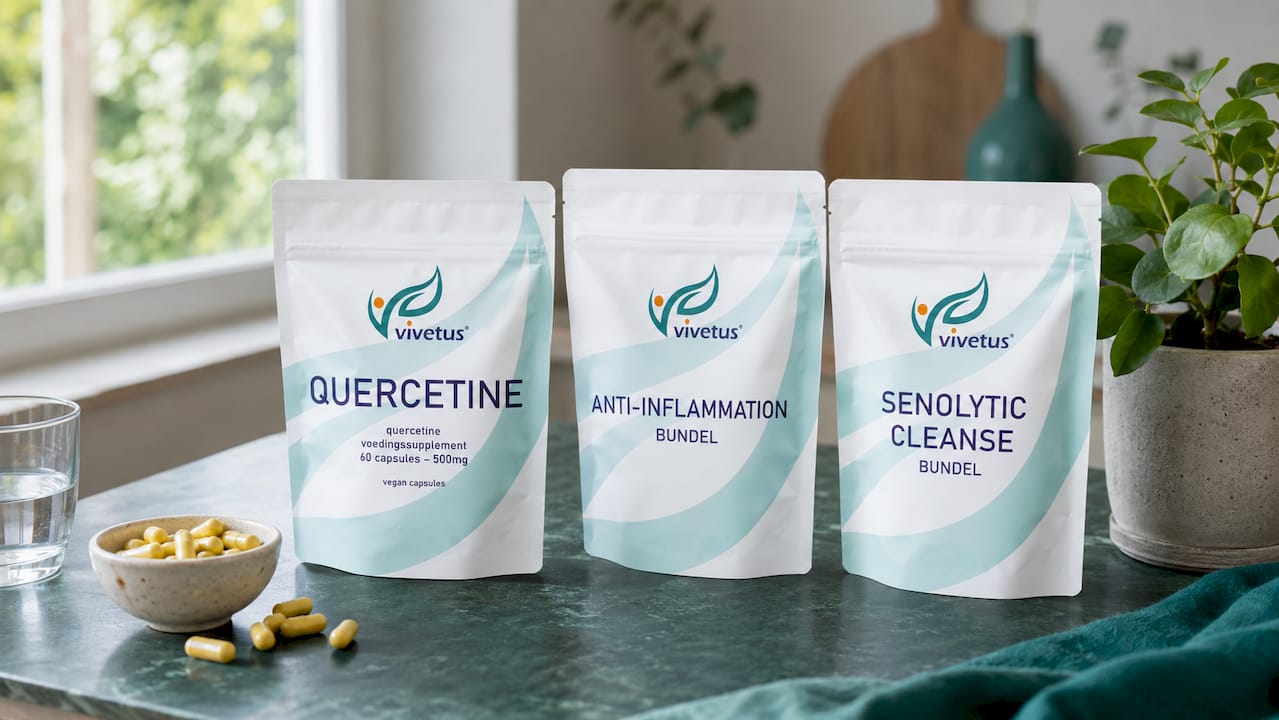
The Vivetus® Quercetine, 60 capsules at 500 mg sits at the conservative end of studied ranges, making it a sensible starting point if you’re new to combining quercetin with zinc rather than jumping to a higher dose immediately. If inflammation is your main concern rather than immune support alone, the Anti-inflammation bundel pairs quercetin with complementary anti-inflammatory ingredients in one stack, saving you from piecing together several separate bottles. For readers thinking about longevity and cellular ageing more broadly, the Senolytic Cleanse bundel extends the same evidence-led approach into a wider protocol. All three ship with clear per-capsule dosing on the label, so you’re never guessing at elemental amounts. Orders over €50 qualify for free shipping, and a subscription option means you’re not reordering manually every month. Have a look at the Quercetine product page to check current stock and start with the dose that fits your routine.
Sources
Key studies cited above cover quercetin’s ionophore mechanism, the flavonoid-zinc review for respiratory health, and animal cytokine-storm data. For product-level detail, see Vivetus’s quercetin benefits overview.
This article is general information, not a substitute for advice from a qualified doctor. Consult a qualified healthcare professional about your own circumstances before acting on anything here.
- PubMed — quercetin ionophore / cellular zinc effects
- Therapeutic potential of flavonoids and zinc in COVID-19 (review, PMC)
- PLOS One — quercetin–zinc complex in animal models